
Your Design Site Has Zero AI Search Visibility
We fetched 25 design studio and portfolio pages the way an AI crawler does. Median readable text: 397 words. One shipped 147KB to say seven.
The short answer
Your site probably looks empty to the machines that now answer questions about your industry. Not slow, not badly ranked. Empty.
We fetched 25 pages across 18 design studio, portfolio-platform and website-builder domains on 27 July 2026, one plain HTTP GET each, no JavaScript executed, under a ClaudeBot user-agent. The median page returned 397 words of machine-readable text. Eight returned fewer than 200.
That is what an AI crawler sees when it comes looking for who does good brand work. Most of the industry is shipping a beautiful shell with nothing legible inside it.
Two thirds of searches now end where they started
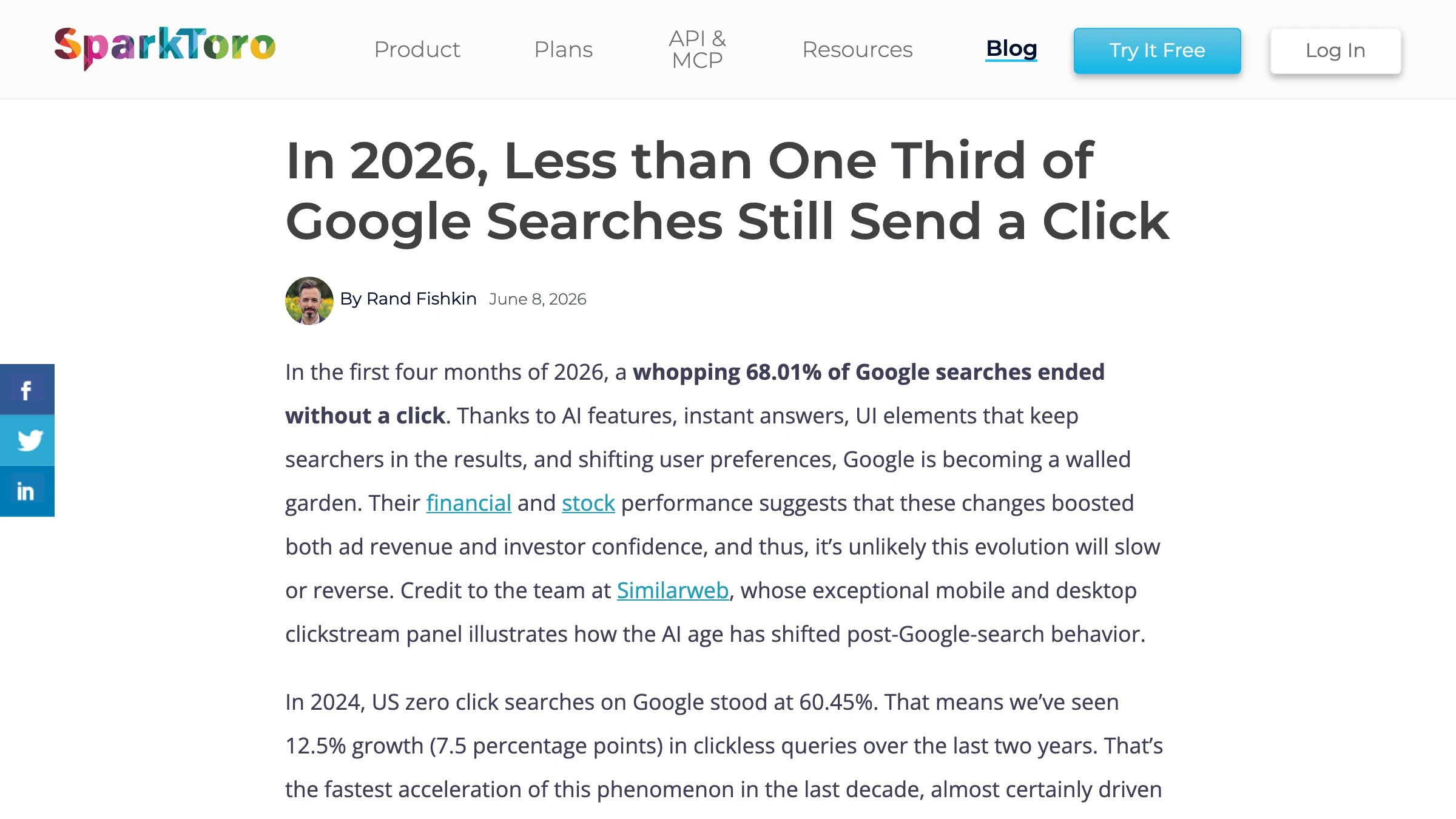
US Google searches ended without a click 68.01% of the time across the first four months of 2026, per SparkToro's June 2026 analysis of Similarweb clickstream panel data. That is up from 60.45% in 2024, a 7.5 point rise in two years.
The trend predates AI. SparkToro first measured this at 49% back in 2019. What AI did was accelerate a curve that was already bending.
AI Overviews now appear on more than 20% of all searches, per Ahrefs data cited by SparkToro. And when one appears, Ahrefs found the top-ranking page takes a 58% lower average clickthrough rate. That figure comes from Ryan Law's re-run on December 2025 data across 300,000 keywords, half with an AI Overview and half informational without, using aggregated Search Console data.
Worth noting the direction. Ahrefs' April 2025 version of that study put the drop at 34.5%. Same methodology family, much worse number.
The machines reading your site cannot run your site
No major AI crawler executes JavaScript. Vercel and MERJ's network-level study, published 17 December 2024, found that these crawlers all fetch raw HTML and stop there:
- GPTBot
- OAI-SearchBot
- ChatGPT-User
- ClaudeBot
- Meta-ExternalAgent
- Bytespider
- PerplexityBot
They do download your JavaScript. They just never run it. The same study measured JS files at 11.50% of ChatGPT's requests and 23.84% of Claude's.
The exceptions are Google and Apple. Gemini rides Googlebot's rendering infrastructure, and AppleBot crawls through a browser-based renderer. Everything else gets whatever your server puts in the initial response.
That study is the most recent large-scale first-party measurement we could verify. It is widely reported to still hold in 2026, and plenty of posts repeat its 569 million GPTBot fetches figure as a rounded "500 million", but we found no newer primary research. Treat it as the best available evidence, not as fresh news.
Vercel's own recommendation from that work was blunt: server-render your critical content and keep client-side rendering for enhancement only. Which rendering mode your stack defaults to is the decision underneath all of this, and we covered it in the marketing site stack.
What an AI crawler actually sees on a design site
We measured HTML payload, readable word count, KB shipped per readable word, alt text coverage and presence of structured data. Brainy is in the table because it would be cowardly not to be, and we are mid-table.
| Site | Page | KB shipped | Words readable | KB per word | Alt coverage |
|---|---|---|---|---|---|
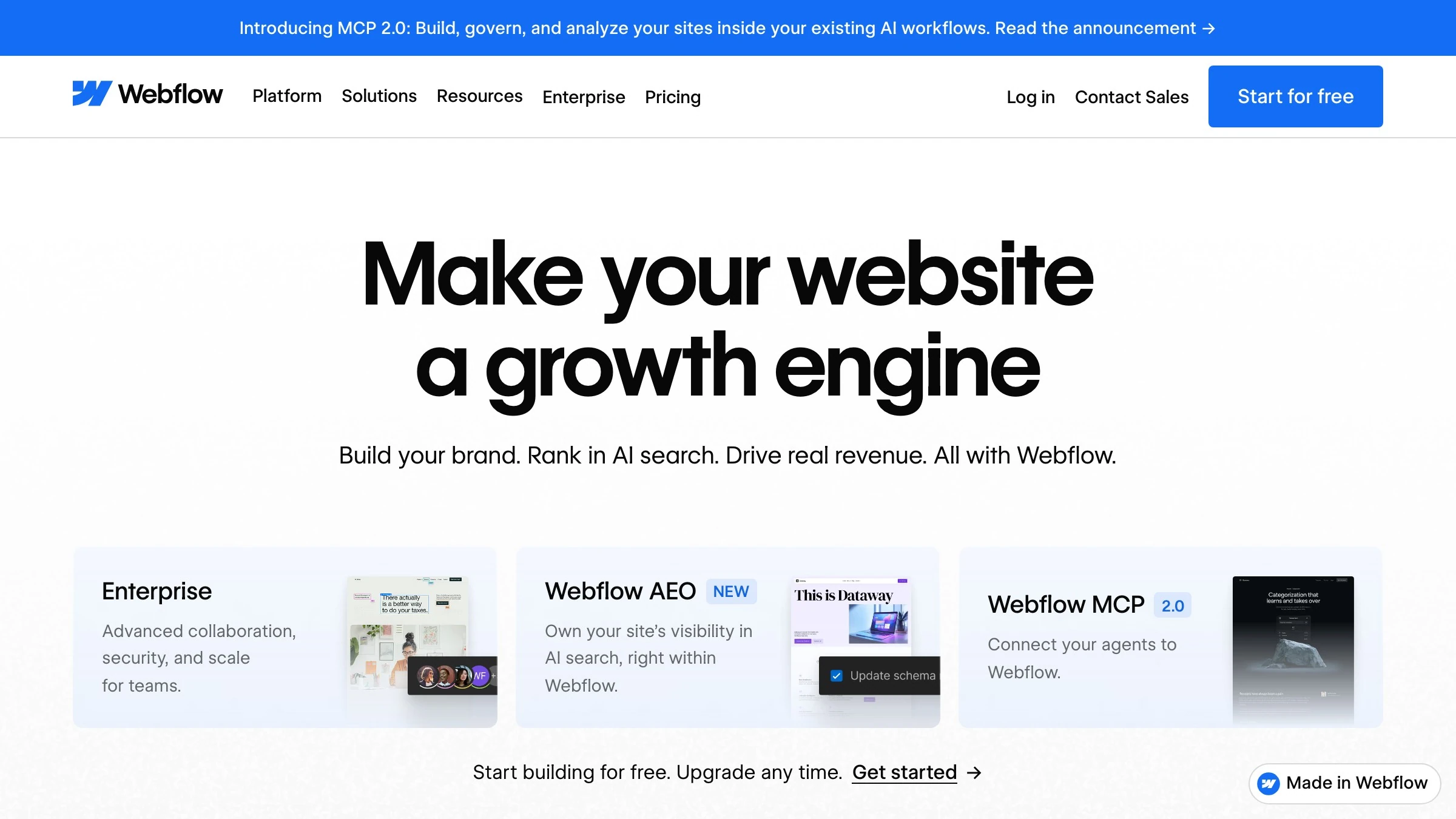
| Webflow | home | 619.0 | 3,466 | 0.18 | 57 of 168 images |
| Pentagram | home | 1,019.4 | 3,288 | 0.31 | 134 of 183 images |
| IDEO | home | 198.8 | 1,841 | 0.11 | 2 of 35 images |
| Pentagram | work | 347.1 | 1,198 | 0.29 | 6 of 42 images |
| Brainy | home | 137.8 | 554 | 0.25 | 27 of 27 images |
| Instrument | home | 3,355.6 | 397 | 8.45 | 0 of 10 images |
| Instrument | work | 3,340.7 | 291 | 11.48 | 0 of 2 images |
| Collins | work | 134.5 | 124 | 1.08 | 0 of 52 images |
| Readymag | home | 147.7 | 7 | 21.10 | n/a |
Across all 25 pages: 14 came in under 500 readable words, 15 carried no structured data at all, and 10 had alt text on fewer than half their images. Area 17 and Made Thought were the clean end, both at 100% alt coverage.
Readymag's homepage is the extreme case. It shipped 147.7 KB of HTML to deliver seven readable words, roughly 21 KB per word. That is not a criticism of the design. It is a description of what a non-rendering crawler receives.
Test your own site in one line
Run the same test on yourself. One line, no tools to install:
curl -s -A "ClaudeBot/1.0" https://yoursite.com | sed 's/<[^>]*>//g' | tr -s '[:space:]' ' ' | wc -w
If that returns a number under 300, the AI layer of search knows essentially nothing about you.
The work page is the emptiest page you own
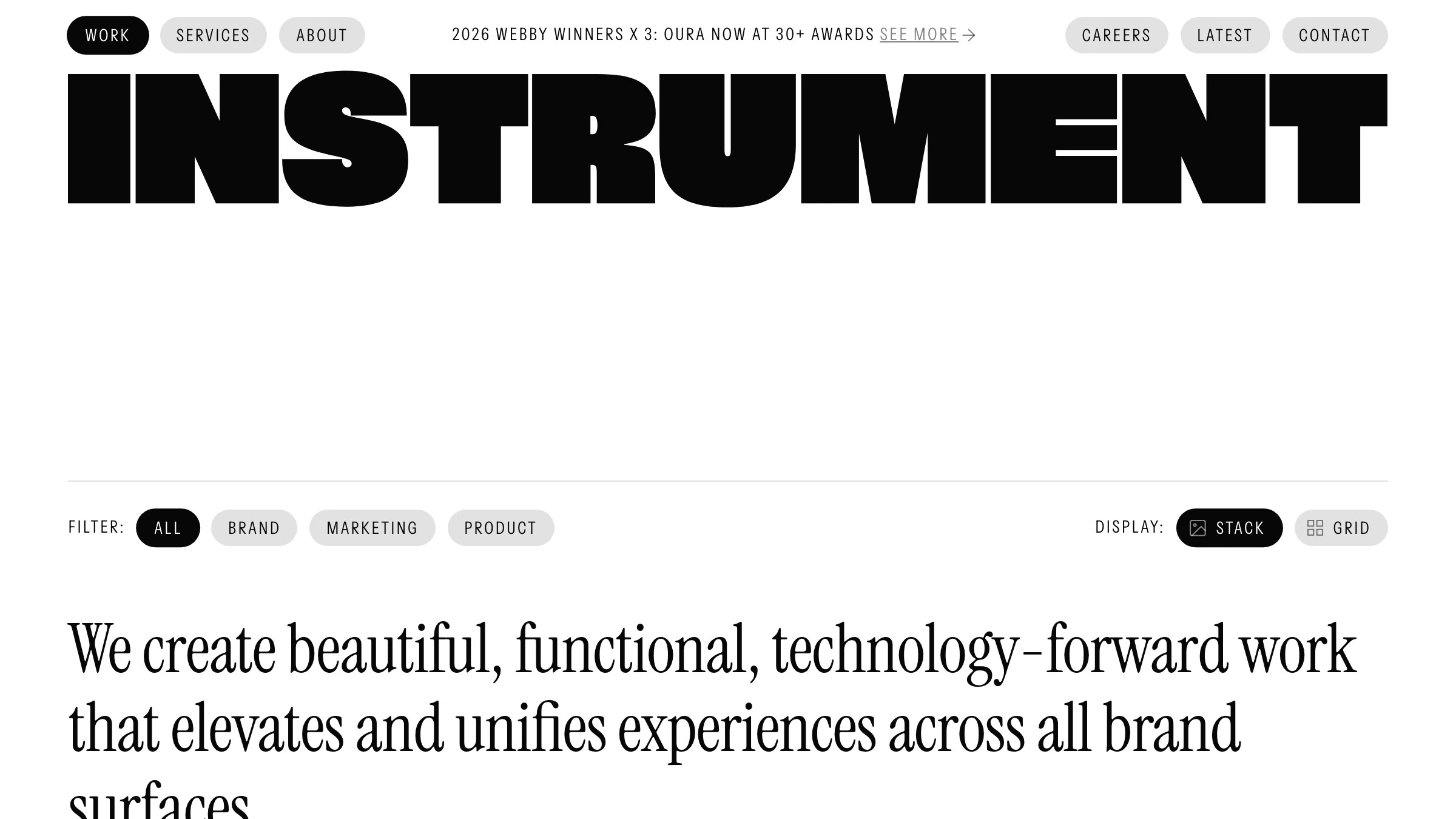
See it live on instrument.com/work
The pattern held across the audit. Homepages carried the most text, and the work or case study pages, the pages that actually prove capability, carried the least. Instrument's work page returned 291 words against 397 on its homepage. Collins' work page returned 124.
The reason is structural, not careless. Work pages are built as galleries. The argument lives in the images, the layout and the sequencing, and the words are treated as captions between them. That convention worked beautifully for a decade of human browsing, and it is exactly what we argued was breaking down in the death of the design case study.
A model asked to name studios strong in editorial identity work reads text. It does not look at your grid. If your best project ships as twelve full-bleed images and forty words, you did not enter the consideration set.
The fix is not more copy for the sake of copy. It is putting the reasoning you already have into the page: the problem, the constraint, the decision, the outcome. We laid out that structure in the case study template, and the same thinking applies to how you sequence a whole portfolio in the anti-portfolio guide.
Alt text stopped being an accessibility chore
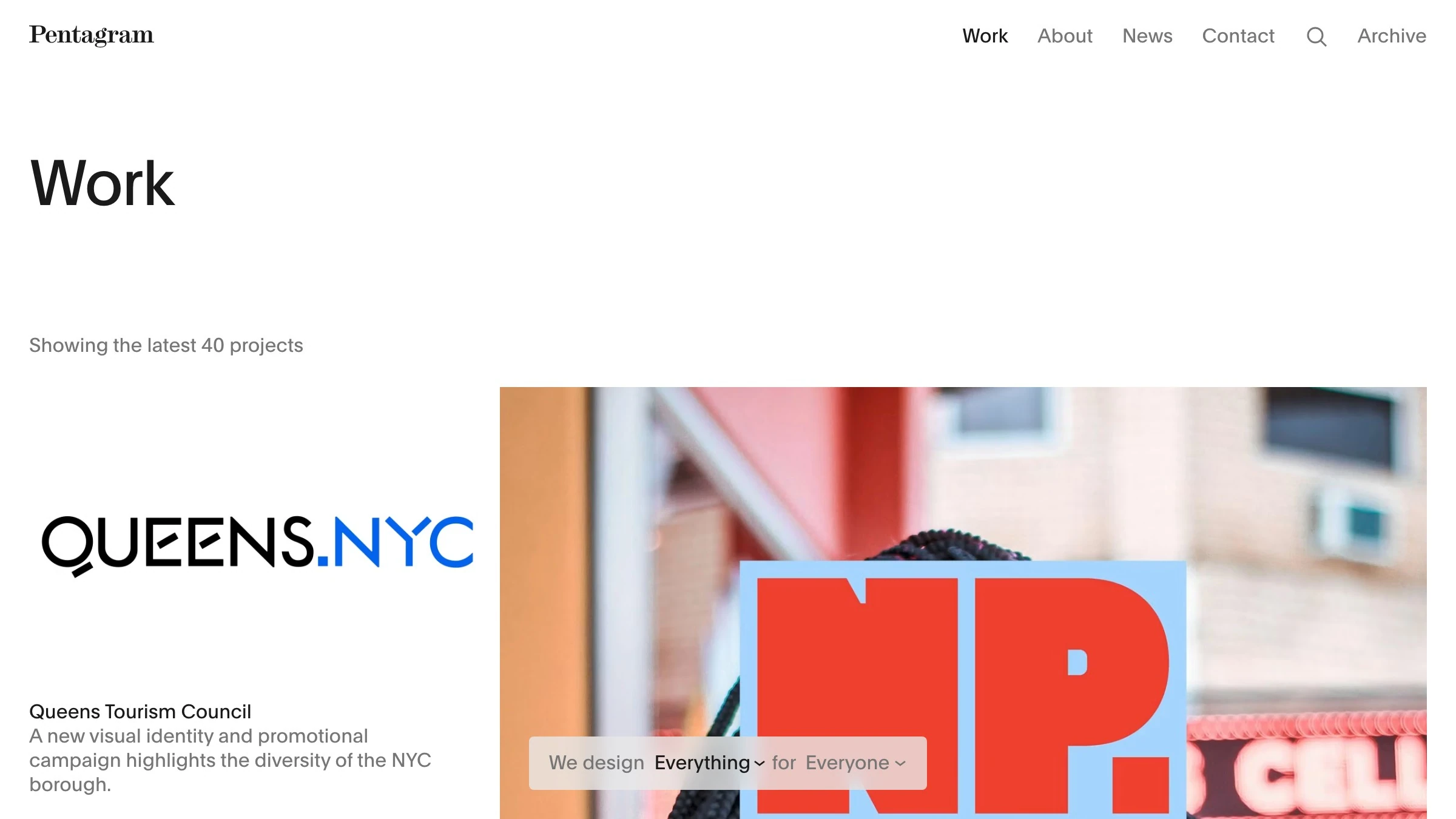
See it live on pentagram.com/work
Ten of 25 pages had alt text on under half their images, and on image-led work pages the ratio was worse. Collins shipped 52 images with zero alt attributes. Pentagram's work page had 42 images with alt on six, and IDEO's homepage had 35 with alt on two.
For a crawler that cannot render, alt text is not a nicety. It is the only description of your imagery that exists in the response, and on a gallery-heavy work page it may be the majority of the readable content on the URL.
So the accessibility work you have been deferring now has a second, commercial reason to happen. Same task, two payoffs. Our accessibility checklist covers doing it properly rather than stuffing keywords into the attribute.
Structured data is the other half. Fifteen of 25 pages carried none. Organization, Person and CreativeWork schema is how a machine knows a page is a studio, a designer and a project rather than three unlabelled blobs of text.
Four fixes, in the order that moves the number
Four changes move the number, and the order matters:
- Server-render the text. If your stack hydrates content client-side, the words are invisible to everything except Google and Apple. Webflow's pre-compiled output is comparatively safe; a custom SPA without SSR is the worst case. Framer serves HTML but leans on React hydration, so test rather than assume. Our marketing site stack breakdown covers the tradeoffs
- Rewrite the work pages. Get every project above roughly 400 readable words of actual reasoning. This is the single biggest gap the audit found and the pages that matter most
- Add alt text everywhere, describing the work rather than the file. On a gallery page this can double your readable text in an afternoon
- Add Organization, Person and CreativeWork structured data. Cheap, mechanical, and 60% of the pages we measured skipped it
Do them in that order. There is no point writing 800 excellent words into a component that never reaches the crawler.
For a small studio that depends on inbound, this is not optional maintenance. It is the difference between being named in an answer and not existing, which we get into in the solo studio playbook.
FAQ
Do AI crawlers render JavaScript?
Not the main ones. Vercel and MERJ's 17 December 2024 study found these crawlers all fetch without executing:
- GPTBot
- OAI-SearchBot
- ChatGPT-User
- ClaudeBot
- Meta-ExternalAgent
- Bytespider
- PerplexityBot
Google's Gemini renders via Googlebot's infrastructure, and AppleBot renders through a browser-based crawler.
How do I check if my own site is visible?
Run a single curl with an AI crawler user-agent, strip the tags and count the words. The one-line command is in the audit section above. Compare the result against what a visitor sees.
Is a low word count always a mistake?
No. This audit measures the initial HTML response only. It does not measure whether a site ranks, converts, or is well designed, and a studio that gets all its work through referral may reasonably not care about inbound search at all.
Does this replace normal SEO?
It sits underneath it. Titles, links and page speed still matter. But none of them help if the body of the page arrives empty, and generative engine optimization is mostly just making sure your actual substance is in the HTML.
How much traffic is really at stake?
SparkToro puts US zero-click at 68.01% for early 2026. Ahrefs measured a 58% CTR drop on the top result when an AI Overview appears, worse than the 34.5% they measured in April 2025. Both are averages across all query types, so your own exposure depends on how informational your queries are.
Beautiful and unreadable are not opposites
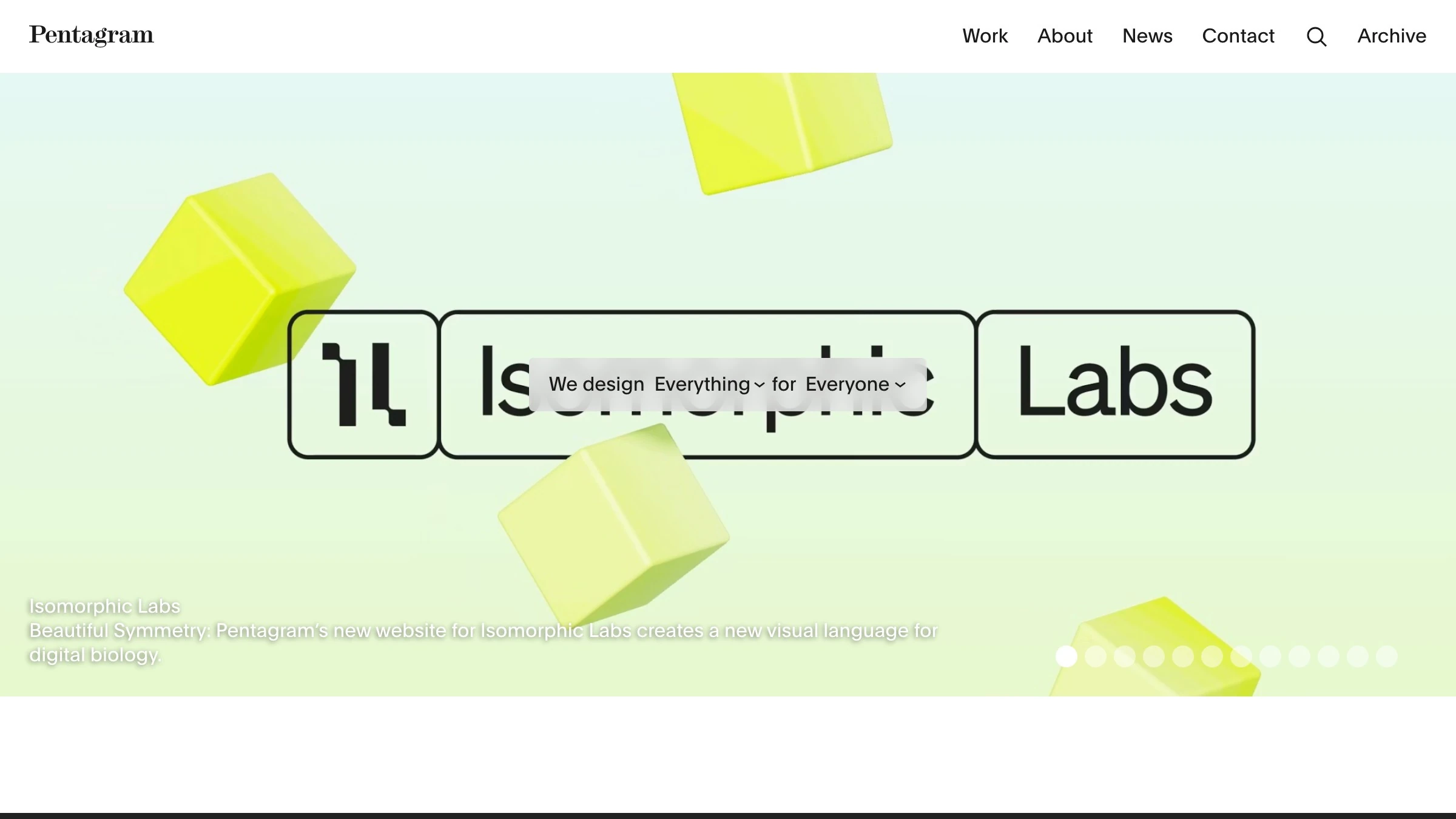
Nothing here argues for uglier sites. Pentagram's homepage returned 3,288 readable words and still looks like Pentagram, and Webflow returned 3,466. Area 17 and Made Thought hit full alt coverage without visible compromise. The tradeoff people assume exists mostly does not, which is the same point we made about web design principles.
What happened is that a convention, image-first, text-minimal, JavaScript-heavy, was correct for a decade of human browsing and quietly became a liability when the audience changed. The studios in that table are not bad at their jobs. Several of them are the best in the industry. The convention failed them.
Go run the curl command. It takes four seconds, and the number it returns is the honest one.
Want work that machines and humans can both read? Join Brainy Creators.
Get StartedGet new papers by email
New Brainy papers in your inbox. Confirm once, unsubscribe anytime.