
Machine Readable Design Systems Are Not Optional in 2026
AI tools build from your design system now, not just your screenshots. Here is how to make tokens, components, and states structured enough for a machine to read without amplifying the mess.
The machine reads your system now, not your screenshot
Make your design system machine readable now. AI design tools build from the structure underneath your work, not from a picture of a finished screen, and that structure is the thing they now act on.
Figma AI and Claude Design no longer guess your intent from a flattened image. They read your tokens, your component definitions, and your named variants, then build from what they find. A tool that reads your system inherits every decision you encoded into it, the clean ones and the lazy ones alike.
That makes structure the ceiling on output quality. A sharp system produces sharp generations. A sloppy one produces sloppy generations at speed.
What machine readable actually means
Machine readable does not mean pretty. It means a tool can resolve every value, name, and relationship without guessing.
A human designer looks at a card with a slightly-off gray border, shrugs, and matches it close enough. A machine cannot shrug. It either finds a token named border.subtle and uses it, or it finds a stray #E3E3E1 hardcoded into one component and treats that accident as a rule.
Four things make a system legible to a machine:
- Tokens that name every value, with no raw hex floating inside components
- Components defined once, with variants as named properties, not as copies
- States spelled out as explicit variants, default, hover, focus, disabled, error
- No detached one-offs that quietly contradict the system they live in
Why a messy system makes AI worse, not slower
A messy system does not slow AI tools down. It speeds up the production of mess. Most people get this backwards.
When a designer inherited a chaotic file, the chaos was self-limiting, because a human copy-pastes only so fast and tends to notice when three buttons disagree. A machine has no such friction. Point Figma AI at a system with four competing "primary" buttons and it will happily generate a fifth screen that uses all four, because nothing in the structure told it which one is real.
AI does not fix a messy design system. It ships the mess faster.
That is the whole risk in one line. The tool is an amplifier, and amplifiers do not care whether the signal is good.

Tokens are the unit a machine can read
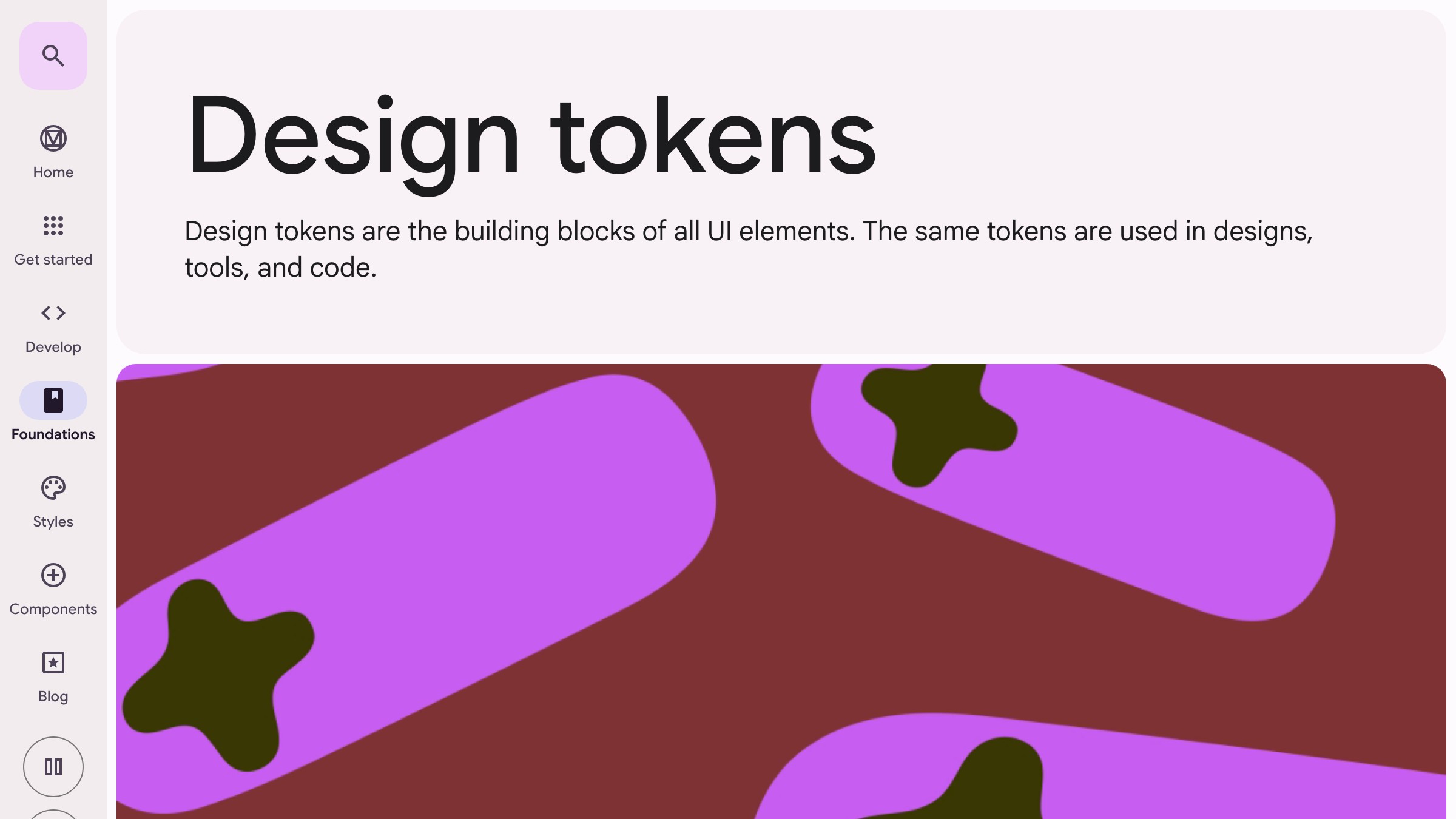
See the token system on m3.material.io
Tokens are the smallest thing a machine can read with certainty, so they are where machine readability is won or lost. A token is a named decision, color.surface.raised, space.4, radius.md, that points to a value.
This matters more now than it did two years ago because a name survives interpretation and a hex code does not. When a machine sees color.text.danger it knows the intent. When it sees #D72638 it knows a number and nothing else, and it will reuse that number in places you never meant danger to appear.
Real systems show what this looks like done right. Material Design 3 documents tokens as a tiered structure, reference to system to component, the kind of named hierarchy a tool can walk. Shopify Polaris ships its tokens as a published, queryable set rather than a Figma file someone has to eyeball.
| Design system | Owner | What it exposes for machines |
|---|---|---|
| Polaris | Shopify | Published, queryable tokens and a structured component catalog |
| Material Design 3 | Tiered design tokens, reference to system to component | |
| Primer | GitHub | Tokens and components shipped as versioned code |
| Atlassian Design System | Atlassian | Named tokens and documented component states across products |
Components and states the machine can resolve
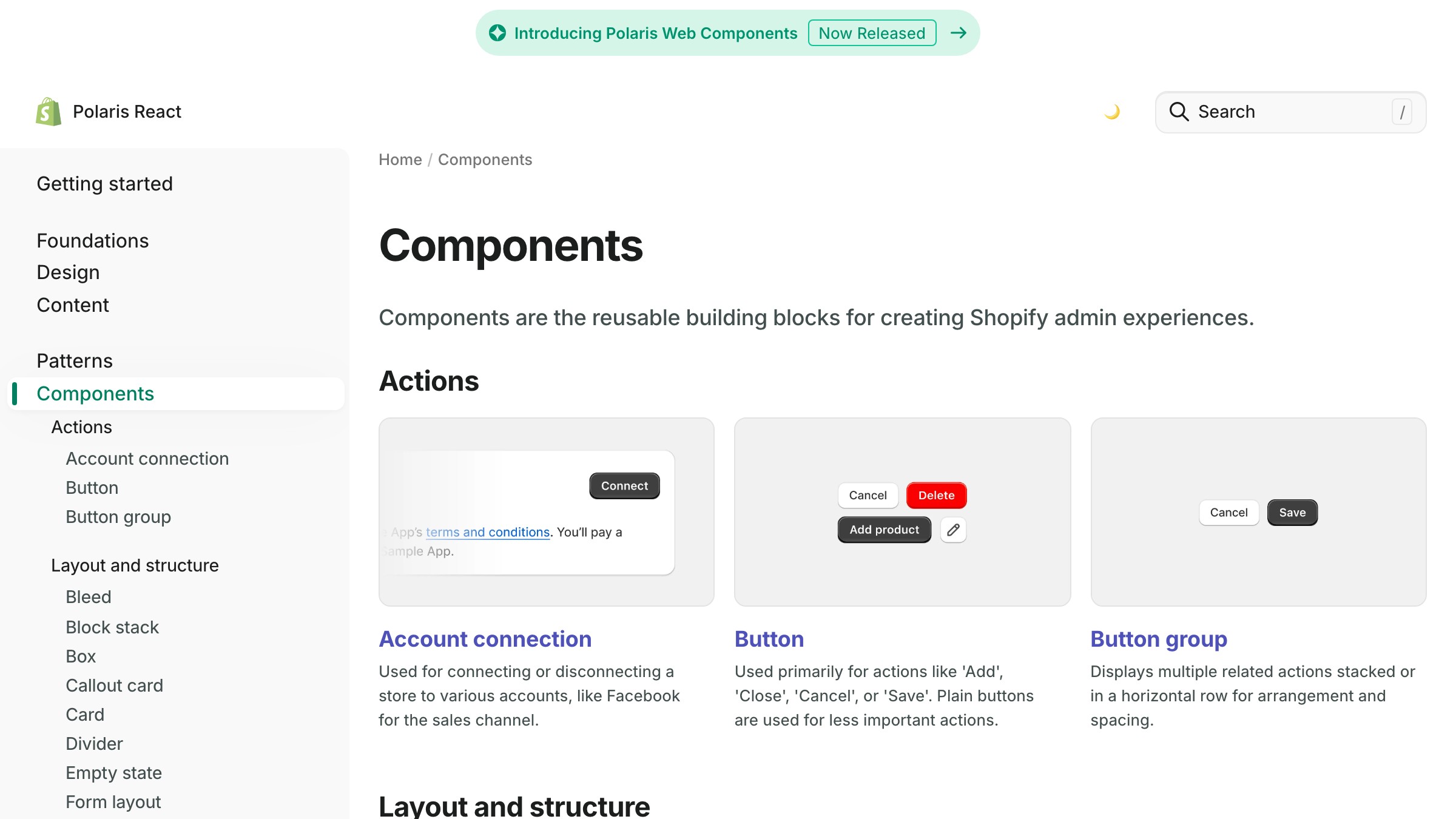
Browse the catalog on polaris.shopify.com
A component is machine readable only if the machine can tell its variants apart by name. One button with a variant property set to primary, secondary, or tertiary is legible. Five separate components named "Button", "Button 2", "Button final", "Button (new)" are a guessing game, and the machine will guess.
States are where most systems quietly fail. Designers draw the default state, ship it, and leave the rest as folklore in someone's head. A machine cannot read folklore.
Every interactive component needs these five states as explicit named variants:
- Default
- Hover
- Focus
- Disabled
- Error
If a state is not a named variant, the tool either invents one or omits it. Both are wrong.
How to make your system AI ready without rebuilding it
You do not need to burn the system down. Machine readability is mostly a cleanup job, and the highest-value fixes are structural, not visual.
Work this checklist against your real file:
- Replace every hardcoded hex, spacing, and radius value with a token reference
- Collapse duplicate components into one definition with named variants
- Add the missing states as explicit variants, default, hover, focus, disabled, error
- Delete or reattach every detached instance that contradicts the system
- Name things by intent,
text.dangernotred.600, so the name carries meaning - Write down the rules a human assumes but never documented, in text a tool can read
Do the structural fixes first, tokens and duplicate components, because those are what the machine reads before anything else. A legible-but-plain system beats a beautiful one full of detached one-offs every time a tool generates from it.
Brainy helps designers make sharper calls, faster, on the work that actually ships. Build alongside the Brainy creator community.

What this changes for the designer
The job moves up a level. Less time pushing pixels into a hundred screens, more time defining the system those screens compile from. The value of your work shifts to the decisions encoded in the structure.
This is good news for anyone who likes systems thinking and bad news for anyone whose value was speed of execution. A tool that builds from your tokens makes a sharp system-designer more valuable and a fast-but-sloppy one less so.
It also raises the cost of a lazy decision. A hardcoded color used to sit in one screen. Now it can propagate into every screen a tool generates, so the small shortcuts compound in a way they never did when a human was the bottleneck.
FAQ
Machine readable means every value is resolvable by name
Tokens replace raw values, components are defined once with named variants, and every state is explicit. If a machine has to interpret a pixel instead of reading a name, that part is not machine readable.
Do I need to rebuild my design system for AI tools?
No. Most of the work is cleanup, replacing hardcoded values with tokens, collapsing duplicate components, and naming states. A rebuild is rarely the answer. Tighten the structure first and the same file becomes far more legible to a tool.
Which design systems are good machine-readable references?
Shopify Polaris and Material Design 3 are the clearest public examples, since both publish structured tokens and documented components. GitHub Primer and the Atlassian Design System are strong references too, because both ship tokens and components as versioned code rather than static files.
Will AI design tools replace design-systems work?
The opposite. When a tool builds from your system, the system itself becomes the highest-value artifact. Repetitive screen-building gets automated, and the decisions encoded in tokens and components matter more, not less.
What breaks AI output the fastest?
Detached one-offs and undocumented states. A detached instance teaches the tool a contradiction, and a missing state forces it to invent one. Both produce confident, wrong output that looks right until you check it.
Structure first, then let the machine build
The shift is simple to state and uncomfortable to act on. A tool now reads your system and builds from it, so the system is the product and the screens are the byproduct.
Make the structure legible before you point any tool at it. Tokenize the values, dedupe the components, name the states, kill the detached one-offs. Do that and Figma AI, Claude Design, and whatever ships next become a force multiplier instead of a mess multiplier.
For more design-systems and tooling breakdowns, keep reading the Brainy papers. And if you want to build alongside the Brainy creator community, come see what we are making.
Brainy helps designers make sharper calls, faster, on the work that actually ships.
Brainy helps designers make sharper calls, faster, on the work that actually ships. See what we are building for creators.
Get StartedGet new papers by email
New Brainy papers in your inbox. Confirm once, unsubscribe anytime.