
My Company Put Me on an Extreme AI Token Diet. The Result Was Design Rot.
Enterprises now meter AI per designer with hard token rationing that quietly rots design quality. Here is how to cap spend without shipping worse work.
A hard monthly token budget per designer is a legitimate cost-control move, and it is also the fastest way to ship worse work without anyone deciding to.
When you ration tokens the blunt way, designers truncate context, skip the second pass, and let the model coast on its generic default. The line item drops by a number finance can see. The quality drops by a number nobody is measuring. That trade is what I am calling design rot, and it is my own name for what happens when two well-documented 2026 trends collide: companies clamping down on AI spend, and AI output collapsing to a generic floor when you starve it of context.
Neither trend is a secret. The bridge between them is the part nobody has connected yet. Let me connect it.
What an AI token diet actually is
A token is the unit AI providers bill by, roughly a word-piece, counted on both what you send the model and what it sends back. A "token diet" is a company capping how many of those each person can spend per month, the same way it caps cloud compute.
The prices are real, and they are why finance noticed. Per Anthropic's published API pricing, Claude Opus 4.8 and Claude Sonnet 5 are priced as shown below, and Claude Haiku 4.5 starts at $1 per million input tokens.
| Model | Input (per M tokens) | Output (per M tokens) |
|---|---|---|
| Claude Opus 4.8 | $5 | $25 |
| Claude Sonnet 5 (intro, through Aug 31 2026) | $2 | $10 |
| Claude Sonnet 5 (from Sep 1 2026) | $3 | $15 |
Source: Anthropic published API pricing.
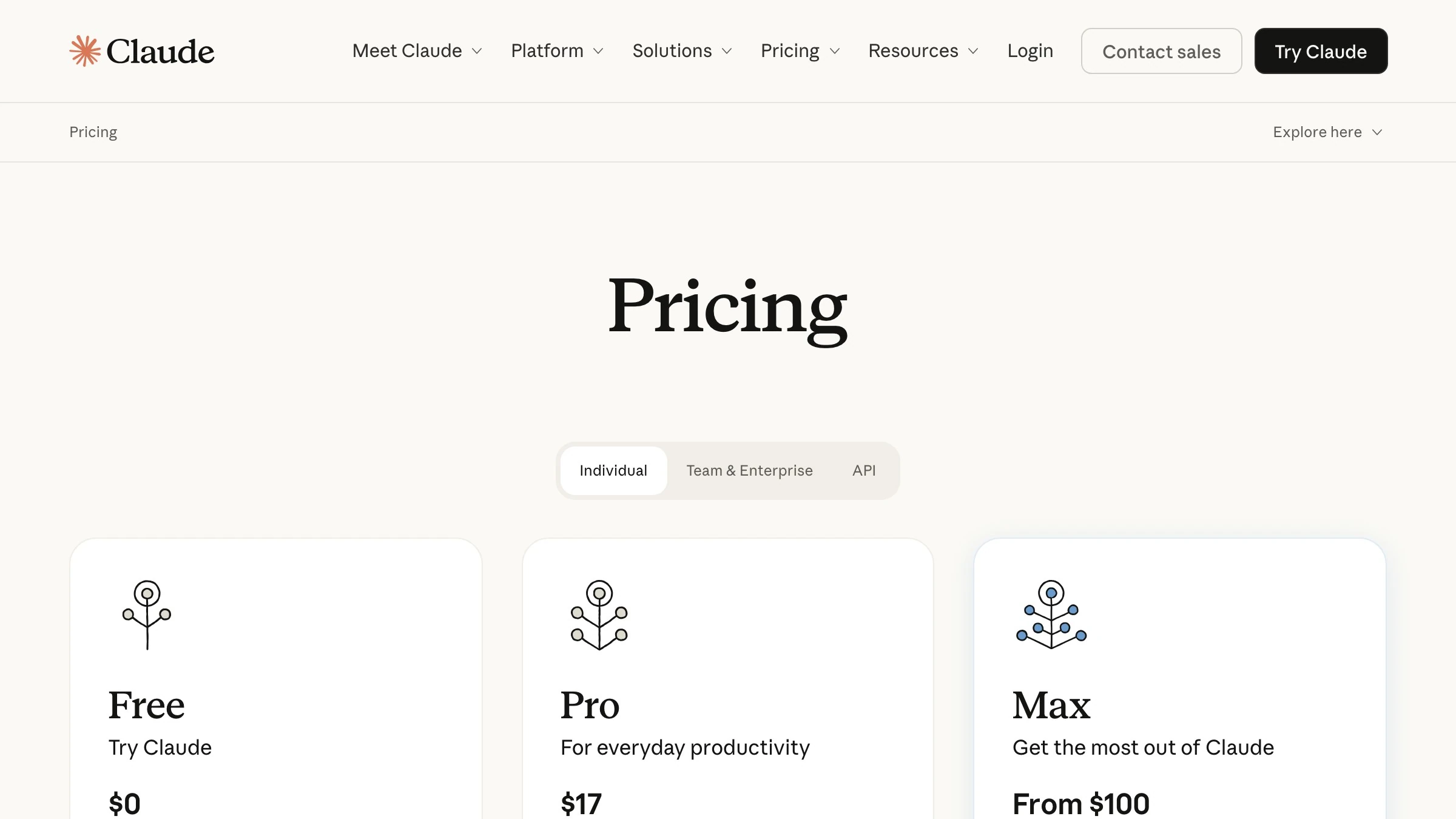
A single prompt is pennies. A designer feeding full brand guidelines, a component library, three reference screenshots, and five iterations is not. Multiply that by a team across a month and you get a bill worth capping. That part is honest.
The shift, AI spend became a per-designer budget
The whiplash is documented, four separate reports in 2026 tracking the same reversal.
| Source | What happened |
|---|---|
| TechCrunch (Lucas Ropek, June 2026) | "We now appear to be entering the era of token rationing." Some companies had built internal employee leaderboards to encourage AI usage before reversing course. |
| 404 Media (leaked internal Accenture meeting audio) | Accenture is trying to stop non-technical workers from "blowing through" its AI token budget on trivial tasks like converting PDFs to presentation slides, reporting "soaring token spend" months after warning staff they risked losing out on promotions if they did not use AI. |
| Forbes (Microsoft) | Wound down most internal Claude Code licenses across its Experiences and Devices division roughly six months after a December pilot, standardizing developers on GitHub Copilot CLI, with cost control cited alongside toolchain unification. |
| Forbes (GitHub) | Moved all Copilot plans to usage-based billing on June 1, 2026, replacing flat seat pricing with token-linked credits at one cent each. |
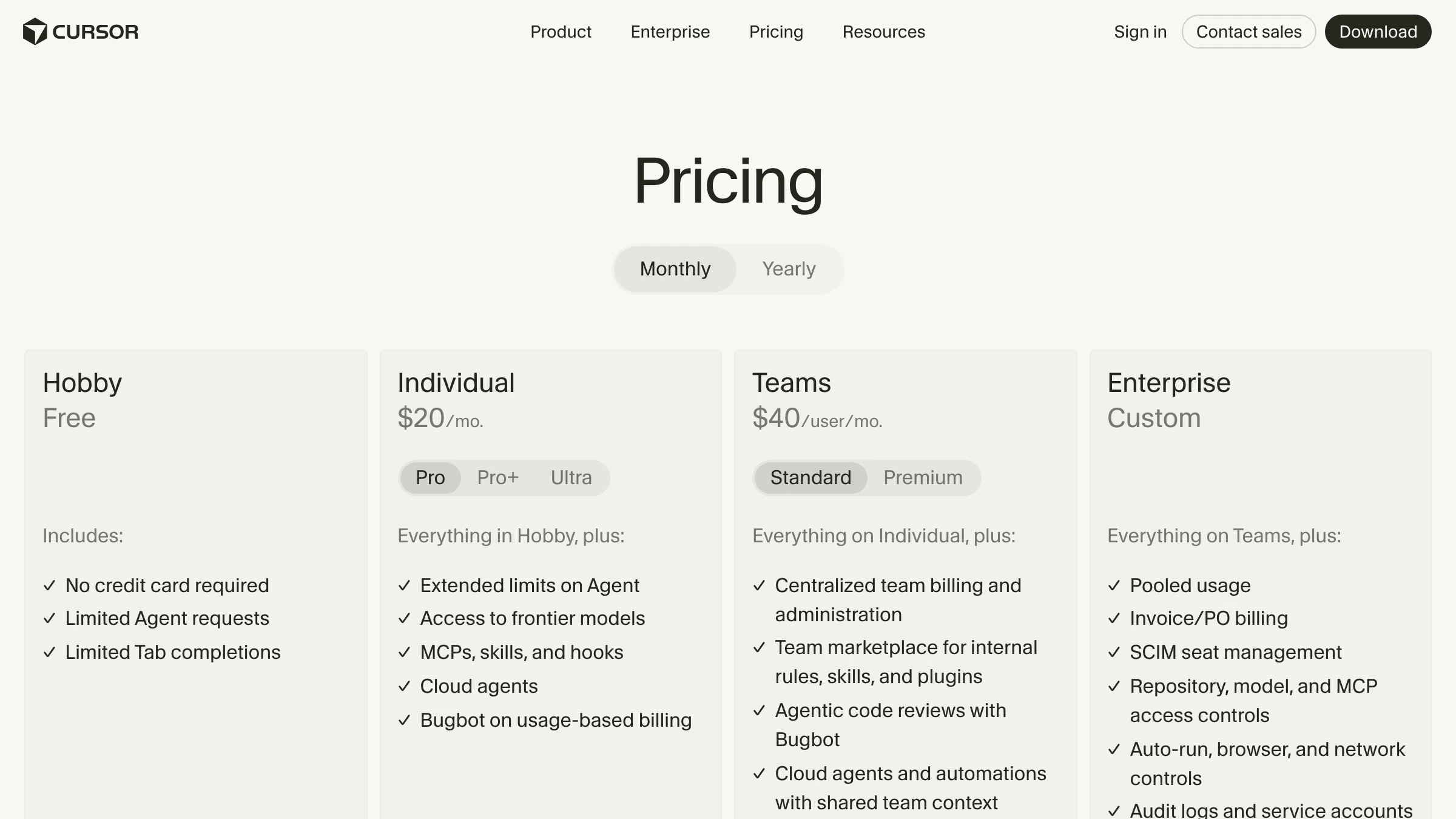
Here is the honest caveat: every one of those documented caps is company-wide or aimed at engineering. I could not find a source reporting a named company rationing tokens specifically for its design team. The metering model is arriving at design's door because that is where all software costs eventually land, not because a case study already wrote it up.
What design rot looks like
Design rot is not dramatic. It is the slow drift of "fine" work that used to be good work. It shows up as behaviors, and each behavior has a cost.
| Token-diet behavior | What it does to the work |
|---|---|
| Feeding a stripped prompt with no brand refs | You get the generic baseline, what one designer calls the "Slop Floor" |
| Truncating context to save tokens | The model forgets your rules mid-task and reverts to defaults |
| Accepting terse "caveman" output | You lose the reasoning that helps you catch its mistakes |
| Skipping iterations to conserve budget | Output that is technically correct but interchangeable |
| Dropping the accessibility pass on a tight month | Contrast and alt-text regressions slip through (illustrative) |

Two of those rows lean on named 2026 accounts. The "Slop Floor" is designer Nurkhon Akhmedov's term for "what the agent ships when you give it a prompt and no grounding." The "caveman" behavior is real: 404 Media reported that developers at OpenAI, Nvidia, and GitHub adopted a plugin that forces AI assistants to produce stripped-down output to cut token costs, "less 'you're right to push back,' more 'Hulk smash.'"
The accessibility row is the one I am flagging as illustrative, not reported. I found no documented case of a token cap causing an accessibility regression. It is a plausible symptom of the same mechanism, and I am naming it as a risk, not a fact.
Why rationing tokens backfires on the work
AI output quality is a function of how much context you give it, and tokens are context. Starve the input, and the model falls back to the most average thing it knows.
Built In's 2026 feature on AI design slop names the result precisely: interfaces that are "technically correct, but lack a specific brand identity or point of view, ultimately eroding user trust," a convergence the piece frames as design's new skeuomorphism. The industry's own numbers point the same way.
The AI in Design Report 2026 found that 91% of designers now use AI at least weekly, up from 54% in 2025, and that the average toolstack more than doubled from three tools to seven. The telling detail: the report names output quality as both the top reason AI design tools stick and the biggest complaint about them. Quality is the whole game, and it is the first thing a token diet cuts.
Akhmedov's account is the sharpest warning. He describes shipping the ungrounded floor output for two weeks before he noticed, because it looked fine.
"The MCP raises the floor," he writes. "Climbing toward the ceiling is still your job." A token cap pins you to the floor and calls it savings.
The shadow IT problem (personal API keys)
Some designers will quietly pay for their own access to keep quality up when the company cap makes the work worse. Expense a personal API key, run the real context on their own dime, ship better work than their metered colleagues.

I want to be precise, because the evidence here is a pattern, not a named case. I found no firsthand account of a designer expensing a personal key specifically to beat a token cap. What exists is workforce-wide shadow-AI data: RedTeam Partners, citing Salesforce's 2026 Workforce AI Survey, reports that 67% of employees use AI tools at work while only 18% of organizations have formal AI security policies. That gap is exactly where unsanctioned workarounds grow.
So treat this as a forecast grounded in a real governance gap, not a reported design-team scandal. The logic is hard to argue with.
If your cap punishes the people doing careful work, careful people route around it, and now your brand context is running through an unmonitored personal account. You did not save money. You lost sight of it.
The honest counterpoint (some rationing is fair)
Tokens are not free, and a lot of AI spend is genuinely wasted. Accenture's leaked "PDFs to slides" example is real waste: burning a premium model on a task that never needed one. That is worth stopping.
The bills are also real. Forbes noted GitHub's own reasoning for usage-based billing, that agentic workflows consume far more compute than a flat seat can absorb. And a governance analysis from iSimplifyMe reports that most enterprise AI agent rollouts exceed their pilot budget by four to eleven times within the first 90 days, driven largely by uncapped retrieval and tool-call recursion.
So the budget is not the villain. The blunt cap is. The fault is metering the thinking instead of the waste.
How to cap AI spend without rotting the work
Cap the waste, protect the context. The governance playbook already exists. It is written for engineers, and it maps cleanly onto design.

- Compress, do not truncate. iSimplifyMe's guidance is to summarize carried-forward context at checkpoints, "pay for the summary once instead of the raw transcript ten times," rather than hard-cutting the input the model needs.
- Route by task. Send throwaway work to a cheap model like Haiku and reserve the expensive model for work that ships. Not every task needs Opus.
- Escalate, do not silently fail. iSimplifyMe recommends that hitting a hard limit trigger a structured "need human review" response "rather than a billing event," because "users tolerate 'escalated to a human,' they do not tolerate silent overruns."
- Cap the team, not the task. A pooled monthly budget with visibility beats a rigid per-prompt limit that makes designers ration mid-thought.
- Measure rework, not just spend. The token you saved is not a saving if it comes back as a redo.
FAQ
Four questions come up every time this framing lands. Straight answers below.
Is "design rot" a real industry term?
No. It is my framing for this piece. The trends behind it are documented, corporate AI rationing and AI output converging to a generic floor, but no source I found connects them under a single name. Treat it as a lens, not a citable metric.
Are companies really rationing AI tokens in 2026?
Yes, though the documented cases are company-wide or engineering-focused. TechCrunch called it "the era of token rationing," 404 Media reported Accenture's crackdown, and Forbes covered Microsoft winding down Claude Code and GitHub moving Copilot to usage-based billing. None of those name a design team specifically.
Why does less context make AI design worse?
Because output quality tracks how much brand-specific grounding you feed the model. Strip it, and you get the average default. Built In calls the result technically correct work that lacks a point of view, and the AI in Design Report 2026 names output quality as the top complaint about AI design tools.
Should I just expense my own API key?
Understand the risk first. Shadow AI is widespread, only 18% of organizations have formal AI policies per the Salesforce 2026 survey, but routing brand context through an unmonitored personal account trades one problem for a bigger one. Fix the cap instead.
The takeaway (meter the spend, not the thinking)
A token budget is a reasonable answer to a real bill. A dumb token budget is a quiet tax on the one thing your design team is paid for.
The fix is not to fight the budget. It is to point it at the waste, the throwaway tasks, the uncapped recursion, the premium model doing junk work, and to leave the grounding alone.
Compress context instead of cutting it. Route cheap work to cheap models. Escalate to a human instead of failing silently. And track the rework, because the token you saved does not count if it comes back as a redo.
Cheap and safe is not the goal. Cheap and safe is how you get a portfolio full of work that passes review and moves nothing. Meter the spend. Leave the thinking alone.
Want design that clears the ceiling, not just the floor? Brainy builds it.
Get StartedGet new papers by email
New Brainy papers in your inbox. Confirm once, unsubscribe anytime.