
AI Slop Is the New Professional Taboo
Raw AI output is becoming the new clip art. Here is the line between AI-assisted work and AI slop, and the professional standard forming around disclose, transform, and own it.
Shipping raw AI output in client work is now read as low-effort, and it is starting to cost people their reputation. Not using AI. Shipping it raw, un-curated, straight from the prompt to the deliverable. That is the line that hardened almost overnight, and if you are billing for design, you are already being judged against it.
The thing that makes this awkward is that the tools are good. Good enough that you can hand a client something glossy in twenty minutes. The taboo is not about quality of pixels. It is about whether a human made a single decision after the model finished.
This paper covers three things:
- The norm that formed, and why it hardened overnight
- The actual line between AI-assisted and AI slop (with a table you can use)
- A standard you can adopt on your next deliverable
The manifesto that named it
Designer @sarahchen named it before most studios had named it privately: raw AI-generated work is "the new clip art." The thread pulled roughly 14.2k reposts and 890+ replies, with multiple agency owners agreeing inline. A feeling that had been building in private DMs got a name in public, and the name stuck.
Clip art is the right comparison. Clip art was never bad because it was made on a computer. It was bad because everyone had access to the same library, nobody changed anything, and you could spot it across a parking lot. Raw AI output is the same tell at a higher resolution.
What "AI slop" actually means (raw output is the new clip art)
AI slop is generated work shipped without human curation. That is the entire definition. It is not "art made with a model." It is the absence of judgment between the generation and the delivery.
You know it on sight because it has a grammar:
- Typography: whatever the model defaulted to, usually a too-clean sans with weird spacing
- Copy: plausible and says nothing, fits any brand in any sector
- Imagery: slightly melted, over-rendered sheen. Nothing references the actual brand, the actual product, or the actual year.
- Sameness: when the input is a generic prompt, the output lands in the same aesthetic basin everyone else's lands in. Your client paid for differentiation and got the median of the training set.
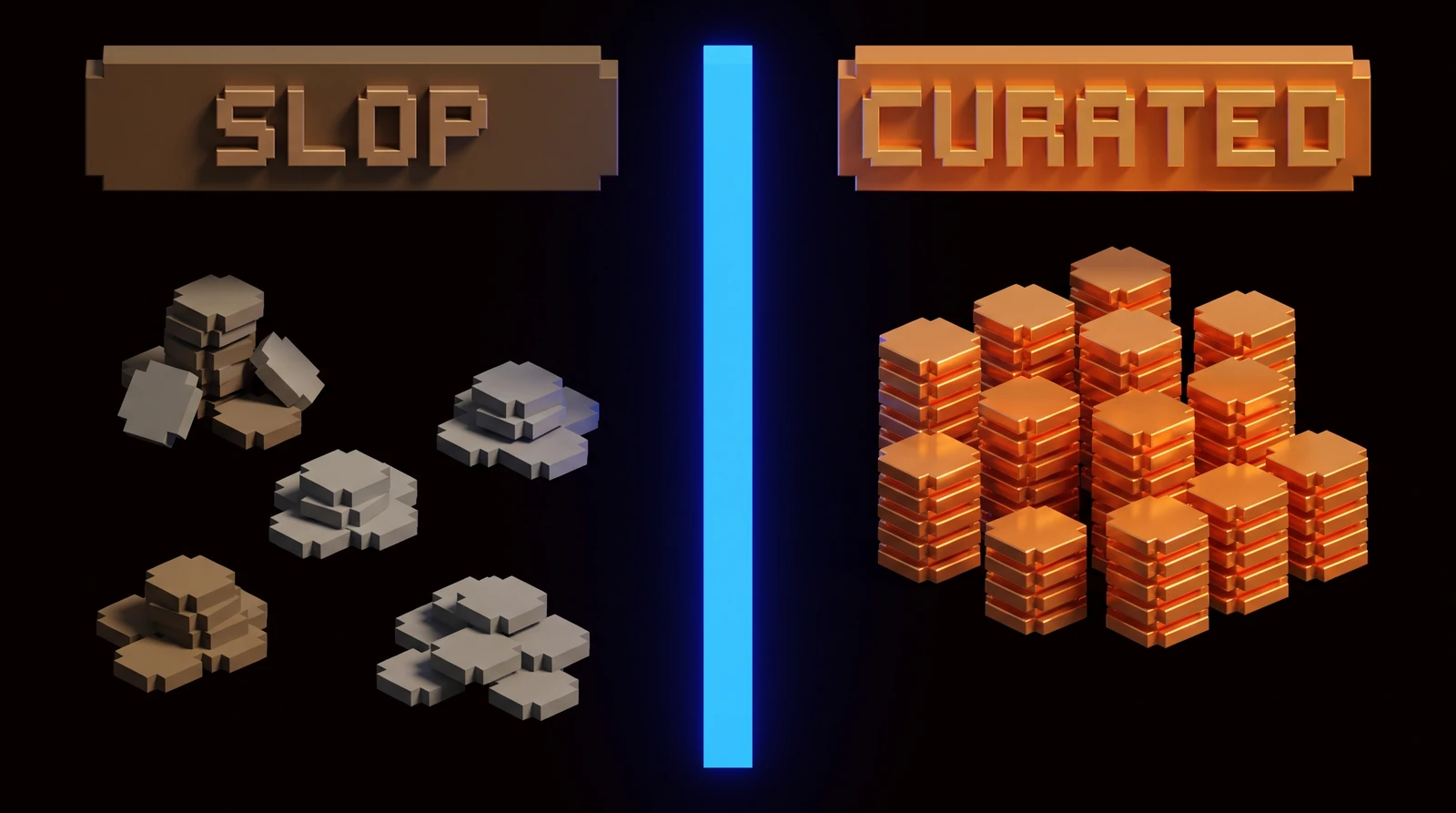
Slop vs. curated AI work, signal by signal (the honest table)
The difference between slop and curated AI work is observable, and clients are learning to read it. Use this as a pre-flight check on anything you are about to send.
| Signal | AI slop | Curated AI work |
|---|---|---|
| Typography | Model default, awkward kerning, no hierarchy decisions | Chosen type, fixed spacing, intentional scale |
| Specificity | Generic, could be any brand in any sector | Names the real product, audience, and moment |
| Brand fit | Floats free of the brand system | Pulled into the client's palette, voice, and rules |
| Accountability | "The AI made it," nobody owns the choices | A named human stands behind every decision |
| Detail under zoom | Falls apart on inspection, melted edges, fake text | Holds up close, errors hunted and fixed |
| Variation | One pass, first result, shipped | Many passes, edited, recombined, refined |
The reason this table is worth saving is that it works in both directions. It tells you what reviewers are scanning for, and it tells you exactly where to spend your time so the work passes.
The line is judgment, not abstinence (AI-assisted is not AI slop)
Swearing off AI is the wrong answer. The backlash makes people overcorrect, and designers who pretend they generated nothing are about to look as silly as designers who pretended they did not use Photoshop in 1995.
AI-assisted work is not the problem. A designer who generates forty directions, kills thirty-eight, rebuilds the survivors in the brand system, fixes the type, and signs their name to the result has done the job. The model was a faster pencil. The judgment was theirs.
The taboo is specifically about handing the client the model's first answer as if it were yours. The line is not "did you touch a model." The line is "did you make it yours after the model did its part."
This matters for how you talk about your process too. Hiding the AI reads as shame. Owning the curation reads as craft.
Clients are not afraid you used a tool. They are afraid they are paying designer rates for a prompt they could have typed themselves.
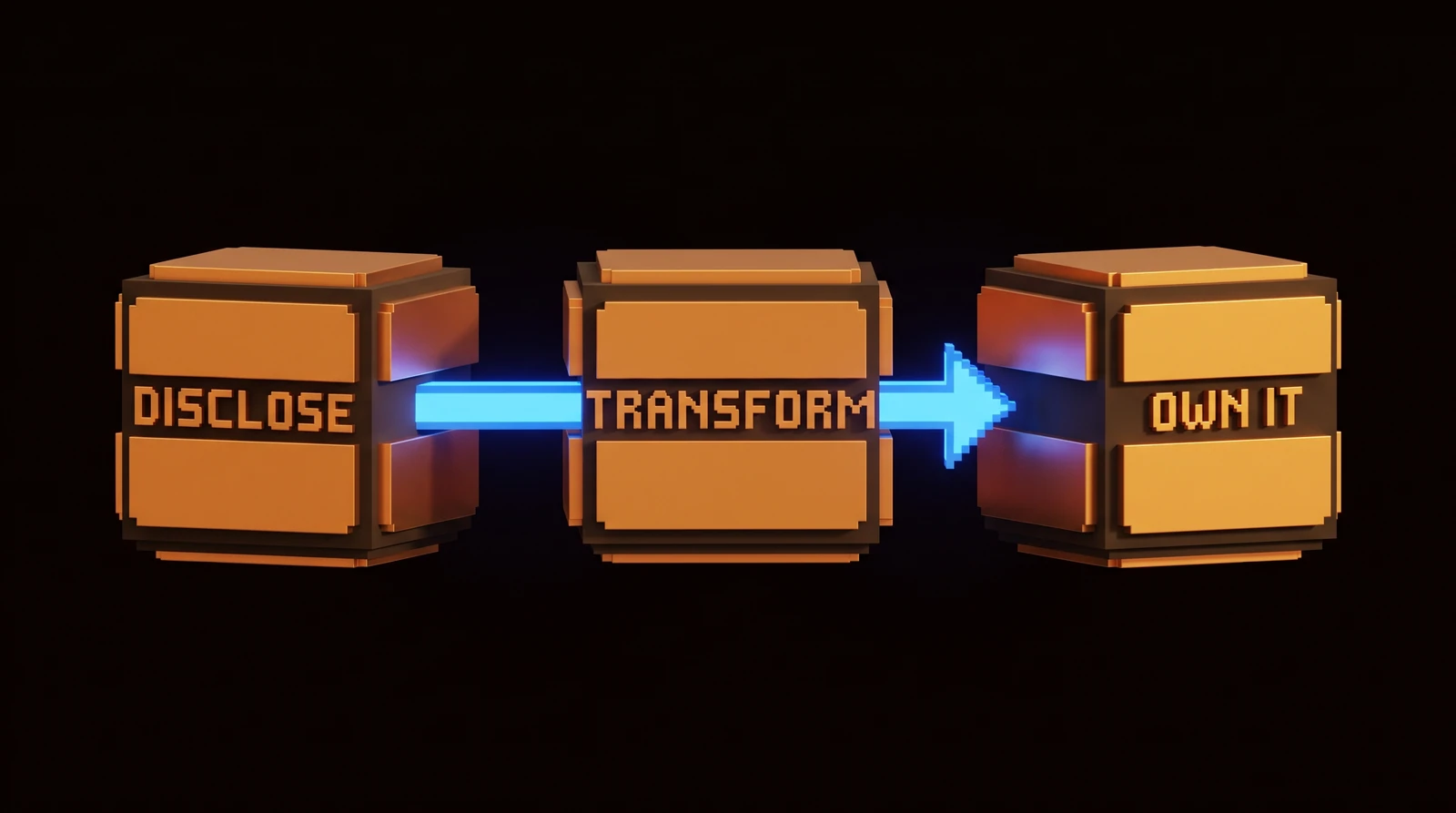
The standard forming: disclose, transform, own it
A practical standard is settling into place across studios that take this seriously. Three moves. You can adopt all three this week.
Disclose. Tell the client where AI entered the process. Not a legal disclaimer, a sentence. "We generated initial directions with AI, then rebuilt the chosen route by hand."
Disclosure kills the gotcha. Nobody can "expose" what you said out loud.
Transform. Do real work after the generation. Rebuild the layout, replace the type, fix the color, rewrite the copy, hunt the artifacts. If a stranger could get your exact output from the same prompt, you have not transformed anything yet.
Own it. Put your name on the decisions and stand behind them. "The AI did it" is not a defense, it is a confession that nobody was in charge. Accountability is the thing a model structurally cannot offer, which is exactly why it is the thing you sell.
How to stay on the right side of the line (a checklist)
Run this before anything leaves your hands. If you cannot check every box, it is not ready.
- I can name at least three specific decisions I made after the generation finished.
- The typography is chosen, not the model default, and the spacing is fixed.
- Every element sits inside the client's brand system, not floating in generic AI aesthetic.
- I checked the work at full zoom and fixed the melted edges, fake text, and warped details.
- The copy names the real product, audience, and moment instead of saying plausible nothing.
- I generated multiple directions and killed the weak ones, rather than shipping the first result.
- I have told, or am ready to tell, the client where AI entered the process.
- My name is on this, and I can defend every choice in the room.
FAQ
Is it now unprofessional to use AI in client work?
No. Using AI is fine and increasingly expected. Shipping its raw, un-curated output as your finished deliverable is what reads as unprofessional. The taboo is about the absence of human judgment, not the presence of a tool.
What exactly counts as "AI slop"?
Generated work delivered without meaningful human curation. The tells are model-default typography, generic copy that fits any brand, imagery that melts under zoom, and no person accountable for the choices. If your output is identical to what anyone else would get from the same prompt, it is slop.
Do I have to disclose that I used AI?
Disclosure is becoming the professional norm, and it protects you. A single plain sentence about where AI entered your process removes any future "gotcha" and reframes the conversation around the curation you did. Hiding it reads as shame; owning it reads as craft.
How much do I have to change before it stops being slop?
Enough that a stranger with the same prompt could not reproduce your result. That usually means rebuilding the layout in the brand system, replacing the type, fixing color and artifacts, and rewriting the copy to name the real product and audience. If the model's first answer is still visible underneath, keep going.
Will clients actually be able to tell the difference?
They are learning fast, and the signals in the table above are exactly what they scan for. More importantly, the people who judge your reputation publicly already can. The cost of being associated with slop is now real, which is the whole reason this norm hardened.
Does this slow me down so much that AI stops being worth it?
No. AI still does the slow part, generating volume and options, faster than you ever could by hand. Curation is where your time goes now, and that is the part worth paying for. You are trading speed on the commodity step for quality on the judgment step.
The takeaway (curation is the value)
Raw output became free, identical, and recognizable, so shipping it untouched became the new clip art. What separates a designer from a prompt is no longer the ability to make an image. It is curation, judgment, and the willingness to put your name on the result.
@sarahchen's thread named the feeling, but the feeling was already there. The market is repricing what design labor is. The generation is the cheap part now. The decisions are the expensive part, and decisions are the only thing a client cannot get from a model on their own.
So adopt the standard. Disclose where AI entered, transform the output until it is genuinely yours, and own every choice. Do that and you are not fighting the tools, you are doing the one job the tools created room for.
Curation is the value. It always quietly was.
Need work that was actually made, not just generated? Hire Brainy.
Get StartedGet new papers by email
New Brainy papers in your inbox. Confirm once, unsubscribe anytime.