The Solo Design Studio: How One Designer Runs a Million-Dollar Practice With AI in 2026
AI killed the production bottleneck that capped solo design practices. Here is the working economic model for a one-person design studio in 2026, the revenue mix, the cost stack, the tools, and the math that gets a solo designer to a million-dollar year without employees.
The solo design studio used to cap out around three to four hundred thousand a year, and the cap was not talent, it was production capacity. One designer could only push so many pixels in a week, and the work that needed a junior either did not happen or got billed at a rate that crushed the margin. AI removed that ceiling in 2025. The solo studios that rebuilt around AI in the eighteen months since are clearing seven figures with no employees, no office, four to six clients, and a software stack that costs less than rent in a midsize city.
This is not a fantasy and it is not for everyone. A million-dollar solo studio in 2026 still demands real craft, real sales chops, and the judgment to say no to most inbound. But the economics are real and the operators have names. Pieter Levels has been the proof point for over a decade. Marc Lou ships products and content as a one-person operation. Brian Lovin runs work that looks like a small studio's output. The Cluely founders went from zero to category leader on a tiny team. The pattern is reproducible by any designer with senior craft willing to operate like a business.
The bottleneck that capped solo studios is gone
Production capacity used to set the ceiling. A solo designer who billed at a senior rate could do maybe two retainers, one big project a quarter, and a handful of audits before the calendar broke. The fix was to hire, which meant becoming a manager, which meant slower work, which meant losing the thing that made the studio worth hiring in the first place. Most solo designers chose to stay small.
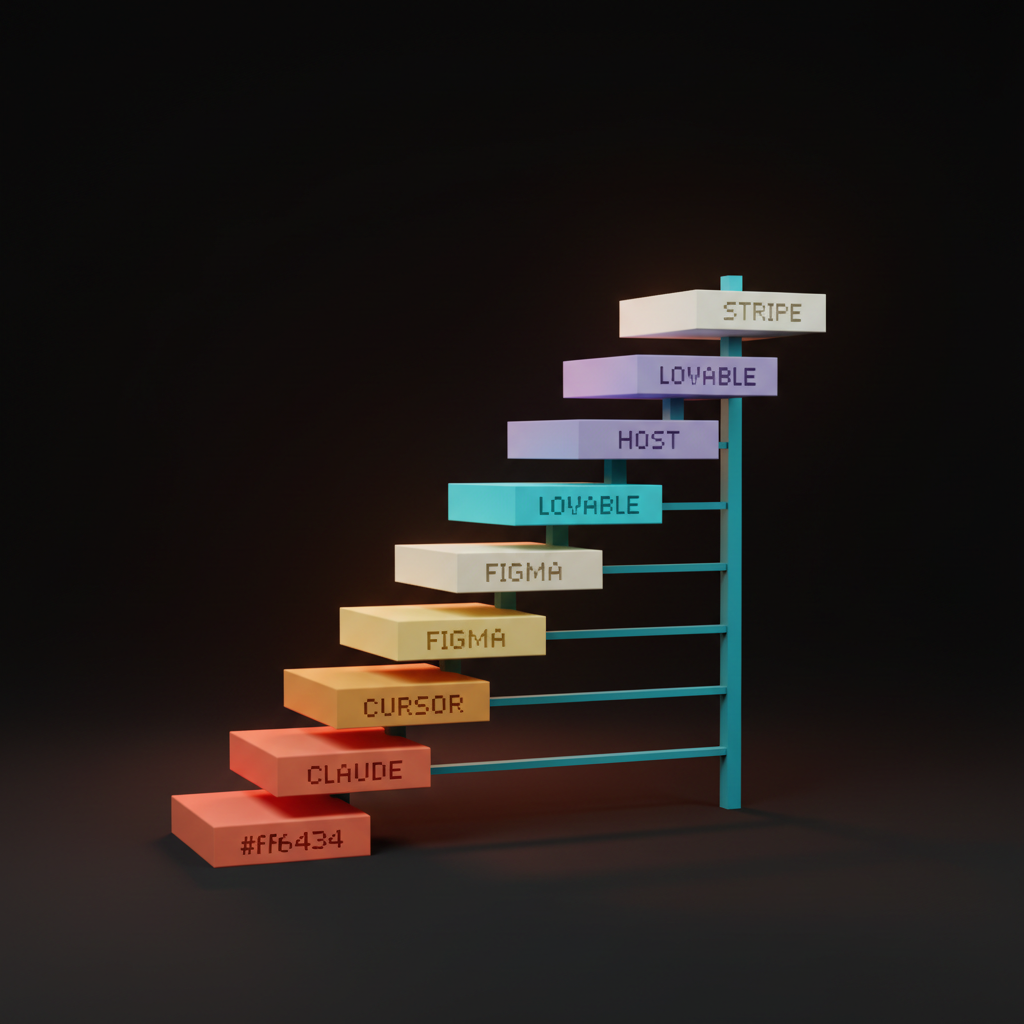
AI changed the math in late 2024 and 2025. Claude, Cursor, Figma AI, and Lovable absorbed the production layer that used to need a junior. A solo designer in 2026 ships the same volume of work a four-person studio shipped in 2022, at higher quality and faster turnaround, because AI never sleeps and never asks for feedback on a Friday afternoon.
The revenue mix that gets a solo studio to a million
A million-dollar solo practice in 2026 runs on four revenue lines stacked together, not one big retainer and a prayer. The mix is what makes it durable. Any single line can wobble and the practice still pays. Most solo designers run one line. The ones clearing seven figures run all four.
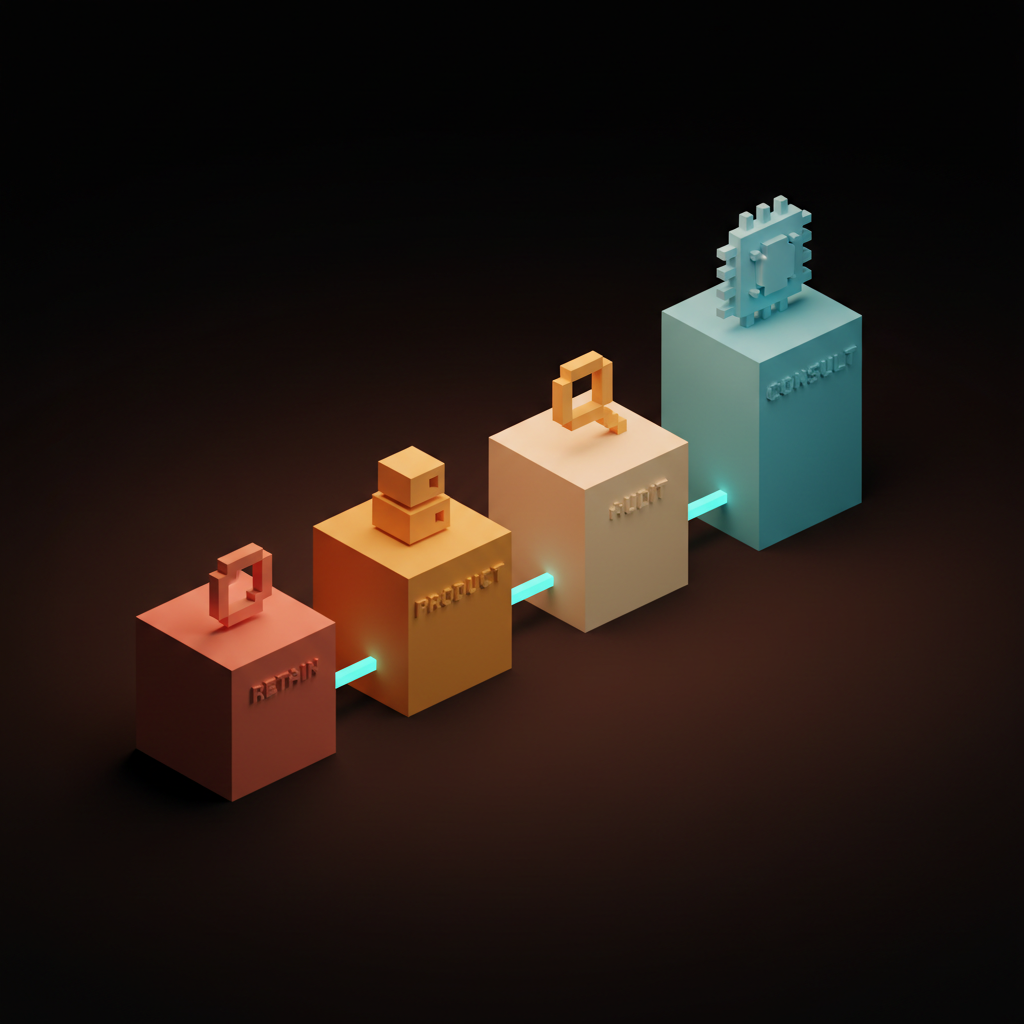
The four lines are retainers, productized services, brand audits, and AI workflow consulting. Each earns a different rate, attracts a different client, and protects against a different risk. Retainers carry the floor. Productized services carry the margin. Audits carry the top of funnel. Consulting carries the premium.
Retainers carry the floor
Two or three monthly retainers at fifteen to thirty thousand each are the floor of a serious solo studio. They buy the time to build everything else. A clean retainer in 2026 is a fixed monthly fee for a defined scope, usually one or two design surfaces, with a hard cap on requests and meetings.
The math is simple. Three retainers at twenty thousand each is seven hundred twenty thousand a year. Most studios that hit seven figures do it with retainers covering sixty to seventy percent of revenue. Without retainers the practice runs on fumes and the calendar runs the designer instead of the other way around.
Productized services carry the margin
Productized services are the highest-margin lane in 2026, because AI compresses the production cost to near zero and the price stays where senior craft sets it. A productized service is a fixed-scope deliverable at a fixed price with a fixed turnaround. Brand systems with prompt packs at twelve to twenty-five thousand. Landing page sprints at eight to fifteen thousand. Design system kits at fifteen to thirty thousand. Each ships in two to four weeks and AI does eighty percent of the labor.
The margin sits at seventy to eighty-five percent. The same deliverable in 2022 ran at thirty to forty percent once a junior or contractor was paid. This is the lane where AI shows up in the bank account.
Brand audits carry the top of funnel
A scoped brand audit at two to five thousand is the cleanest top-of-funnel offer a solo studio can run, because it converts cold prospects into retainer or product clients. The audit is a one to two week engagement, a single deliverable, and a clear set of recommendations. The client gets a real artifact. The studio gets a paid sales call.
Audits convert at thirty to fifty percent into a larger engagement when the work is real. The pricing is also why they work. A two-thousand-dollar audit feels like a yes for a serious client and a no for a tire-kicker, which is exactly the filter a solo studio needs.
AI workflow consulting carries the premium
AI workflow consulting is the premium lane that compounds, and most solo designers leave it on the table. The pitch is simple. The studio already runs a working AI design pipeline, the client wants one, the studio sells the playbook plus implementation at fifteen to fifty thousand per engagement. The deliverable is a documented workflow, a Skill pack, a prompt library, and a working integration into the client's stack.
This is where Claude Skills and Figma MCP turn into a productized service line. Margins sit at eighty to ninety-five percent because the studio is selling its own infrastructure twice.
The cost stack a 2026 solo studio actually runs
The full cost stack of a 2026 solo studio sits between fifteen hundred and three thousand a month. Every line is earned. Claude API one fifty to four hundred. Cursor seat at twenty. Figma at forty-five. Lovable at twenty-five to fifty. Hosting fifty to two hundred. Notion at ten. Linear at ten. Stripe Atlas accounting and tax at two to four hundred amortized. A few productivity tools at fifty to a hundred.
A solo studio in 2026 runs on under three thousand a month in software, no rent, no payroll, no office. A million in revenue against thirty to forty thousand in operating costs is the kind of margin that used to require a venture-backed product. Now it requires a designer who knows how to ship.
If you want help building this stack and the playbook that runs it, hire Brainy. ClaudeBrainy ships Skill packs and prompt libraries that turn AI into the second person in the room. BrandBrainy ships the brand and craft layer that makes a solo studio feel like a real practice instead of a freelancer with a logo.
The software stack a solo studio actually uses
The full stack a serious solo studio runs in 2026 is seven tools, not seventy, and every one of them earns its seat. Figma for design. Claude for thinking, writing, asset generation, and Skill packs. Cursor for code. Lovable for fast prototypes the client can click. Notion for client docs and the internal knowledge base. Linear for project tracking. Stripe for payments and Stripe Atlas for the company itself.
Anything outside this list is a distraction. The trap most solo designers fall into is collecting tools instead of using them. Seven tools run hard beats forty tools half-configured. The other trap is refusing to learn enough code to use Cursor and Lovable seriously, which is the same as refusing to ship product. Vibe coding is the entry point and it is not optional anymore.
What AI does and what the designer does
The split between AI work and designer work decides whether a solo studio scales or stalls. AI does production. First drafts of layouts, components, asset variants, copy, code scaffolds, research synthesis, meeting notes, proposal drafts. Anything with a clear template and input. AI is faster than any junior and costs a fraction of a salary.
The designer does taste, strategy, client trust, and final editing. Picking the angle. Reading the room. Saying no when the brief is wrong. Choosing the type pairing AI would never choose. The work that compounds and the work the client is actually paying for. The studio works because the designer sits at the top of the stack and uses AI as the team underneath, not as a replacement for craft.
The math that gets a solo studio to a million
The math is not magical. Three retainers at twenty thousand a month is seven hundred twenty thousand a year. Eight productized engagements at twenty thousand is one hundred sixty thousand. Twenty audits at three thousand is sixty thousand. Two consulting engagements at thirty thousand is sixty thousand. Total is one million on the line, and the calendar is not full.
The ceiling is the designer's calendar, not production capacity. AI absorbs the work that used to break the calendar. The designer spends time on sales, judgment, and the ten percent of the craft AI cannot fake. This is what AI-augmented design pricing actually unlocks at the solo level.
The named operators already doing it
This is not theoretical. A small number of named operators are running solo or near-solo practices clearing seven figures in 2026. Pieter Levels has been the public proof point since the mid-2010s, running Nomad List, Remote OK, and a stack of indie products solo. Marc Lou ships ShipFast, Indie Page, and a content engine as a one-person operation, and his revenue is public. Brian Lovin runs design and product work that looks like a small studio's output.
The Cluely founders built a category leader on a tiny team, and the design operation underneath is closer to one person plus AI than to a traditional studio. The Indie Hackers community is full of operators clearing high six and seven figures solo. The pattern is the same. Sharp focus, a small menu, AI as the production layer, and a refusal to hire just because revenue says they could.
The honest tradeoffs
A million-dollar solo studio is real, but the tradeoffs are real too. There is no team to lean on when the work gets hard. The designer owns sales, and sales is the part most designers do not want to own. The designer owns QA on every deliverable, and AI output without senior QA is junk that ships and embarrasses the studio. The designer says no a lot, because every yes that does not fit the model breaks the model.
There is no boss, no standup, no shared culture, no one to celebrate with. Some designers thrive in that quiet. Many do not. The studio also depends on a single person staying healthy, focused, and motivated for years, which is a real operational risk no LLC can solve. AI does not make this practice bigger. It makes it possible at a scale that used to require a team.
FAQ
Can a solo designer really make a million dollars a year in 2026?
Yes, but it requires senior craft, real sales chops, and a stacked revenue mix of retainers, productized services, audits, and AI workflow consulting. The operators doing it are named and public, including Pieter Levels and Marc Lou. AI removed the production ceiling that used to cap solo studios at three to four hundred thousand.
What tools does a solo design studio actually need in 2026?
Seven tools. Figma, Claude, Cursor, Lovable, Notion, Linear, and Stripe. Total cost is fifteen hundred to three thousand a month including Claude API usage, accounting, and Stripe Atlas. Anything beyond this list is a distraction.
What does AI do versus what the designer does?
AI does production. First drafts, asset variants, code scaffolds, research synthesis, proposal drafts, meeting notes. The designer does taste, strategy, client trust, and final editing. AI is the team, the designer is the practice.
Is this realistic for a designer just starting out?
No. A solo studio at this scale assumes senior craft, a network, and the ability to close five-figure deals. Junior or mid-level designers should focus on the new design ladder first, then build the solo practice from a senior position.
What is the biggest risk of running a solo studio at this scale?
Operational fragility. Everything depends on one person staying healthy and motivated for years. The mitigation is documented systems, clean retainers, twelve months of operating reserves, and a willingness to pause new work when the calendar breaks.
How to build the solo studio this quarter
Three moves. First, audit the current revenue mix against the four-line model. If retainers are not at the floor, close one or two more this quarter. If productized services are not on the menu, write one this week and price it at a fixed scope. Second, install the seven-tool stack and delete everything else. Run it hard for thirty days before adding anything.
Third, write the AI workflow that already runs the practice into a Skill pack and a prompt library, then sell it as a consulting engagement to the next client who asks how the studio ships so much work. Productizing the playbook is the highest-leverage move a solo designer can make in 2026.
If you want help building the practice, hire Brainy. BrandBrainy ships the brand and craft layer that makes a solo studio feel like a real practice. ClaudeBrainy ships Skill packs, prompt libraries, and Figma MCP integrations that turn AI into the second person in the room. The solo studio is the most leveraged shape a designer can run in 2026, and the next eighteen months are the window to build it.
Building a solo studio and want the AI workflow stack that gets it past the production ceiling? BrandBrainy ships the brand and craft layer that makes a solo studio feel like a real practice. ClaudeBrainy ships Skill packs, prompt libraries, and Figma MCP integrations that turn AI into the second person in the room.
Get StartedGet new papers by email
New Brainy papers in your inbox. Confirm once, unsubscribe anytime.