
Vibe Coding for Designers: How to Ship Real Apps With v0, Bolt, Lovable, and Cursor
A working 2026 playbook for designers shipping real apps with AI dev tools. v0 vs Bolt vs Lovable vs Cursor vs Replit Agent vs Windsurf, the prompt patterns that produce shippable code, the design-system handoff flow, and the realistic ceiling on solo design-driven builds.
Vibe coding for designers is the practice of describing a product in plain English, letting an AI dev tool turn the description into running code, and shipping the result. In 2026 it is the most leverage a designer has ever had over a real working product. It is also the easiest way to ship a beautiful demo that crumbles the moment a real user shows up.
The difference is not the model, it is the workflow. Pick the right tool for the layer, write prompts like a design brief, treat the AI as a junior dev who needs a system, and you ship 80 percent of a real product solo before a senior engineer touches it. Skip those steps and you ship a slide deck that compiles.
This piece is the playbook. Seven AI dev tools, the layer each wins, four prompt patterns, the Figma-to-repo handoff, the gotchas every designer hits in week two, and the honest line on where the solo ceiling sits.
Vibe coding is a workflow, not a vibe
Vibe coding got its meme moment in early 2026 from Andrej Karpathy describing "fully giving in to the vibes" and accepting whatever the model shipped. The practice is older and more disciplined than the name suggests.
The loop is simple. Describe a feature. The model translates it into code. You run it, describe what is wrong, the model edits. The design-build-feedback cycle that used to take a week now takes an afternoon. Output is real code in a real repo.
Why designers are the unlock for vibe coding
Designers already spec UI, articulate intent, and run feedback loops. Vibe coding rewards those muscles.
A junior PM prompts "build me a todo app with a clean UI". A designer prompts the framework, the component library, the layout grid, the type scale, the empty state, and the destructive confirmation pattern. Same model, different operator. AI dev tools fail the way junior designers fail: spacing off, hierarchy muddy, motion generic, empty states missing. A designer running a vibe-coding session is doing real-time UI critique on every output. That is the loop that produces shippable work.
The seven tools that actually ship code
v0 from Vercel, Bolt from StackBlitz, Lovable, Cursor, Claude Code, Windsurf from Codeium, and Replit Agent. Every other AI coding tool is a wrapper around one of these or a feature competing with one specific layer.
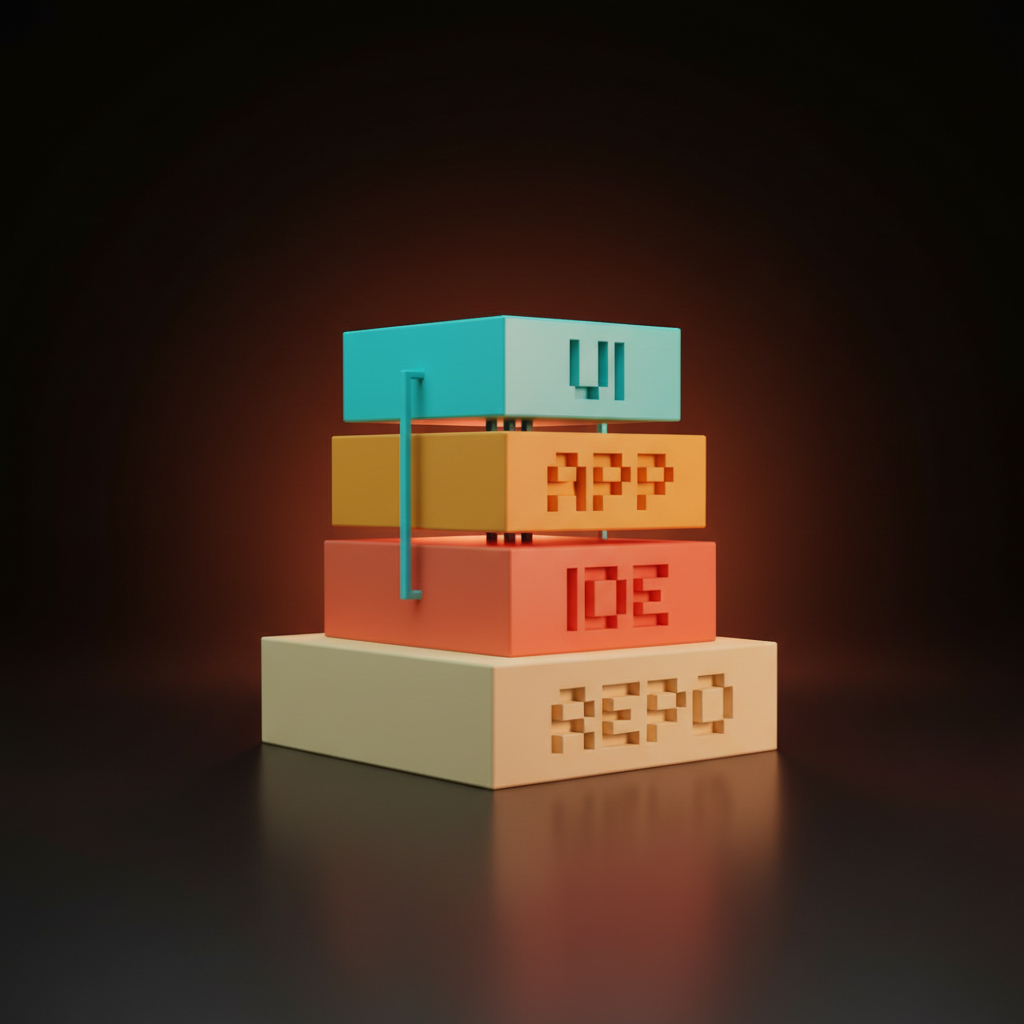
The trap is treating them as interchangeable. Each wins a specific layer and loses badly in the wrong context. Pick by the layer, not by brand recognition.
v0 wins the design-faithful component layer
v0 from Vercel is the closest thing to a Figma export that actually ships. It speaks shadcn and Tailwind natively, so the output drops into a Next.js codebase without a translation layer.
Use v0 for "design this page, this entire marketing site". Spacing, type, and component conventions are right out of the box. The catch: v0 is a UI tool, not a full-stack tool. It does not run your database, manage auth, or wire payments. Treat v0 as the component generator, not the product builder, and it outperforms every other tool on UI fidelity.
Bolt wins the full-stack prototype in a browser
Bolt from StackBlitz is the fastest path from prompt to a running full-stack app you can share by URL. It runs Vite, Next.js, Astro, Remix, or SvelteKit in a WebContainer in the browser. No local install, no Docker, no cloud setup.
Use Bolt for "show me a working prototype of this idea by tomorrow". Right tool for the early-stage demo, the validation prototype, the investor walkthrough. Bolt apps are great prototypes and weak production builds. Once the app outgrows the WebContainer you are exporting it anyway.
Lovable wins the founder MVP
Lovable is built for the non-engineer founder, which is exactly the design lead trying to ship a product without hiring a dev shop. Sweet spot: the full-stack MVP with auth, a database, and CRUD wired in.
Use Lovable for "build me a v1 of this product that handles real users and real data". Output is a Supabase-backed app with auth, role-based access, and a deployable URL. Lowest cost in the category from zero to a working signup-and-data product. Lovable apps drift past v1. Ship the MVP in Lovable, harden it elsewhere.
Cursor wins once the codebase is real
Cursor is where vibe coding stops being a toy and starts being a job. It edits a real repo with a real diff. The agent reads existing code, follows existing patterns, and ships changes that pass existing tests.
Use Cursor for "extend this product, fix this bug, add this feature to a codebase someone else wrote". Agent mode runs multi-file edits and tab completion is the best in the category. Cursor is a poor zero-to-one tool. Use it the moment you have a repo, and stay there.
Claude Code wins the headless agent layer
Claude Code is the terminal-first agent that handles refactors, migrations, and multi-file work better than any IDE alternative. It runs in your terminal, reads your filesystem, and ships changes like a senior engineer would: read, plan, edit, test, commit.
Use Claude Code for "rename this concept across forty files", "migrate this library from Tailwind v3 to v4", "audit this codebase for accessibility violations and fix them". Every tool call streams, every edit shows a diff. Same trust patterns the cleanest AI agent UI design patterns ship. Claude Code is not a UI builder, it is a code agent.
Windsurf and Replit Agent fill the corners
Windsurf from Codeium is the polished IDE alternative for designers who want a calmer environment than Cursor. Use Windsurf when Cursor feels too aggressive.
Replit Agent is the cloud sandbox for a build that needs zero local setup. Browser-only, no terminal, no install. Right tool for the hackathon weekend or "I have an iPad and want to ship something". Wrong tool for production-grade work. Zed deserves a mention as the high-performance editor with a growing AI agent layer.
Pick the tool by the layer, not the hype
The right tool depends on what you are building today, not which one trended on X this week.
Marketing site. v0. Prototype with a backend by Friday. Bolt. Real product with users and data and you are not an engineer. Lovable. Extend an existing codebase. Cursor. Refactor or migration across many files. Claude Code. Calmer agent. Windsurf. Zero local setup. Replit Agent.
Teams that get vibe coding wrong pick one tool and force it into every layer. v0 is not a product builder. Bolt is not a production runtime. Lovable is not a refactor agent. Match the tool to the layer and the workflow stops fighting you.
Want a vibe-coded product that survives a real engineer's review? Hire Brainy. AppBrainy ships full product engineering for teams ready to take a vibe-coded MVP to a real launch, ClaudeBrainy ships Claude Skills and prompt libraries tuned for design-driven builds.
Four prompt patterns that produce shippable code
Spec like a design brief, not like a wishlist. Four patterns separate code that ships from code that demos.
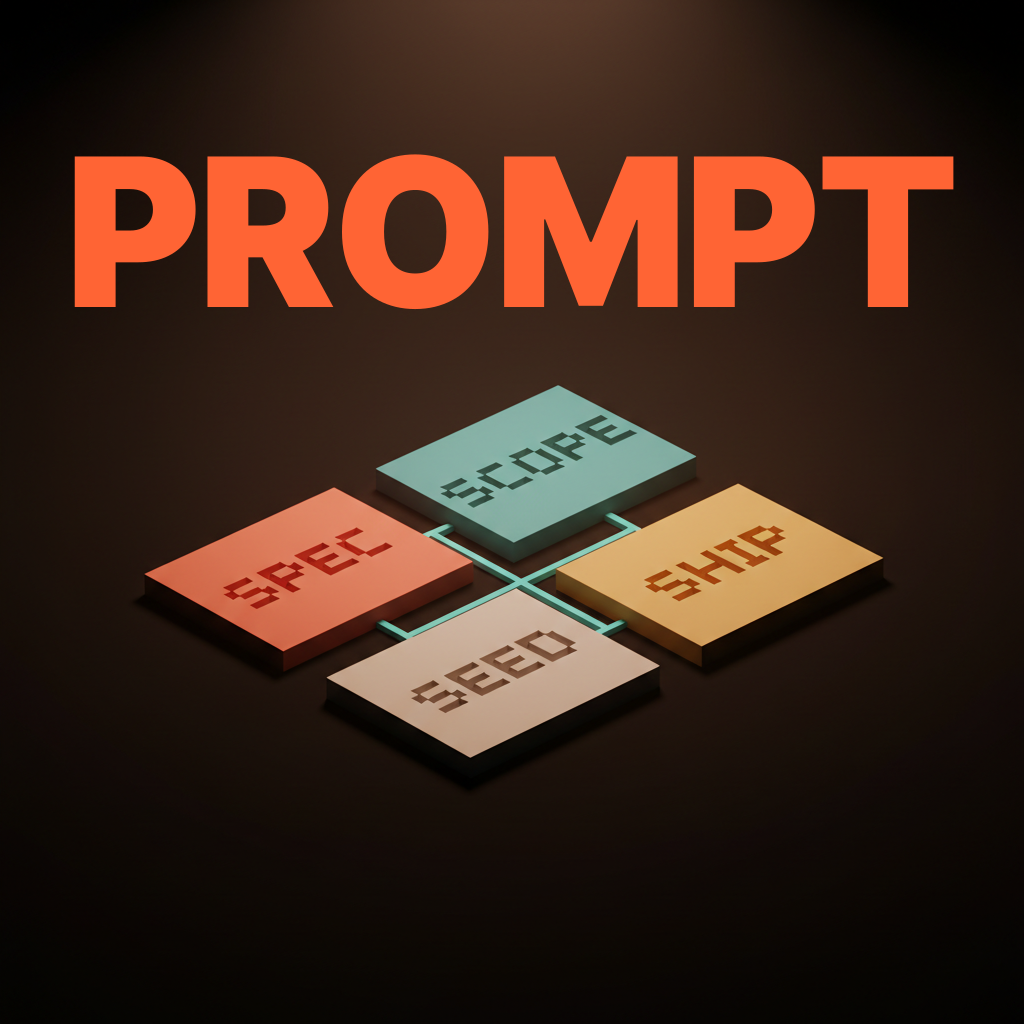
Spec. State the framework, component library, design tokens, layout grid, type scale, and destination file before you describe the feature. Example: "Next.js 15 App Router, shadcn UI, Tailwind 4, tokens in app/globals.css, ship into app/(marketing)/pricing/page.tsx. Build a three-tier pricing section with a yearly toggle, a featured middle tier, and an FAQ accordion." That sentence beats a paragraph of vibes.
Scope. State what is in and what is out. "Do not modify any file outside app/(marketing)/. Do not add new dependencies. Use the existing button component." Boundaries make the diff reviewable.
Seed. Give the model a real example to anchor on. A screenshot, a Figma URL, a competitor's site, or a working component file. "Match the visual style of this HeroSection. Use the same shadow scale, the same spacing rhythm." Examples beat adjectives every time.
Ship. State the acceptance criteria the model has to meet before it claims done. "Done when the section renders without TypeScript errors, the FAQ is keyboard-accessible, the yearly toggle updates pricing live, the empty-state shows when no plans load, and mobile stacks the tiers without overlap." Definition of done is the difference between a demo and a ship.
The four combine. A real prompt opens with Spec, sets boundaries with Scope, anchors with a Seed, and closes with Ship.
The design-system handoff flow
A vibe-coded app without a design system is a prototype, with one it is a product.
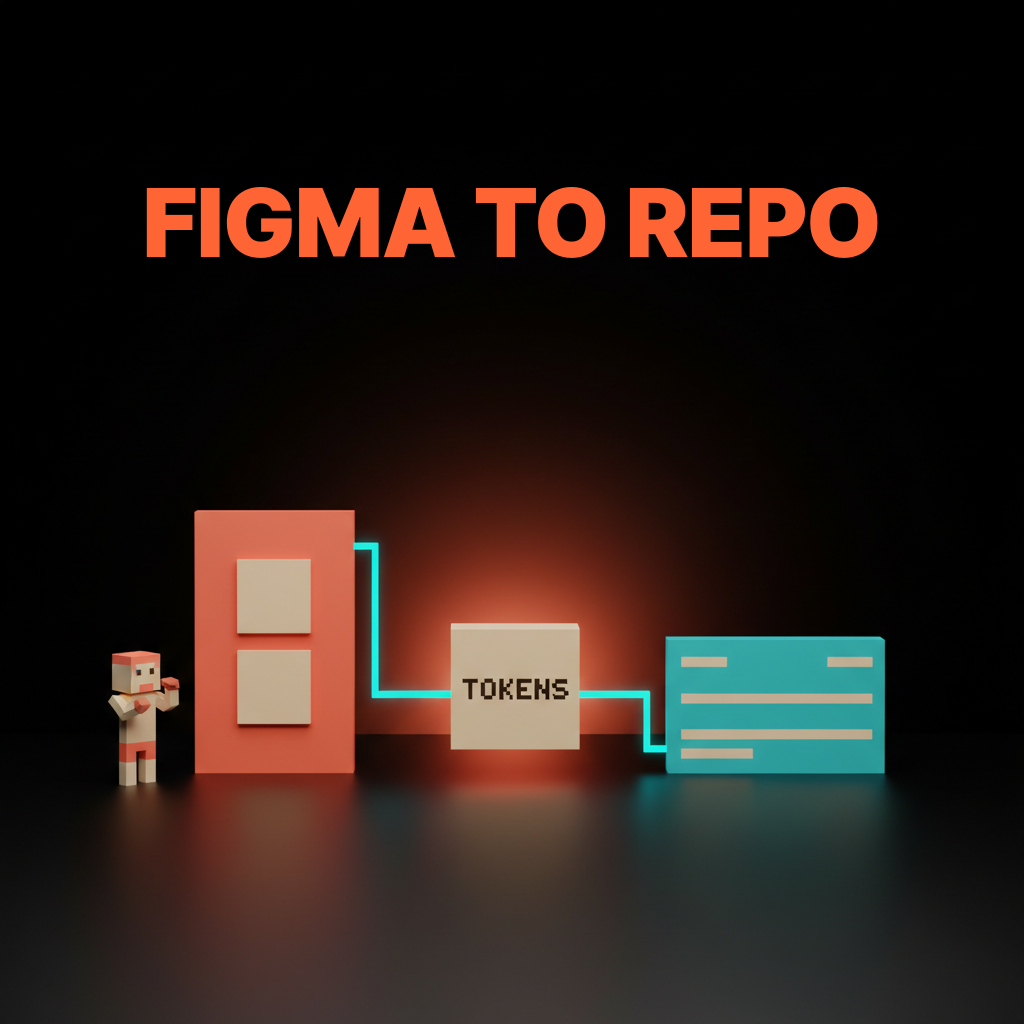
The flow that holds up. Define tokens in Figma (color, type, spacing, radius, shadow, motion). Export them to a single source of truth in the repo, usually tokens.json, a Tailwind config, or CSS variables in globals.css. Point the AI dev tool at that file and force it to use those tokens for every output. Refuse to merge code that hardcodes a color or font size. Repeat as the system grows.
This is the same discipline a real design handoff from Figma to dev demands without AI in the loop. AI does not weaken the requirement, it sharpens it. The model hallucinates spacing values forever if you let it. The design system is what stops it.
The gotchas nobody warns you about
Three failure modes hit every designer in week two. None are model problems. All are workflow problems.
Context drift. The agent forgets the design system halfway through and produces components in a different style. Fix: pin the tokens file in the prompt every session, use Cursor rules or a Claude Skill that re-injects the constraints, and treat context efficiency as a real discipline.
Dependency hell. The agent installs three packages to solve a problem the existing stack already solved. Two are abandoned, one breaks the build on the next install. Fix: a Scope rule that forbids new dependencies without explicit approval, locked package manager, every package.json change reviewed like a security PR.
Cost blowout. The agent runs hot, every iteration burns tokens, the monthly bill spikes when the team scales the workflow. Fix: cache aggressively, scope prompts tightly, prefer one-shot generations with strong Spec prompts over chatty back-and-forth.
The realistic solo ceiling for designers
A designer can ship 80 percent of a real product solo. The last 20 percent still needs a senior engineer. Pretending otherwise is how vibe-coded apps blow up in production.
What you ship solo: the marketing site, the product UI, interaction patterns, the component library, basic CRUD, auth through a managed provider, the first data model, the deploy to Vercel, the brand, the artifact users can click on.
What still needs a senior engineer: hardening auth and permissions, defending against abuse traffic, schema for scale, payments with webhooks and refunds and tax, observability and on-call, schema migrations when the product pivots, the security review before real customer data shows up.
The mistake is treating that last 20 percent as a leftover. It is a different job. Vibe coding compresses the first 80 percent from months of dev time to a week of designer time.
FAQ
What is vibe coding for designers?
The workflow of describing a product in plain English, letting an AI tool turn the description into running code, and iterating in a tight feedback loop. For designers it is the highest-leverage way to ship a real working product solo, because taste, structural thinking, and critique are the muscles it rewards.
Which AI coding tool should a designer start with?
Start with v0 if your job is mostly UI and marketing pages. Bolt for a full-stack prototype shareable by URL tomorrow. Lovable if you are building a real product with users and data and you are not an engineer. Move to Cursor or Claude Code the moment you have a real repo.
What is the difference between v0, Bolt, and Lovable?
v0 from Vercel is a UI component generator that ships into Next.js codebases. Bolt from StackBlitz is a full-stack prototype builder that runs in a browser WebContainer. Lovable is a founder MVP builder backed by Supabase with auth, database, and CRUD wired in. Different layers, different jobs.
Can a designer ship a real production app with vibe coding?
A designer can ship 80 percent of a real production app solo with the right tools and workflow. The last 20 percent (auth hardening, payments, schema migrations, observability, security review) still needs a senior engineer.
How do you keep AI-generated code consistent with a design system?
Define tokens in a single source of truth, pin that file in every prompt, and refuse to merge code that hardcodes a color, font size, or spacing value. Use Cursor rules or a Claude Skills pack to re-inject constraints every session.
The shift vibe coding actually unlocks
Vibe coding does not turn designers into engineers, it turns designers into product owners with a working build instead of a deck.
Old workflow: designer ships a Figma file, hands it to engineering, waits two weeks for a prototype that maybe matches the spec. Feedback loop measured in weeks. Design intent erodes at every handoff.
New workflow: designer writes a Spec-Scope-Seed-Ship prompt, gets a working build in an hour, ships an MVP by Friday. The senior engineer comes in to harden the last 20 percent, not to translate the first 80.
Teams winning in 2026 treat vibe coding as a workflow discipline. Pick the right tool for the layer. Spec like a design brief. Pin the design system in every prompt. Respect the solo ceiling.
If you want a vibe-coded product that survives a real engineer's review, hire Brainy. AppBrainy ships full product engineering for teams ready to take a vibe-coded MVP to a real launch. ClaudeBrainy ships Skill packs and prompt libraries tuned for design-driven builds, so the model knows your system before you ever open a prompt window.
Want a vibe-coded product that survives a real engineer's review? Brainy ships ClaudeBrainy as a Skill pack and prompt library tuned for design-driven builds, and AppBrainy ships full product engineering for teams ready to take a vibe-coded MVP to a real launch.
Get StartedGet new papers by email
New Brainy papers in your inbox. Confirm once, unsubscribe anytime.