
The Junior Designer Crisis: How AI Reshaped the Career Ladder, and What to Become Instead
Junior design hiring collapsed in 2024-2026 and it is not coming back. Here is what AI actually broke about the career ladder, the new ladder forming in its place, and the skills entry-level designers should be building right now.
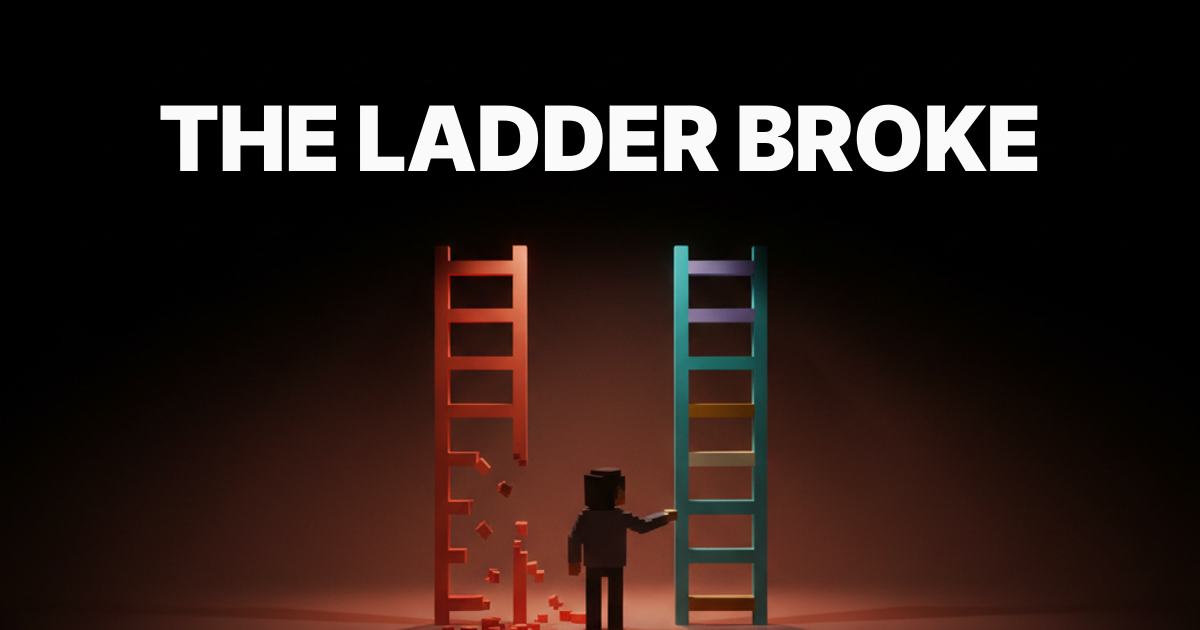
The junior design ladder broke between 2024 and 2026, and most of the people writing about it are still pretending it did not. Junior product design postings on LinkedIn dropped roughly forty percent from their early-2024 peak. Entry-level UX postings dropped further. The roles that are still open are either heavily code-fluent or sit inside teams that already restructured around AI.
This is not a recession blip. It is a structural reset. The traditional pipe of junior to mid to senior to staff still exists on paper, but the work that used to fill the junior rung now happens in seconds inside Figma, Cursor, and Claude. Companies stopped paying entry rates for output that AI produces faster, cleaner, and at any hour. The ladder did not soften. The bottom rung snapped.
The good news is that a new ladder is forming. It rewards craft, agency, and shipping speed instead of years served. If you are a designer trying to break in or trying to climb past the noise, this is what actually changed and what to build next.
The junior design ladder broke, and the timeline matters
The collapse happened in three waves. Wave one ran through late 2023 and early 2024 when the first round of layoffs from Meta, Google, Amazon, and Salesforce flooded the senior pool. Wave two ran through 2024 and 2025 as midsize companies discovered they could ship the same work with smaller teams plus Figma AI and v0. Wave three ran through 2025 and into 2026 as design-heavy startups normalized hiring at the staff and senior level only and routed entry-level work through AI tools and one or two design engineers.
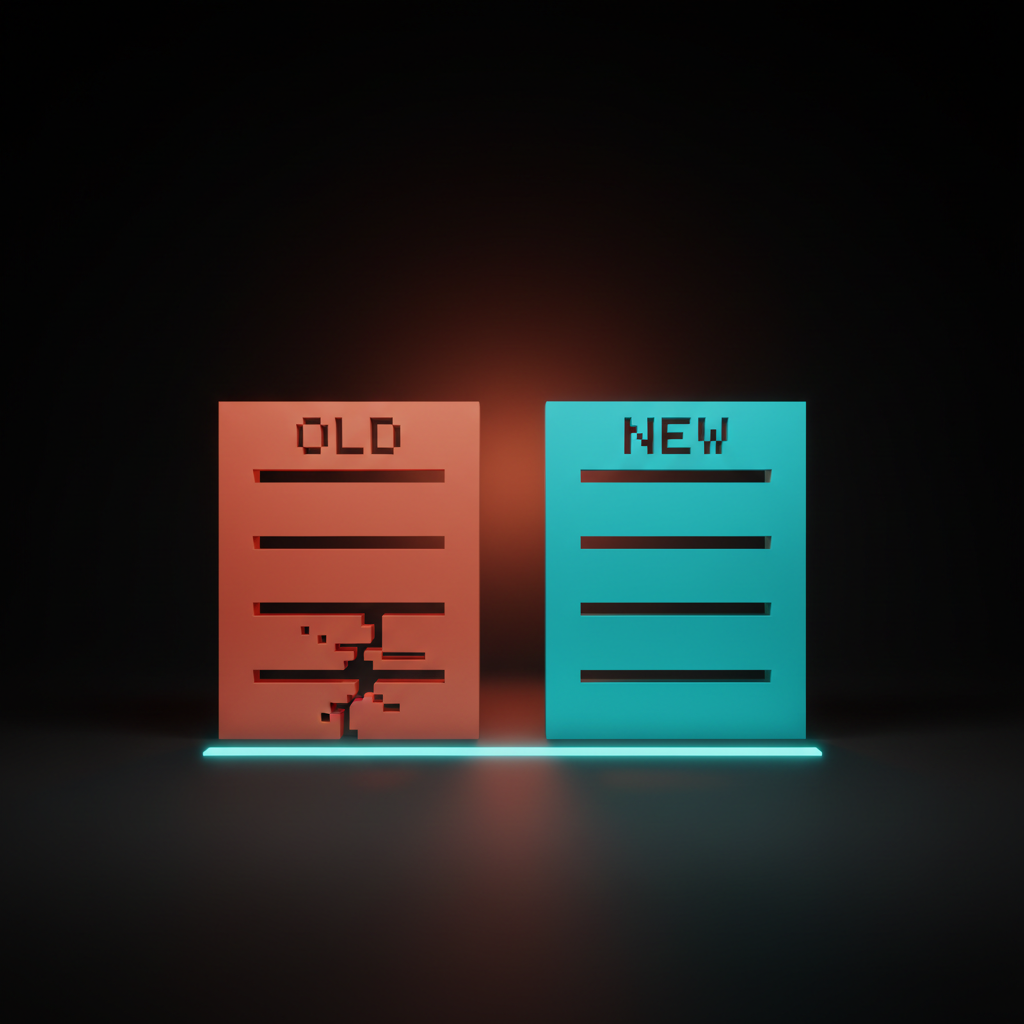
The result is a market where senior designers compete with each other for fewer seats, and new graduates compete with AI for work that AI now does. Junior postings exist, but most are mid-level work with a junior salary attached.
Four reasons companies stopped hiring juniors
First. The junior workload moved into AI. The screens, flows, variants, and exploration sets that used to live with juniors now live in Figma AI, v0, and Lovable. Output that took a week takes an afternoon.
Second. Training cost outran patience. Companies used to absorb the eighteen-month ramp on a junior because the throughput at month nineteen made it worth it. AI hit a tier of throughput in 2025 that is hard to justify training around.
Third. Hybrid and async work raised the bar on self-direction. Junior designers historically learned by sitting next to seniors. That apprenticeship model does not survive Slack and Notion as the primary interface, and AI fills the gap in a way junior chairs no longer do.
Fourth. The hiring leader pool shrank. Design directors got cut in waves two and three, and the remaining leaders default to senior hires because they have less bandwidth to coach.
The teams that already moved
Linear, Anthropic, Vercel, Brex, Ramp, and Stripe rebuilt their design hiring around the new ladder, and the pattern is the same across all six. Linear runs a small team where every designer ships code. Anthropic stocks design engineers and product designers, with no junior product design rung. Vercel ships v0 and runs a design team where Figma is one tool of many and code is the medium. Brex and Ramp both rebuilt their design orgs in 2024 and 2025 around senior generalists plus design engineers, with entry-level work routed through AI and a small production layer. Stripe Press and the Stripe product design team have been quiet leaders on the design engineer rung for years.
The pattern is consistent. Small senior team. Code-fluent. AI as leverage. No traditional junior rung. The companies setting the pace are the companies hiring designers who can ship a working interface, not designers who can hand off a Figma file and hope.
The old ladder, and why every rung now does mid-level work
The traditional pipe was junior, mid, senior, staff, and the junior rung was where companies trained taste at company expense. Juniors did variants, screen production, redlines, and asset prep. AI ate that rung. The result is that the work that used to define junior is now the warm-up exercise for mid. Mid is now the new junior. Senior is now the new mid. Staff is the new senior. The titles slid up by one rung and the bottom one fell off.
This compression is the structural problem. Companies still want senior taste. They no longer want to pay for the years of practice that used to produce it. So most companies stopped trying.
The new four-rung ladder forming in its place
The replacement pipe is production assistant, AI orchestrator, design engineer, product designer. Each rung rewards craft and shipping speed instead of years served. The rungs are narrower in scope but heavier in leverage.
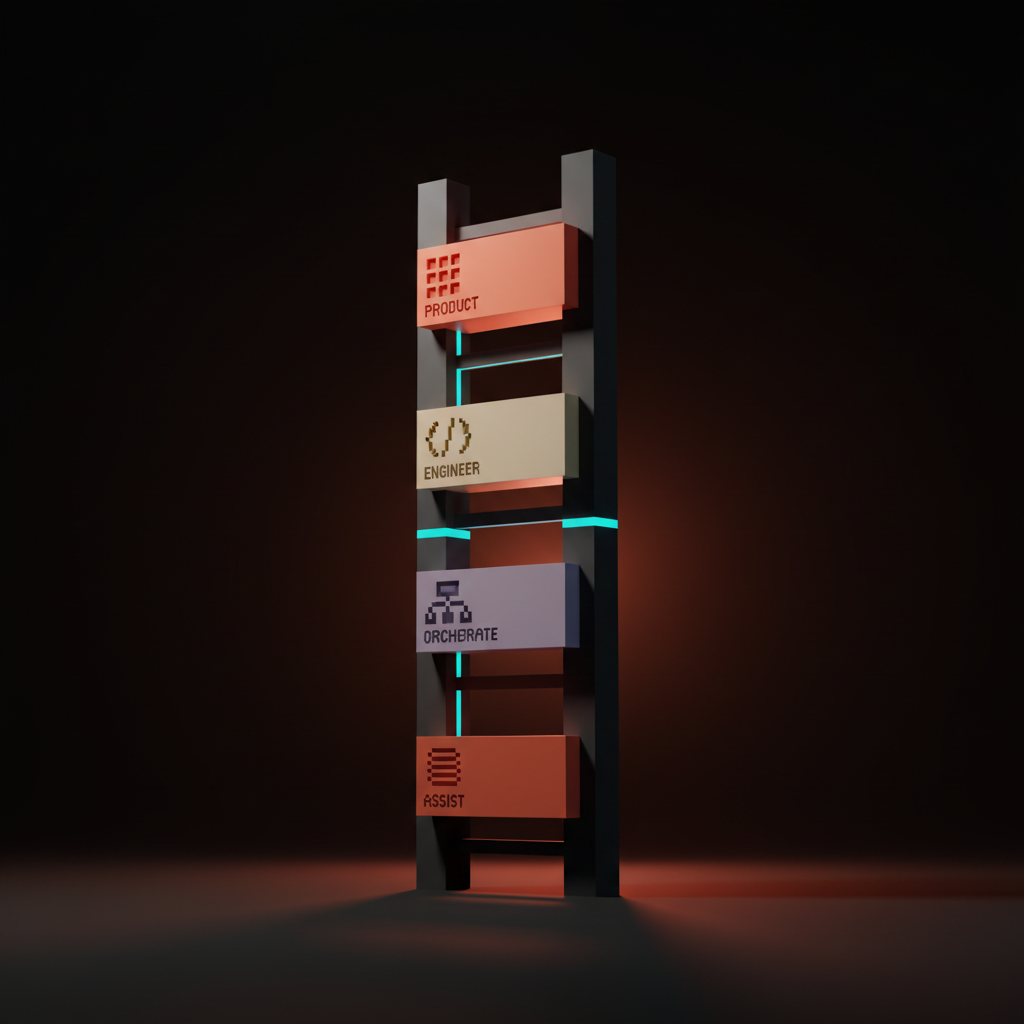
The numbers matter here. A junior designer in 2022 cleared seventy to ninety thousand in a major US market. A production assistant in 2026 clears sixty to eighty. An AI orchestrator clears one hundred to one hundred forty. A design engineer clears one hundred sixty to two hundred forty. The compression at the bottom is real, but the climb is faster, and the ceiling is higher than the old senior rung at every rung above orchestrator.
Production assistant is the new entry rung
A production assistant is not a junior designer. It is a designer who runs the AI tools that used to be the junior workload, then ships the output to spec. The job is forty percent operating Figma AI and v0, thirty percent quality control on AI output, twenty percent component library upkeep, and ten percent client communication. This rung is real and pays, but it is a launchpad, not a career. Most production assistants either move up to orchestrator within a year or get squeezed by the next AI tier.
AI orchestrator is the rung that pays
AI orchestrator is the rung where most current juniors will land in 2027 if they invest in the right stack now. It is the rung companies cannot fill from the senior pool, because most senior designers built their craft before AI tooling and have not retrained. An orchestrator owns the AI workflow for a feature or surface. They prompt, eval, route, and ship. They run Claude Skills, Figma MCP, and a model-agnostic prompt library. They write evals so the AI output is measurable. They are paid on shipped product, not figures shipped to engineering.
If you are a designer with two to four years of experience right now, this is the rung to aim for. Get good at the orchestration layer and you skip the senior-mid bottleneck the old ladder forced everyone through.
Design engineer is the rung that compounds
Design engineer is the most durable rung on the new ladder. Code-fluent design plus AI is the combination that ships product, and it is the combination companies will keep paying for through any tooling shift. A design engineer owns the implementation of a feature end to end. They write components, ship to production, and own the design system inside the codebase. They use AI code editors as a daily tool, not a novelty. The design engineer rung is where the salary curve actually bends, and it is the rung that survives every future AI tier.
If you do not write code today, the next twelve months matter more than the next four years. Pick a stack (React, Tailwind, TypeScript), build three real things, and use Cursor or Claude Code to learn faster than a curriculum would teach you.
The five entry skills that actually compound in 2026
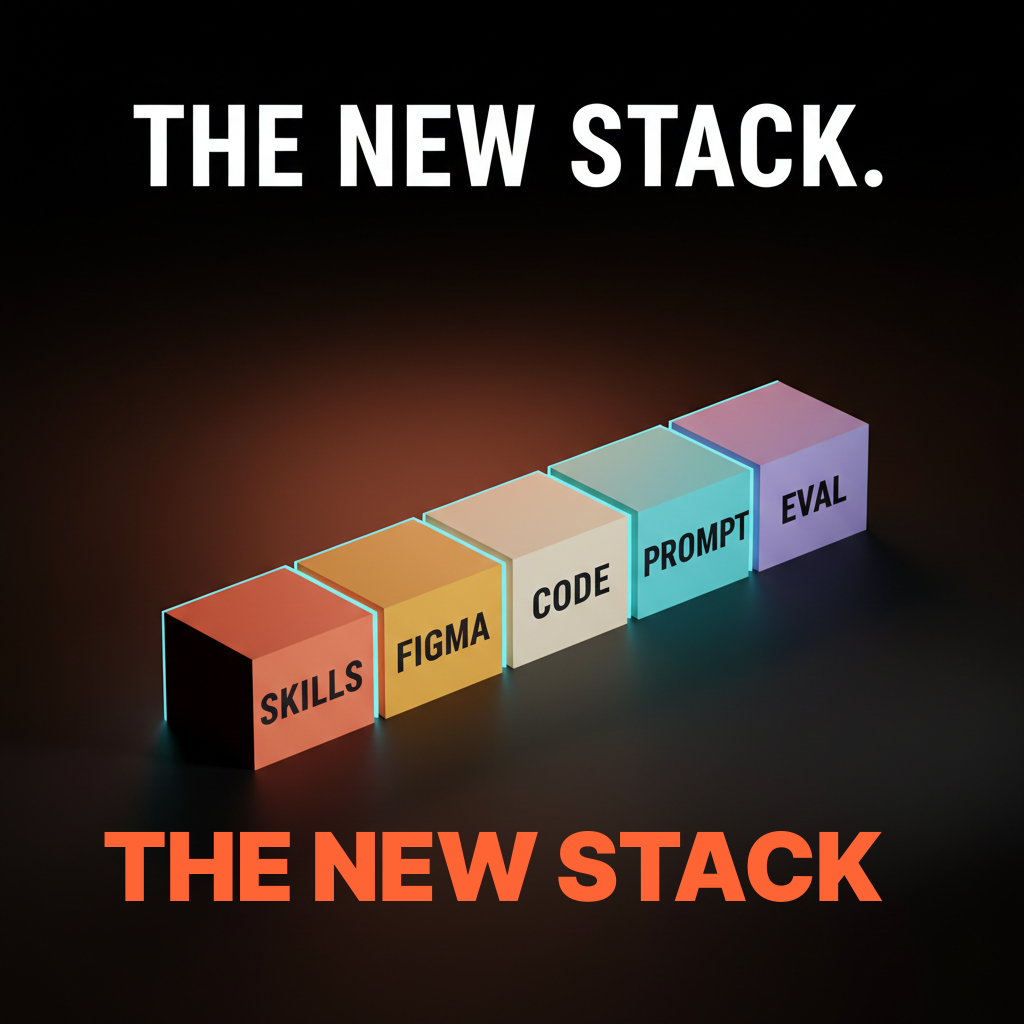
If you are starting now, build these five and skip everything else. The rest is filler that AI does in seconds.
One. Claude Skills authoring. Skills are the unit of leverage in 2026. A designer who can author a Skill that automates a brand check, a component generation pass, or a design system audit is a designer the team cannot replace.
Two. Figma MCP. The Figma Model Context Protocol turns Figma into a tool the AI can read and write. Designers who set up MCP, wire it into Cursor, Claude Code, or Claude Desktop, and ship a working pipeline from Figma to code are doing the design handoff work that companies will pay senior rates for.
Three. Code-fluent design. Not full-stack engineering, but enough React, Tailwind, and TypeScript to read components, edit them, and ship to production. A designer who can fix a component instead of filing a ticket is a designer who runs the rung above their salary.
Four. Prompt systems. Not prompt tricks, prompt systems. Reusable, versioned, evaluated prompts that map to a real design workflow. The designers winning at orchestrator and design engineer have prompt libraries the same way they have component libraries.
Five. Eval. Most designers do not know what an eval is. Designers who do, write small structured tests for their AI workflows so the output is measurable and improvable. This skill is rare and pays.
If you want help building the new skill stack, hire Brainy. ClaudeBrainy ships Skill packs and prompt libraries that turn AI into leverage and gives you the orchestrator stack out of the box. BrandBrainy ships the brand and craft layer that AI cannot fake.
The skills not worth building anymore
A short list of skills that used to be the path and are now the trap. Do not spend a year on these in 2026.
Pixel-perfect Figma chops alone. Figma is a tool, not a craft. The designers who built their reputation on flawless auto-layout and component nesting are now the designers most exposed, because that is exactly the work AI ships in an afternoon.
Generic Material UI or Bootstrap knowledge. The framework rendering of a design is the cheapest part of the job. AI scaffolds it. Designers who built their portfolio on stock-component fluency are competing with the model that ships those components for free.
Logo-on-a-Mac portfolios. Five logos, three landing pages, a couple of mock dashboards. This portfolio shape was outdated in 2022 and is fatal in 2026. Hiring managers want shipped product, real users, and the case study to back it.
Stock UX deliverables. User personas, journey maps, and empathy maps without shipped product. Process artifacts are not a portfolio. The artifact is the product, and the product has to exist.
A polished single-page resume site. The site is fine, the polish is not the point. A site without three real shipped projects in it is a frame around nothing.
How the new ladder pays
Salary compression on the old ladder is real. The new ladder pays more on average and pays sooner. AI orchestrator at one hundred forty is now what mid-senior was three years ago. Design engineer at two hundred is now what staff was. The ceiling at the top of the new ladder, which is product designer at companies like Linear, Anthropic, and Vercel, is higher than the old principal rung was at most companies, often two hundred fifty to four hundred fully loaded.
The reframe matters. The new ladder pays more for less time-served if the craft is real. It pays nothing for time-served without craft. The trade is honest, and for designers who already had craft and were stuck behind seniority, this is the best market the field has ever offered.
The honest reframe
The junior ladder did not get harder, it got replaced, and the replacement rewards craft and agency more than the old one ever did. If you are a strong designer with shipping instincts, the next two years are the best window the field has had in a decade. If you are a designer who got into the field because the salary looked easy, the next two years will be brutal.
Most designers are still trying to climb a ladder that no longer exists. The designers pulling ahead in 2026 are building skills that were not on any curriculum two years ago, shipping product on small teams, and treating AI as the leverage layer instead of the threat. The market rewards the second group.
FAQ
Is AI replacing junior designers?
In effect, yes. Not by replacing the role outright, but by absorbing the work the role used to do. The junior workload moved into AI, the rung consolidated upward, and entry-level hiring dropped sharply. The path forward is the new four-rung ladder, not a return to the old one.
What should a junior designer learn in 2026?
Claude Skills authoring, Figma MCP, code-fluent design (React, Tailwind, TypeScript), prompt systems, and eval. Skip generic Material UI knowledge, pixel-perfect Figma chops alone, and logo-on-a-Mac portfolios. Build three real shipped projects with case studies that show the AI workflow underneath.
Is design engineer the safest career path?
It is the most durable rung on the new ladder. Code-fluent design plus AI is the combination that ships product, and companies will keep paying for it through any future tooling shift. The salary curve bends at this rung and the ceiling sits above the old senior rung.
How is the new ladder different from the old one?
The old ladder was junior, mid, senior, staff, with the junior rung doing screen production and exploration sets. The new ladder is production assistant, AI orchestrator, design engineer, product designer, with each rung rewarding craft and shipping speed instead of years served. The bottom rung is narrower, the climb is faster, and the ceiling is higher.
Are companies actually hiring this way?
Yes. Linear, Anthropic, Vercel, Brex, Ramp, and Stripe restructured their design orgs around the new ladder. The pattern is small senior team, code-fluent, AI as leverage, and no traditional junior rung. Most growth-stage startups are following the same pattern in 2026.
What to do this quarter
Three moves. First, audit your portfolio against the do-not-build list. If your top three projects are logos on a Mac, mock dashboards, or stock UX deliverables, replace them with shipped product. Second, pick one orchestrator skill and ship a working artifact this month. Author a Claude Skill, wire up Figma MCP, or write a prompt system with an eval attached. Third, learn enough code to ship a real component to production. Cursor or Claude Code plus a tutorial-free, ship-something-real approach beats a six-month bootcamp.
If you want help getting onto the new ladder, hire Brainy. ClaudeBrainy ships Skill packs and prompt libraries that turn AI into leverage. BrandBrainy ships the brand and craft layer that AI cannot fake. The new ladder rewards designers who pair both, and the next eighteen months are the window to build that stack.
If you want help building the new skill stack, BrandBrainy and ClaudeBrainy run the workflows that get designers onto the new ladder. ClaudeBrainy ships Skill packs and prompt libraries that turn AI into leverage. BrandBrainy ships the brand and craft layer that AI cannot fake.
Get StartedGet new papers by email
New Brainy papers in your inbox. Confirm once, unsubscribe anytime.