Brand Archetypes: The 12 Brand Personalities and How to Choose Yours
What the 12 brand archetypes are, the real brands that own each one, and a four-question framework to choose yours without guessing or copying a rival.
Brand Archetypes: The 12 Brand Personalities and How to Choose Yours
An archetype is not a personality you give your brand. It is the one promise everything else has to agree with.
That distinction matters because most brand archetype articles treat this like a quiz. You answer eight questions, you get a label, you paste "The Hero" into your brand guidelines, and nothing changes.
The real use of an archetype is not labeling. It is deciding the one thing your brand promises a person, then letting that decision run every downstream choice across voice, color, type, copy, and packaging.
If you have never been able to look at your brand materials and feel that they all belong to the same entity, you probably do not have an archetype problem. You have a commitment problem, and the archetype is just the tool that forces the commitment.
What a brand archetype actually is
An archetype is a universal character pattern that lives in the collective human imagination. Carl Jung documented them as recurring figures in myths, dreams, and stories across cultures, among them the Hero, the Trickster, the Ruler, and the Caregiver.
These patterns resonate because they map to deep human motivations, fears, and desires that do not change across time or geography. When a brand takes on an archetype, it borrows that resonance and tells the audience, "We are the brand that plays this role in your life."
The promise then becomes instinctive. Nike does not have to explain that they stand for athletic achievement, because the Hero archetype does that work silently, at scale, every time their visual language and copy land in agreement.
The operative word is agreement. The archetype only works as a lens for every decision, not as a word in a doc that gets reviewed once a year.
Where the 12 archetypes come from
Margaret Mark and Carol S. Pearson mapped Jung's archetypes onto brand strategy in their 2001 book The Hero and the Outlaw. Their framework organized twelve characters by the core human motivation each one speaks to, and that model became the standard brand strategists still use.
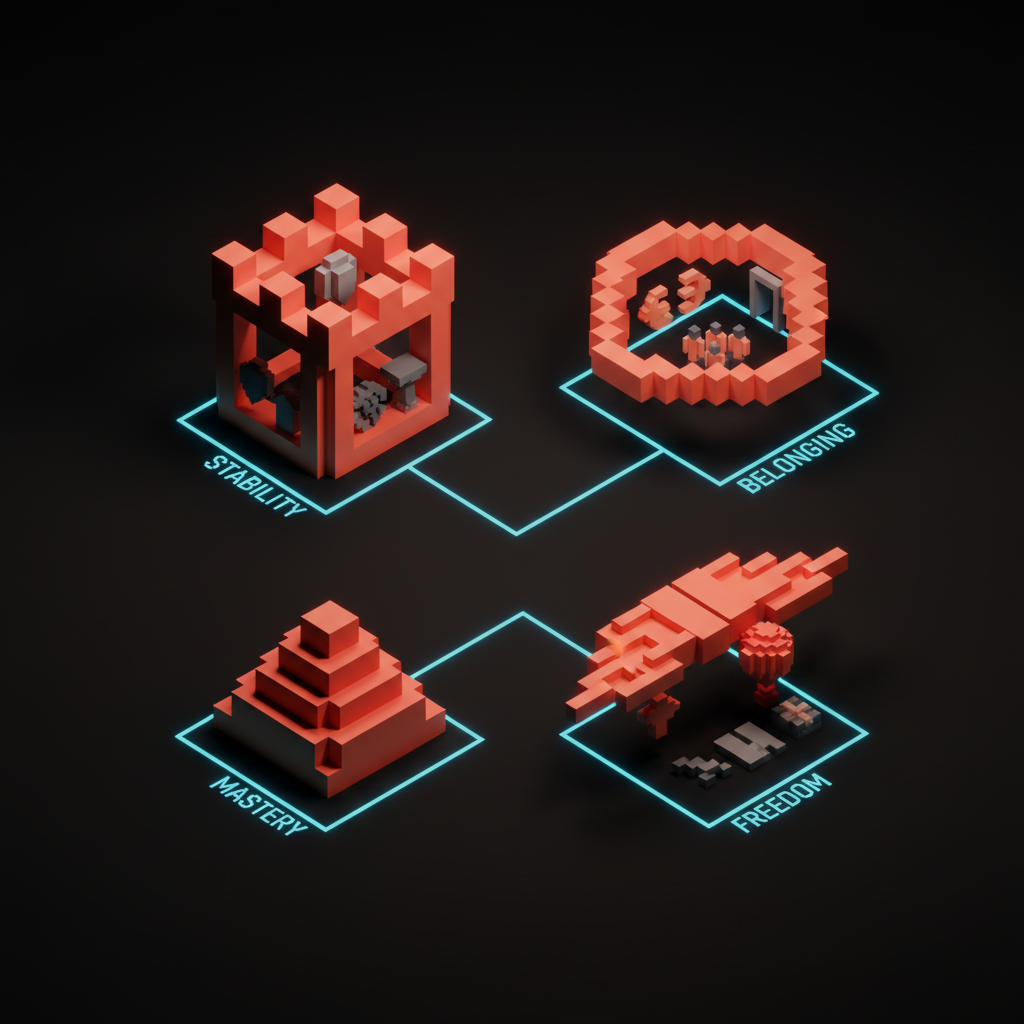
The twelve archetypes sit across four motivational families of stability, belonging, mastery, and freedom. The families matter as much as the individual archetypes, because they tell you what your brand is fundamentally for before you ever pick a character.
Start with the family, not the label. Knowing which motivation your brand serves narrows the field from twelve options down to three, which is the difference between a real choice and a lucky guess.
The 12 brand archetypes at a glance
Here is every archetype, its core desire, the brand that genuinely owns it, and the voice that archetype produces. This is the reference table worth saving.
| Archetype | Core Desire | Brand That Owns It | Voice It Produces |
|---|---|---|---|
| Hero | Mastery, achievement | Nike | Urgent, active, aspirational. Challenges the audience to rise. |
| Outlaw | Liberation, disruption | Harley-Davidson / 37signals | Defiant, anti-establishment, provocative. Rejects the status quo explicitly. |
| Magician | Transformation | Disney | Visionary, wonder-first. Sells the outcome of transformation, not the mechanism. |
| Ruler | Control, order, prestige | Rolex | Authoritative, precise, exclusive. Never shouts. Commands. |
| Sage | Knowledge, truth | Clear, trustworthy, evidence-led. Demystifies rather than mystifies. | |
| Creator | Expression, originality | Adobe / LEGO | Invitational, expansive, tool-focused. Empowers the audience to make. |
| Caregiver | Service, protection | Volvo | Warm, reassuring, safety-first. Puts the person's wellbeing before the product. |
| Everyman | Belonging, accessibility | IKEA | Unpretentious, honest, inclusive. Never positions as elite. |
| Innocent | Purity, goodness, simplicity | Dove | Gentle, optimistic, clean. Celebrates what is natural or true. |
| Explorer | Freedom, adventure, discovery | Patagonia | Unfiltered, vast, outdoors-coded. Rejects the mundane. |
| Lover | Intimacy, beauty, pleasure | Chanel | Sensory, seductive, refined. Prioritizes feeling over function. |
| Jester | Joy, play, irreverence | Duolingo / Old Spice | Unexpected, funny, self-aware. Uses humor as the product feeling. |
The twelve sort into four motivational families. Some archetypes shade across more than one, which is normal and not a problem to solve.
- Stability: Ruler, Caregiver, Creator, Innocent
- Belonging: Everyman, Lover, Jester, Caregiver
- Mastery: Hero, Sage, Explorer, Creator
- Freedom: Outlaw, Jester, Explorer, Magician
Three archetypes people map wrong
A few of these need a sentence of defense, because the conventional mapping is often lazy.
Outlaw is not just "edgy." Harley-Davidson earns the Outlaw because their entire product is a rejection of domesticity. 37signals earns it because their company writing is a literal manifesto against the way the software industry operates. Neither uses defiance as a tone-of-voice trick. It is their actual position, and if your brand is not willing to name what it is against, you cannot claim this archetype.
Sage is not "we have a blog." Google earns it because their entire design philosophy is organized around surfacing truth with as little friction as possible. The search bar exists to demystify, not to showcase Google. Most brands that call themselves Sage are actually just Everyman with a podcast.
Creator is not for every design tool. Adobe earns it because their products exist solely to amplify what the user makes, and their brand treats that as sacred. LEGO earns it because the entire product is an invitation to build something that did not exist before. The Creator archetype demands that the brand genuinely subordinates itself to the audience's creative act.
The four-question framework to choose yours
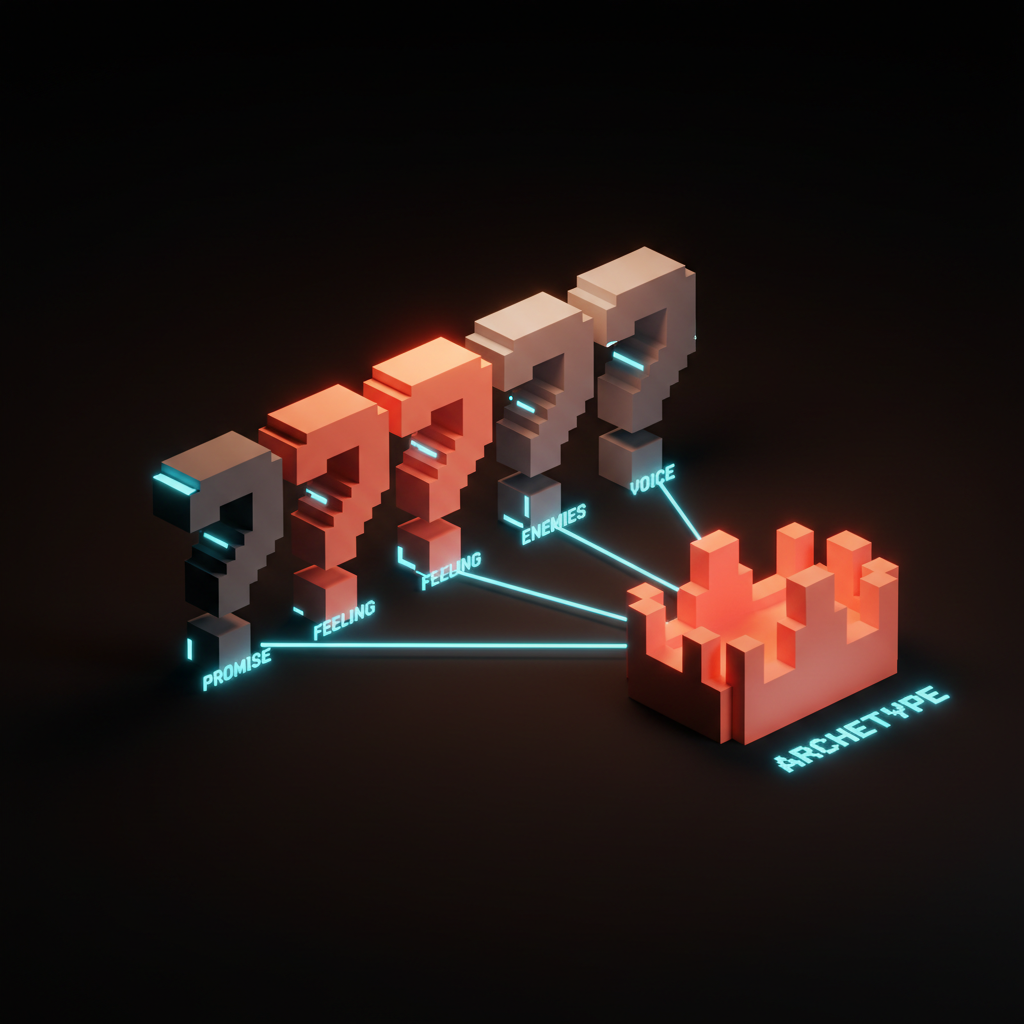
Stop running the quiz. Run this instead. Four questions, in order, each one narrowing the field:
- What do you promise a person?
- What feeling do you sell?
- Who or what is your enemy?
- How should you sound?
The first two pin down what your brand is for. The last two pin down what it is against and how it sounds. Here is each one.
What do you promise a person?
Not what your product does. What the person gets from the experience of using your brand. Nike promises achievement, Patagonia promises access to wildness, and IKEA promises a home that works without drama.
Write one sentence. If you cannot write one sentence, the archetype work cannot help you yet, because you do not have a promise.
What feeling do you sell?
Products have features. Brands sell feelings. Rolex sells certainty of status, Duolingo sells progress that does not feel like studying, and Dove sells acceptance without having to change.
The feeling is usually more honest than the promise, because people will tell you the feeling in a way they will not always tell you the promise.
Find your enemy, then your voice
These are questions three and four, and they are where most brands get specific for the first time.
Who or what is your enemy?
Every strong archetype implies an antagonist:
- Nike's enemy is giving up
- Patagonia's enemy is fast fashion and disposable culture
- 37signals' enemy is the corporate software playbook
- IKEA's enemy is unnecessary cost and pretension
If you cannot name your enemy, your archetype will be generic. The enemy is not a competitor. It is a condition, a behavior, or a system your brand exists to push back against.
How should you sound?
Not which words to use, but the quality of your voice, whether it runs commanding or inviting, funny or serious, warm or precise. A Ruler brand like Rolex sounds nothing like a Jester brand like Duolingo even when both discuss the same topic.
The test is simple. Take a paragraph of your existing copy and read it aloud. If it sounds like it could belong to any brand, the archetype is not doing its job yet.
Run all four answers side by side, and the archetype that maps cleanest to all four is yours. If you get conflicting answers, that is the symptom that the brand does not have a clear position yet, and the archetype work is secondary to the positioning work.
Brainy builds brand identities that pick a lane and commit to it. See how we work with brands.
How your archetype sets your voice
The archetype is the input. Voice, color, and type are outputs that follow from it in sequence.
Voice comes directly from the core desire. A Hero brand like Nike writes in second-person imperatives that push the reader to act. A Caregiver brand like Volvo writes in warmth that promises to handle the hard part. A Jester brand like Old Spice writes in asides, jokes, and self-aware subversions.
You do not need a voice guide of ten pages. You need one archetype and one honest look at whether your current copy matches it.
For a full method on turning an archetype into documented voice and tone, see how we approach turning the archetype into a voice. Once voice is set, the rest of the identity work follows the same principle, so it helps to build the identity around it.
Color and type follow from there
Color follows emotional territory, not personal preference:
- Explorer brands like Patagonia reach for desaturated earth tones that read as the natural world at scale
- Lover brands like Chanel reach for warm jewel tones that feel intimate and sensory
- Ruler brands use dark, contained palettes because restraint signals power
- Innocent brands go light and clean because purity reads that way
These are defaults, not rules. They carry the archetype's emotional signal to someone who has never read a word of your copy. If you want to go deeper, the colors that match the personality works through the logic in detail.
Type works the same way. A Sage brand almost always reaches for geometric sans-serifs because they read as rational and neutral. A Creator brand has more latitude, because originality is the signal, so a distinctive type choice is itself on-brand. A Ruler brand tends toward classical serifs with tight spacing because those choices communicate authority without effort.
The type does not need to scream the archetype. It needs to not contradict it. Contradiction is the failure mode, and type that carries the personality covers the practical decisions.
Why picking two archetypes usually backfires
Most brands land on two archetypes and call it nuance. It is almost never nuance. It is indecision with a design vocabulary.
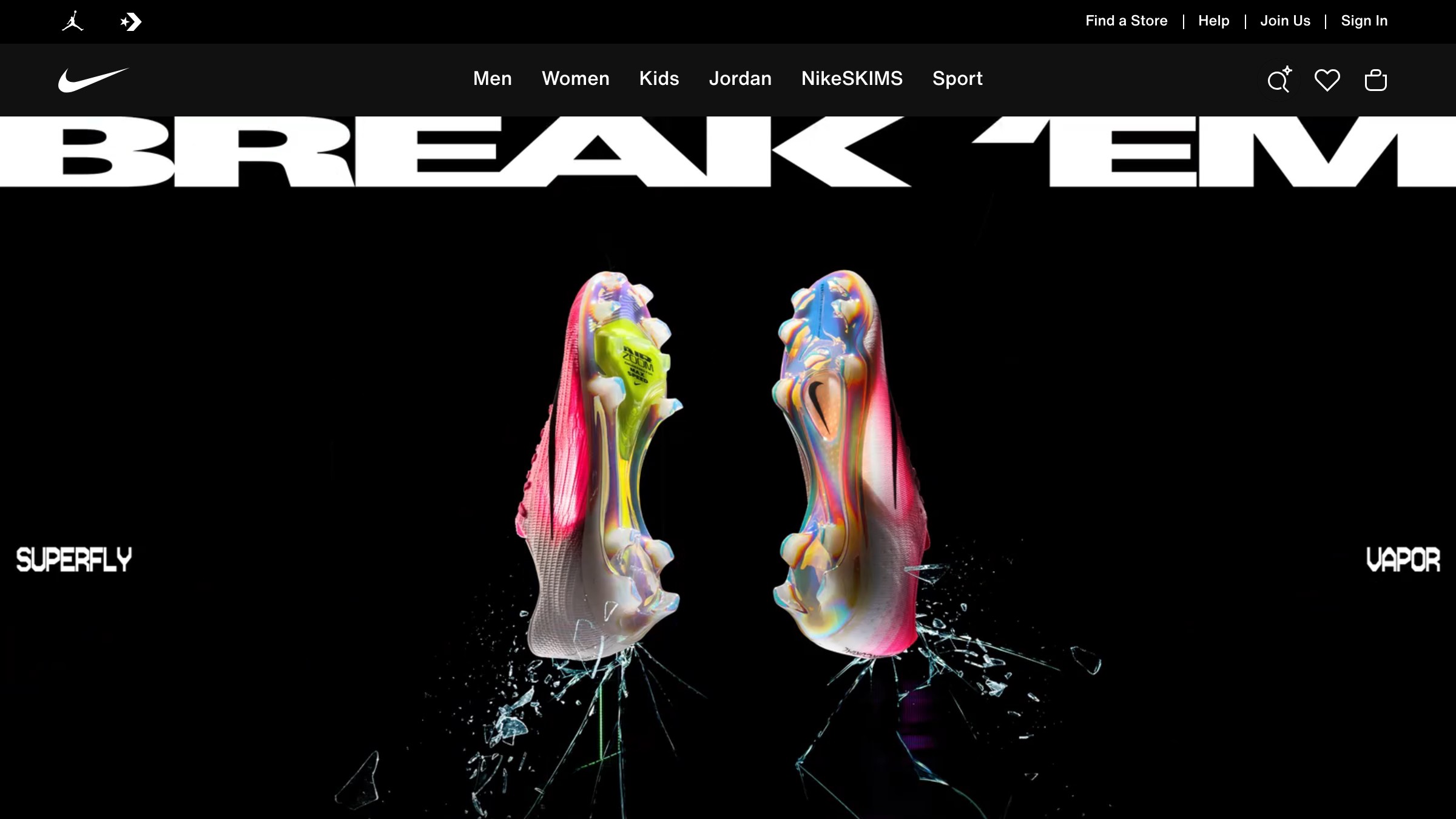
The problem is not that brands cannot hold complexity. It is that archetypes are not personality traits that add together. They represent different promises, different emotional territories, and different implied enemies.
A Hero brand and a Caregiver brand are not compatible expressions of one identity. The Hero, like Nike, tells you to rise, achieve, and push past your limit. The Caregiver, like Volvo, tells you that you are safe and protected. Both are valid promises, but a brand cannot make both at once without one undermining the other.
The dual-archetype trap usually happens when a brand is trying to appeal to two audiences or serve two products under one identity. That problem is strategic, not visual. Either pick the primary audience or split the sub-brands, but do not try to solve a strategy problem with a blended archetype.
The one real exception, and how to break a tie
There is one legitimate version of two archetypes at once, which is a primary archetype with a secondary modifier. Nike is primarily a Hero. Its secondary texture is the Explorer, visible in the campaigns shot in wilderness and the gear built for trail.
When those two appear together, the Hero is in charge and the Explorer is the environment the Hero operates in. The moment they carry equal weight, the identity starts to blur.
If you still cannot choose after running the four-question framework, the answer is almost always the archetype that maps to your best customers. Not all customers. The ones who already buy on conviction, refer others, and do not need to be convinced.
When brand archetypes are a waste of time
Archetypes are a tool for communicating a promise at scale. If you do not have a clear promise, no archetype will create one. The framework assumes a brand already has something to stand for, and when it does not, the exercise produces a label and nothing else.
There are three conditions where archetype work is genuinely premature.
Your brand has not chosen its audience
Archetypes resonate differently with different people. The Outlaw reads as liberating to some audiences and reckless to others. If the brand has not chosen who it is building for, the archetype choice will swing around every time someone new weighs in with an opinion.
Your product does not match the promise
A brand can declare itself an Explorer, but if the product experience is bureaucratic and constrained, the archetype is theater. The most expensive brand disaster is an archetype your product actively contradicts. Customers notice the gap faster than any brand team does.
The team will not commit after the choice is made
An archetype that gets revisited every six months is not an archetype. It is a mood board. If leadership will not kill content, campaigns, and copy that contradict the chosen archetype, the exercise is decorative.
The framework is most powerful as a filter, not an origin story. Its real value shows up the third time a team argues about a logo option or a campaign concept and someone can point at the archetype, ask whether the option maps to it, and cut it when the answer is no.
FAQ
What is a brand archetype?
A brand archetype is a character type from Jungian psychology that represents a universal human motivation. It defines what role a brand plays in its audience's life and aligns every expression of the brand around one promise.
How many brand archetypes are there?
There are 12. They are Hero, Outlaw, Magician, Ruler, Sage, Creator, Caregiver, Everyman, Innocent, Explorer, Lover, and Jester, grouped into four motivational families of mastery, freedom, belonging, and stability.
What is the difference between a brand archetype and a brand personality?
Brand personality is usually a set of traits like warm, bold, or playful. A brand archetype is a character role with an implied motivation, enemy, and promise. "We are bold" does not tell you what to say in a recall. "We are the Ruler" does.
Can a brand change its archetype?
Yes, but it is painful and expensive. Apple shifted from Outlaw (the original Mac versus IBM era) toward Creator across the 2000s as its line grew into tools for creative people. The shift took a decade of real product change, not a rebrand.
Which brand archetype is best for a startup?
The one that matches your actual position, not the one that sounds exciting. If your product is mainly about access, Everyman converts better than the Outlaw or Hero. If it is about creative tools, Creator is more honest.
What is the Jungian basis for brand archetypes?
Carl Jung described archetypes as universal patterns in the collective unconscious that recur across myths and stories. Margaret Mark and Carol Pearson applied the model to brands in The Hero and the Outlaw (2001), arguing that brands mapping to these patterns earn instinctive recognition.
What happens if my archetype is already taken by a competitor?
Two brands can share an archetype and compete. Nike and Adidas are both Hero brands, because the archetype is a territory of motivation, not a trademark. Sharing one with a strong competitor is a reason to execute it better, not to retreat to a weaker archetype.
Choose the decision, not the costume
Most brands pick an archetype the way someone picks a Halloween costume, finding the one that sounds like them on a good day and stopping there. The brands that actually benefit from this framework treat it as a constraint, not a description.
The constraint is the point. Once you commit, a large category of decisions becomes easy.
Copy that does not match gets cut. A palette that fights the emotional territory gets rejected. A product extension that serves a different motivation probably belongs to a different brand.
The archetype is most useful as a recurring question, not a one-time workshop. Every time a creative brief lands or a campaign concept comes up for review, the question is whether it matches the archetype. Applied consistently, that one question is what makes an identity feel coherent over time.
There is more brand identity writing in the Brainy archive if you want to go further. The archetype is the starting decision, and everything that follows, from voice to color to type, is the work of honoring that decision in every detail.
If you want the twelve walked through out loud with real companies attached, this breakdown pairs well with the reference table above.
Pick one. Commit. Let it run.
Brainy builds brand identities that pick a lane and commit to it. See how we work with brands.
Get StartedGet new papers by email
New Brainy papers in your inbox. Confirm once, unsubscribe anytime.