
Brand Voice and Tone: How to Define, Document, and Apply Yours in 2026
A pillar guide to brand voice and tone: voice vs tone, five real brand archetypes, and how to document yours for the AI era.
Voice is who you are. Tone is how you talk to this person right now. Most brands have neither, and the gap shows up the moment a second writer joins the team.
That is the short version. The long version is this article: what voice and tone actually mean at the craft level, how five real brands deploy them in 2026, and how to document yours in a format that works for human writers and AI generators alike. Skip to the teardowns if you already know the theory. Start here if you want the full picture.
Voice is who you are, tone is how you talk now
Voice is stable. It is the consistent personality living in every piece of brand copy, regardless of who wrote it or what platform it appears on. If you swapped your copy with a competitor's and readers couldn't tell the difference, you don't have a brand voice. You have words.
Tone shifts. The same brand that lands a dry joke on Instagram needs to be clear and direct in a billing error email. That is not inconsistency. That is emotional intelligence applied at scale.
The mistake most brands make is treating tone as something you add on top. A "friendly" overlay. A "casual" checkbox.
Tone is not decoration. It is the real-time calibration of your voice to the context, the platform, and the emotional state of the reader. Your voice stays constant. Your tone reads the room.
The distinction matters operationally because they require different tools. Voice is documented once as a set of principles. Tone is mapped across every context your brand touches. A guide that captures only one of them leaves writers guessing at exactly the moments they most need clarity.
The three layers of a voice system
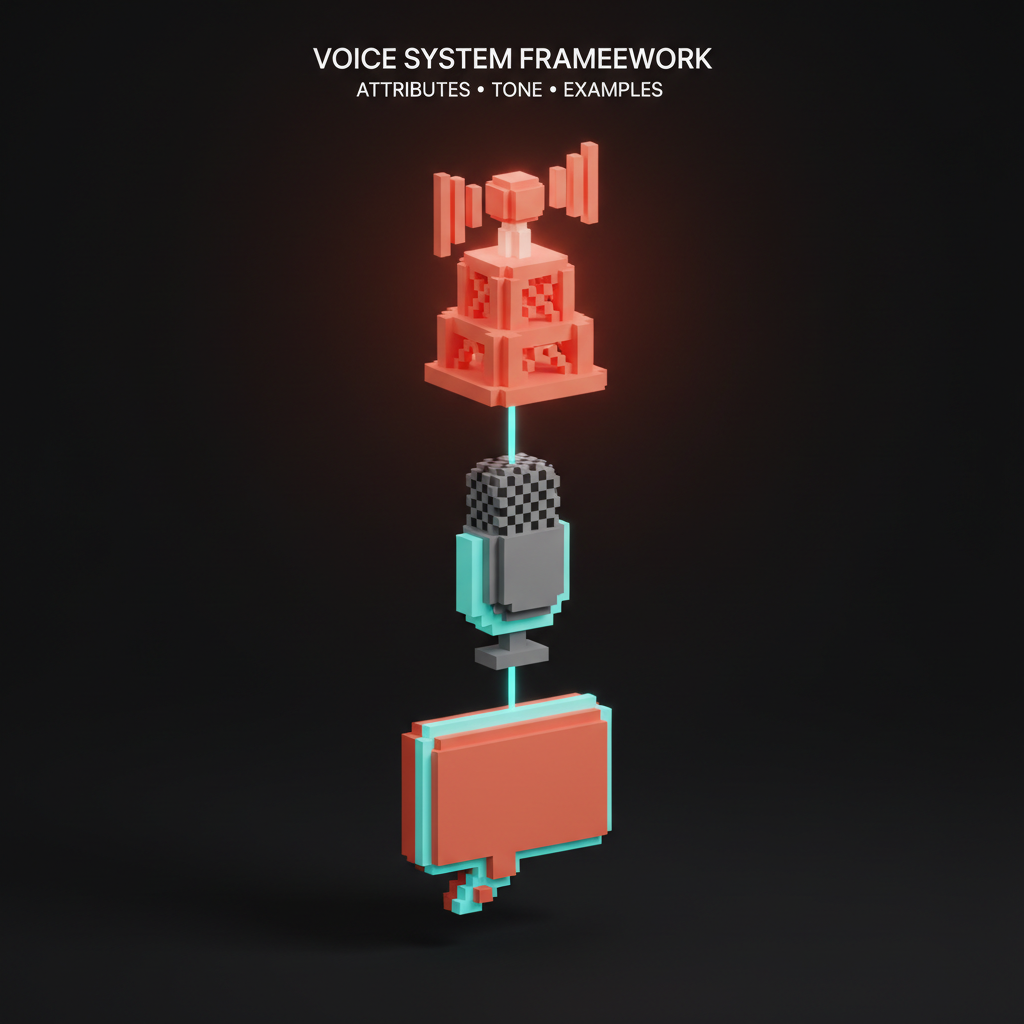
A workable voice system has exactly three layers. Get all three in writing before you try to apply any of them.
-
Voice attributes describe the personality at the core of the brand. Skip generic words like "friendly" or "professional" and try "pragmatic but warm" or "opinionated without being combative." Most voice guides stop here, which is why most voice guides fail.
-
Tone spectrum maps the voice to four to six real emotional contexts (marketing, onboarding, error states, support, social). For each, show what "turned up" and "turned down" looks like. This is where you catch the error-state copy that sounds like a legal department wrote it.
-
Applied examples are the fastest-learning layer. Take five real sentences from live copy and write each one correctly and incorrectly in your voice, side by side. A writer who sees "your password is incorrect" next to "that password didn't match, want to try again?" learns the voice in seconds.
Five brand voices at a glance
| Brand | Archetype | One-line description | Never says |
|---|---|---|---|
| Mailchimp | Warm-pragmatic | Helpful first, personality second | Jargon, pressure, formality |
| Discord | Casual-inclusive | Sounds like the community it hosts | Corporate, distant, formal |
| Headspace | Calm-deliberate | Voice is the product experience | Urgent, hypey, loud |
| Innocent | Playful-honest | Full personality, no pretense | Serious, defensive, corporate |
| Hey | Opinionated-anti-corporate | Voice as a competitive positioning weapon | Neutral, hedged, deferential |
These five archetypes cover most of the terrain in consumer and prosumer brand voice. None of them is better than the others. The right archetype is the one that matches who your brand actually is and what your customers actually respond to. Copying an archetype that doesn't fit the product is how you get Discord's casualness applied to a B2B legal tool.
Mailchimp: warm-pragmatic, the canonical playbook
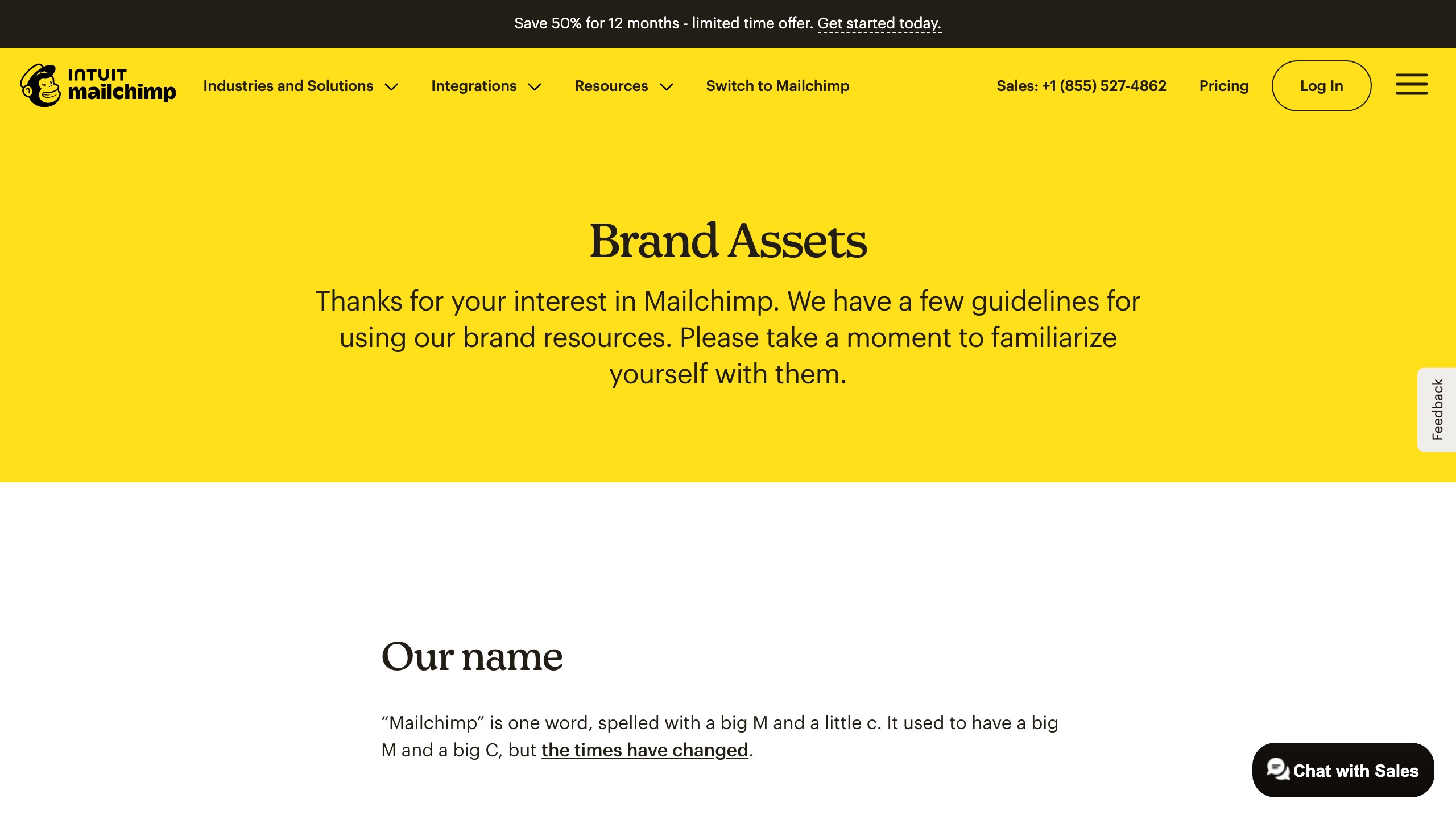
Mailchimp is the most studied brand voice in the marketing space, and for good reason. Their public content style guide has been required reading for copywriters since 2015.

What actually makes the voice work is not the guide. It is the hierarchy baked into it: useful first, personality second. Always.
The mechanism is prioritization. Mailchimp uses the same voice across three different copy contexts:
- Error messages: tell you what happened and what to do next
- Onboarding copy: teaches without performing
- Marketing copy: explains without overselling
The warmth is never the point. It is just how the useful thing gets delivered.
The line that captures the archetype is "Send better email." Three words.
No adjectives about transformation. No promises about your future. A direct instruction that treats the reader as a capable adult. That is the whole voice in six characters.
Where it fails when other brands try it: they mimic the warmth and skip the usefulness. The result is approachable copy that says nothing. Mailchimp earns the personality because information always comes first. Strip the information and you have a chatty brand that people find quietly exhausting after five minutes.
Discord: casual-inclusive, voice as a community contract
Discord's copy is casual to the point where a lot of brand designers instinctively distrust it. Colloquial phrasing. A register that sounds like a 24-year-old wrote it at 2am. Some UI strings that feel almost unfinished.
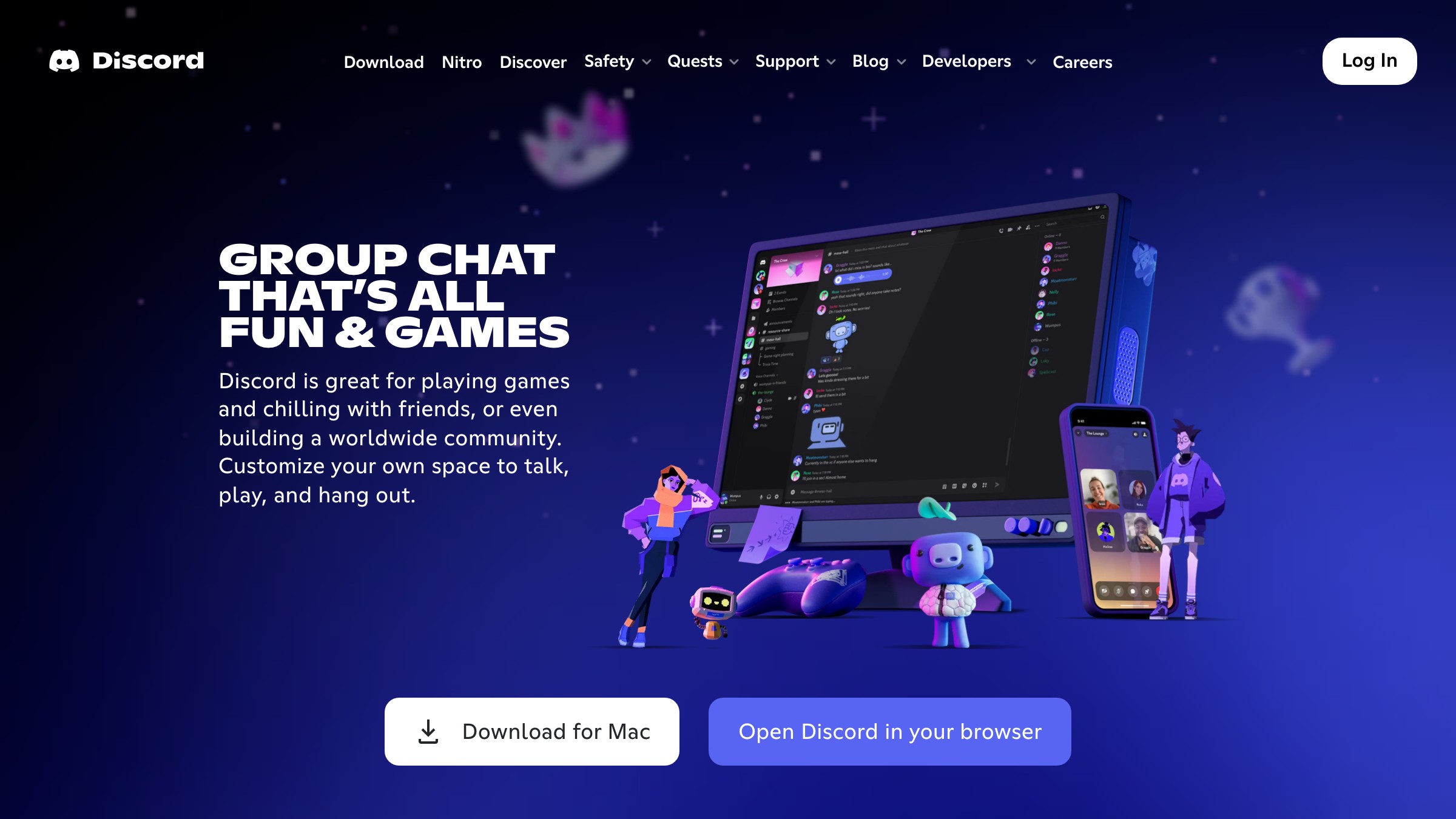
That is the point. Discord's copy does not describe a community platform. It performs community membership. When product copy sounds like the people using the product, the copy becomes a social contract: you belong here too.
"Your place to talk" is not a feature description. It is an offer of ownership. The informality is not an oversight in the brand guidelines. It is the strategy, documented and deliberate.
Where it fails: casualness without intentional inclusivity becomes insider language. Discord avoids this because the casual register is broad and low-barrier, accessible to a gamer, a study group, and an art collective simultaneously. Any brand that copies the lowercase and colloquial tone but applies it to a narrow audience archetype ends up sounding like it is trying to be cool. Trying to be cool is the fastest way to not be cool.
Headspace: calm-deliberate, voice as the product experience
Headspace does not describe a meditation app. The copy is the first meditation. Everything about it is an act of slowing down through three concurrent mechanisms:
- Short sentences that force the reader's pace down
- Low-frequency vocabulary that avoids cognitive friction
- Rhythm that breathes, with deliberate pauses in the cadence
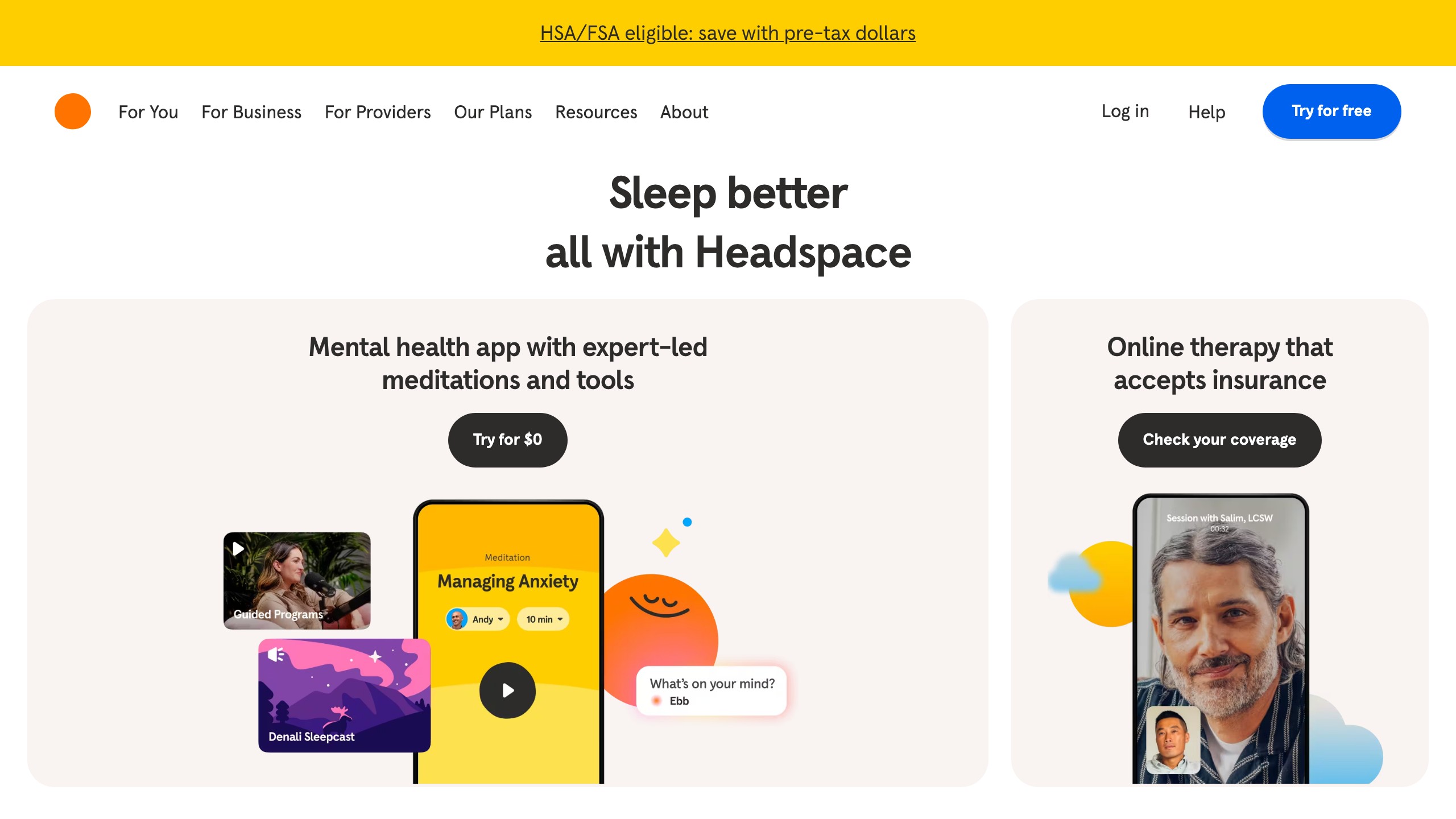
The mechanism is transfer. The voice teaches the nervous system what using the product will feel like before the person ever opens the app.
"Be kind to your mind" lands differently than "Achieve your mindfulness goals." The first is a permission structure. The second is a productivity tool that happens to involve breathing.
This is the most product-integrated voice on this list. Headspace cannot afford detachment between what the copy promises and what the product delivers. A frenetic homepage headline would undermine the entire UX on contact. The voice and the product experience are a single system.
Where it fails: calm-deliberate reads as flat if the writer does not understand the difference between slow and boring. The mechanism is pacing, not passivity. Headspace copy still has personality. It is just never in a hurry to show it.
If you want this article's principles applied to your own brand, have Brainy build your brand voice system. We ship the full system: voice attributes, tone map, applied examples, and an AI-ready documentation layer that does not need a workshop to maintain.
Innocent: playful-honest, voice as the whole personality
Innocent Drinks is a UK fruit-juice brand whose entire go-to-market strategy is, at its core, a copywriting strategy. The product is commodity juice in a crowded refrigerator. The copy is not commodity anything.

The mechanism is radical honesty delivered with warmth. Innocent admits when something is imperfect. It writes like a person, not a committee.
The side panels of its cartons read like notes from someone who is genuinely delighted that you picked up the bottle. Innocent's copy follows the same four-beat pattern across the site and the packaging:
- Open with a greeting
- Offer a small fact
- Land a small joke
- Treat you like a human who bought a juice, not a consumer engaging with a beverage product
The result: copy that has become the brand asset. The recipe is interchangeable. The voice is not.
Where it fails: a full-personality voice with no separation between brand and product is structurally brittle. If quality drops, there is no professional distance to hide behind. Innocent has built a brand where personality is the trust, which means any breach of that trust hits harder than it would hit a more neutral brand. That is a trade-off worth knowing before you commit to it.
Hey: opinionated-anti-corporate, voice as a positioning weapon
Hey is Basecamp's email product. If every other brand on this list uses voice to be more likable, Hey uses voice to be more polarizing. The homepage copy does not describe an email service. It indicts the current state of email.
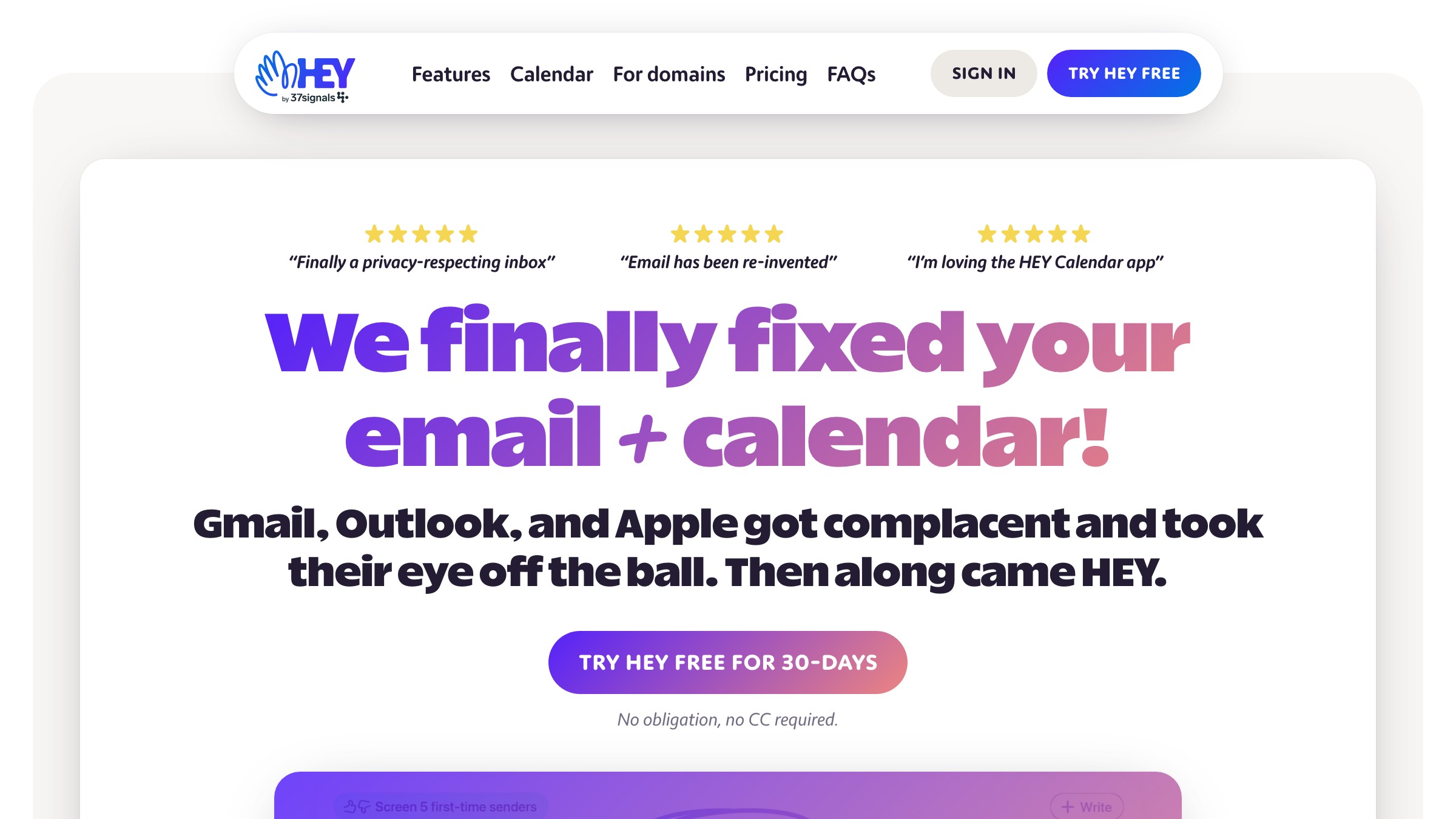
The mechanism is explicit value conflict. Hey names what it is against:
- Tracking pixels in your inbox
- Algorithmic sorting that hides messages
- Surrendering your attention to advertiser interests
That naming IS the positioning. The voice is a competitive weapon delivered as copy. Lines from their site are blunt to the point of confrontational, calling out industry practices by name and inviting you to be bothered by them too.
Every person who reads Hey's homepage and thinks "this is too aggressive" has self-selected out. The voice is not for everyone. That is the strategy.
A brand trying to acquire every possible customer cannot hold this voice. Hey holds it because Basecamp has a 20-year track record of meaning what they say.
Where it fails: opinionated-anti-corporate ages out if the opinion is attached to a moment rather than a principle. If the competitor you named stops being the dominant enemy, the positioning loses its edge. Hey is structurally sound because its enemy is systemic, surveillance-era email, rather than a specific product. The voice stays relevant as long as the problem is real.
How to document voice for the AI era
Here is the problem with most brand voice guides in 2026: they were written for humans. They rely on nuance, implication, and professional judgment. An experienced copywriter reads "warm but direct" and knows from years of work what that means. An AI generator reads "warm but direct" and produces a hedge.
Documenting voice for AI means being explicit about things experienced writers handle intuitively. That requires a different document structure, not a different philosophy.
What to include in a voice document that AI can apply:
-
Voice attributes with operational definitions. Not just "warm." Warm means the writer is on the reader's side, shows up in second-person phrasing, and acknowledges friction before solving it. It does not show up in exclamation marks or empty affirmations.
-
A not-a list for each attribute. "Warm is not: cheerful for its own sake, filler positivity, saying 'amazing' about anything the brand does."
-
Before/after rewrites. Five real sentences from live copy. Write the corporate version and the brand version side by side, labeled. This is the fastest training data you have.
-
Banned phrases with replacements. Not "avoid jargon," which is too vague. Instead, name the specific corporate-speak words your brand will never publish, plus the plain-language replacement for each. The list itself becomes the teaching tool.
-
Tone context map. A table showing how the voice adjusts by surface. Give AI the map, not just the compass.
A voice JSON you can paste into a system prompt
The fastest-applying voice document is a structured block you paste directly into a system prompt or AI assistant configuration.
{
  "brand": "YourBrand",
  "voice_attributes": ["pragmatic", "warm", "direct"],
  "never_say": ["utilize", "ideate", "deliverables", "scalable"],
  "always_prefer": ["short sentences", "second person", "active voice"],
  "tone_contexts": {
    "marketing": "confident, specific, no exclamation marks",
    "error_states": "plain, solution-first, never apologetic in tone",
    "social": "shorter, drier, one idea per post"
  },
  "example_rewrites": [
    {
      "wrong": "Utilize our end-to-end platform to maximize deliverables.",
      "right": "It handles the heavy lifting. You focus on the work."
    }
  ]
}
Paste this into your ChatGPT custom instructions, your Claude project system prompt, or your internal AI writing assistant. The specificity is what makes it work. Vague adjectives produce vague outputs. Specific examples produce specific outputs.
How to apply voice across product surfaces
A voice guide that only covers marketing copy is incomplete. Brand voice shows up everywhere a person reads your words, and it rarely holds consistent unless someone explicitly mapped the whole territory.
| Surface | Voice priority | Common failure |
|---|---|---|
| Marketing headlines | Lead with the brand POV | Generic benefit statements |
| Onboarding copy | Useful first, personality second | Being cute when clarity is needed |
| Error states | Plain, human, solution-oriented | Legal-speak or robotic defaults |
| Transactional email | Efficient, with on-brand markers | Completely different register from everything else |
| Social media | Shorter, more conversational | Repurposed long-form copy pasted in |
| Product UI strings | Invisible when right, jarring when wrong | Written by engineers, never reviewed |
| Support documentation | Authoritative and approachable | Passive voice, excessive hedging |
Product UI strings are the most neglected surface on this list. They are often written by product managers or engineers solving a functional problem, not a voice problem.
A modal that reads "Are you sure you want to proceed with this action" and a modal that reads "Ready? This can't be undone" both work. Only one sounds like your brand.
Write UI string examples explicitly into the voice guide or they will always drift toward the most cautious person in the room.
The voice audit when you do not have one yet
Most brands that need a voice guide do not have one because starting from zero feels abstract. Here is how to do the audit in a single working session.
-
Collect 20 pieces of live copy. Homepage, a recent marketing email, three social posts, an error message, an onboarding screen, a product page. Print or screenshot them. You need the full range.
-
Write the same sentence five ways. Take a neutral statement like "We help teams communicate better." Write five versions with different personalities, then read them aloud. Pick the one that sounds most like you and push it further.
-
Write the never-says list. What is a sentence your brand would never publish, even if the information was correct? "Utilize our end-to-end platform to maximize scalable deliverables." If that lands as obviously wrong, you already have a voice that you just have not written down.
Reverse-engineer the voice you already have
-
Find your highest-confidence copy. Every brand has a piece of copy written when they were just being themselves, such as a founder's first email or a landing page written in one sitting. That piece is your voice anchor. Pull out the sentences and reverse-engineer the rules they follow.
-
Look for the inconsistencies. Compare your homepage to a recent transactional email, then compare an Instagram caption to a product page. Where do they feel like different brands? Those gaps are where your voice guide needs the most specific rules.
-
Write the first draft, ship it, and add to it. Three attributes with definitions, five banned phrases, three before-and-after rewrites, and the tone map table fit in three to five pages and make a functional voice guide. Refine it against real copy as it comes in, not in a workshop that produces a 40-page document nobody opens.
Common voice failure modes
Most voice failures are not dramatic. They are slow accumulations. You only notice them when a reader says "this doesn't feel like you anymore" and you cannot identify when it changed.
Too generic. The voice guide says "friendly, professional, approachable." That describes every brand and no brand simultaneously. Generic attributes produce generic copy. Specificity is the entire point of a voice guide, not the decoration on top of it.
Copy by committee. Every person who touches copy smooths an edge, softens a point, adds a hedge for legal, removes the joke because someone in the meeting didn't laugh. The result is copy that nobody objects to and nobody remembers. Voice systems die by consensus. One person should own the voice and have the authority to defend it, even in a meeting where the CMO disagrees.
Voice that changes by surface. Marketing sounds like a startup. Legal pages sound like a law firm. Social sounds like an intern running their personal account.
Every surface treated as a separate kingdom. This is almost always an org problem, no single person owns the cross-surface voice, so each team applies their own judgment with their own defaults.
Voice that ages badly. Slang, internet vernacular, and cultural references have half-lives. Brands that build personality around current internet humor become dated faster than brands that build it around a consistent point of view. Mailchimp's "Send better email" from 2015 still works. A 2015 brand voice built around the memes of that year does not.
Voice nobody enforces, and how to fix it
The guide exists, but nobody opens it. It lives in Notion or a Figma page that nobody opens. New writers get onboarded without reading it.
Voice guides are not self-executing. Someone has to read new copy against the guide before it publishes, and that has to be someone's actual job.
FAQ
What is the difference between brand voice and tone?
Voice is your brand's fixed personality. It stays consistent across all copy, all channels, and all writers. Tone is how you modulate that personality to fit a specific context, audience, or emotional moment. Same voice, different tone: Mailchimp is always warm and pragmatic, but the warmth in a welcome email is turned up higher than in a billing error notification.
How long should a brand voice guide be?
As long as it needs to be to make the next piece of copy better, and not one word longer. A functional starter guide has three to five voice attributes with definitions and examples, a never-say list, five before-and-after rewrites, and a tone context map.
That fits in three to five pages. Larger organizations may need more, but start short and add specificity as real copy reveals gaps. A 40-page document nobody opens is not a voice guide, it is a monument to a workshop.
Can you have a strong brand voice and still be flexible across markets?
Yes, but it requires deliberate planning. The voice attributes stay fixed. The tone context map gets expanded to include cultural and market-specific calibrations.
Innocent's UK-playful voice travels reasonably well to English-speaking markets but needed significant adaptation for continental Europe. Document the adaptations explicitly rather than letting regional teams solve it from scratch and produce five different brand personalities.
FAQ: writing for AI and team alignment
How do you write brand voice prompts for AI generators?
Specificity. Generic voice prompts produce generic outputs. Give the AI the voice attributes, the never-say list, before-and-after examples, and explicit tone context for the specific task.
Feed it three to five real examples of brand copy at its best. System prompts that include example rewrites produce dramatically more consistent results than system prompts that list adjectives.
What if team members disagree about the voice?
This is almost always a symptom of not having a written guide and making decisions by gut feel. The fix is to write the guide and designate one person as the voice owner. Disagreements about voice belong in the document creation process, not in the copy review at 4pm on a Thursday before a launch. If you are actively fighting about voice on a deadline, the guide is already overdue.
How often should you update a brand voice guide?
Review it once a year against a sample of recent live copy. Update when you find copy that the current guide does not cover well, not on a fixed schedule. Add to the never-say list when phrases have crept in that need to be officially banned. Do not rewrite the core attributes unless the brand has genuinely repositioned, and understand that changing the core voice is a brand strategy decision, not a content calendar decision.
Stop letting your voice happen by accident
Every piece of copy you publish is a voice decision. The question is whether it was intentional or a default. Brands that define voice early give every writer, every agency, and every AI generator a target to hit. Brands that skip it get whatever interpretation the current writer thought felt right, which is a different answer every time.
The five brands in this article built voice systems that survive writer turnover, agency changes, and platform shifts. None of them achieved that by accident. They wrote it down, gave it to every person who touched copy, and built a review process that kept it honest.
For the visual layer that sits underneath voice, brand identity guidelines covers how the written and visual systems connect. For the full picture of what voice is part of, start with the full brand identity playbook. If you want to understand why your customers perceive the brand differently than you intend, the difference between brand identity and brand image is the right next read.
For more brand identity breakdowns, the full archive is there.
Have Brainy build your brand voice system.
Need a voice and tone system that survives 200 writers, three agencies, and an AI generator, not a tagline doc nobody opens? Brainy ships brand identity.
Get StartedGet new papers by email
New Brainy papers in your inbox. Confirm once, unsubscribe anytime.