
Vibe Coding Risks: What Breaks When One Person and AI Ship a Whole Startup
Vibe coding risks no one audits when one founder and AI ship a whole startup, from security holes to broken branding, and how to harden it into a real one.
Vibe Coding Risks: What Breaks When One Person and AI Ship a Whole Startup
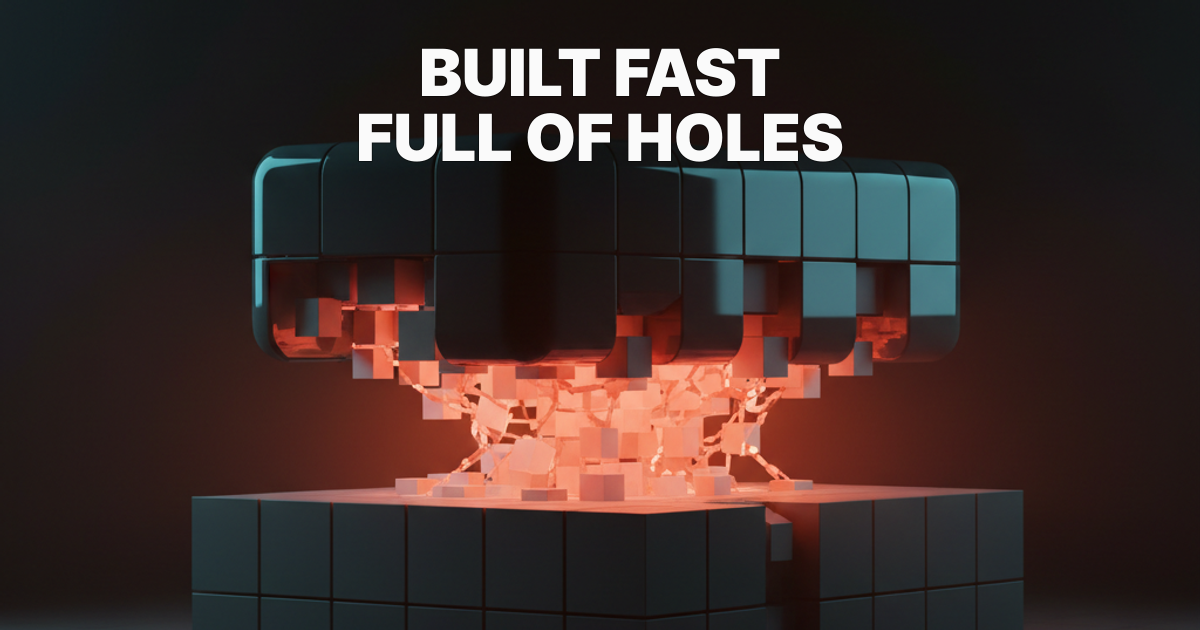
AI made it free to ship a product and just as free to ship a liability.
In 2026, a solo founder with Lovable, Bolt, v0, Cursor, or Replit can have a working product in production by Saturday afternoon. The speed is real. The problem is that everything those tools quietly skip is also real, and the skipped parts are exactly what separates a working demo from a real business.
This paper maps what actually breaks underneath the surface of a vibe-coded startup: the security holes sitting open until someone finds them, the branding that contradicts itself across every page, the UX that only makes sense to the person who built it, and the hollow structural foundation underneath all of it. Then it covers how to harden what you already shipped.
The gold rush nobody is auditing
Thousands of founders shipped AI-built products in 2025 and 2026. Most of them are running in production right now, some with paying customers, active users, and real revenue. Almost none of them have been audited.
This isn't a failure of the founders. It's a structural side effect of the tools. When Lovable or Bolt generates a working product in hours, the psychological reality is that it feels done. The UI is polished, the flows work, the demo impresses, and everything looks solid from the outside.
The problem is that "looks solid" and "is solid" diverge sharply the moment you look inside. Security patches aren't baked into generated code by default. Brand decisions get made in isolation across disconnected sessions. Forms and onboarding flows are generated from pattern libraries, not from thinking about how your specific users think.
One person, every hat
Vibe coding works because one person can now cover ground that used to require a team. A solo founder can design the product, build it, write the copy, configure payments, and push to production without hiring anyone. That is a genuine, non-trivial structural shift in what a single person can accomplish.
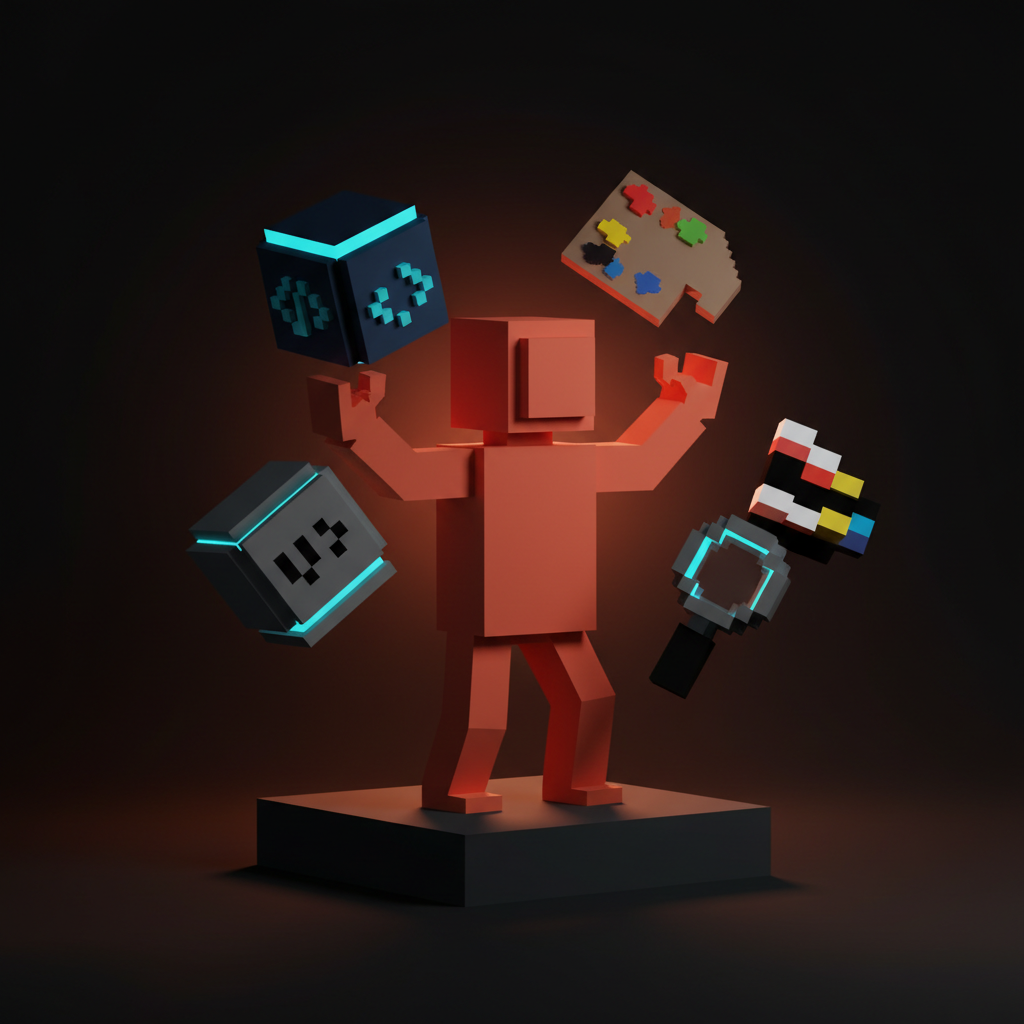
The catch is that every hat still exists even if one head is wearing them. Security audits don't stop being necessary because the developer skipped them. Brand consistency doesn't manage itself because the founder generated the logo at midnight. UX research doesn't happen by default because the builder assumed everyone thinks the way they do.
Tools like Lovable, Bolt, v0, Cursor, and Replit removed the execution barrier. They did not remove the need for judgment. And judgment is exactly what degrades under speed pressure when you are the developer, the designer, the writer, and the founder all at once.
See how designers are navigating this at how designers actually use vibe coding.
What vibe coding actually ships
A typical Lovable or Bolt build ships a working UI, real data persistence, Stripe payment flows, authentication, and a route structure that would have taken a team two sprints to build manually. That part is real and worth respecting. The part worth auditing is what comes bundled with it.
Generated code tends to ship with a predictable set of gaps bundled in:
- Secrets sitting in the wrong place, often client-side
- Logic running in the browser that belongs on the server
- No rate limiting on public endpoints
- No systematic error handling
These aren't bugs in the AI tools. They're the natural output when speed is the only target and nobody reviews the architecture before push.
The branding is usually assembled across three or four disconnected sessions: one for the logo, one for the landing page, one for the app dashboard, one for the emails. Each session generated something reasonable in isolation. Together, they contradict each other.
The copy fills space, not intent. The onboarding forms ask the questions the AI suggested, not the questions that tell you whether a user will ever convert.
The security holes you cannot see
The security surface of a vibe-coded product is larger than it looks. These are the gaps a typical AI-generated build leaves open.
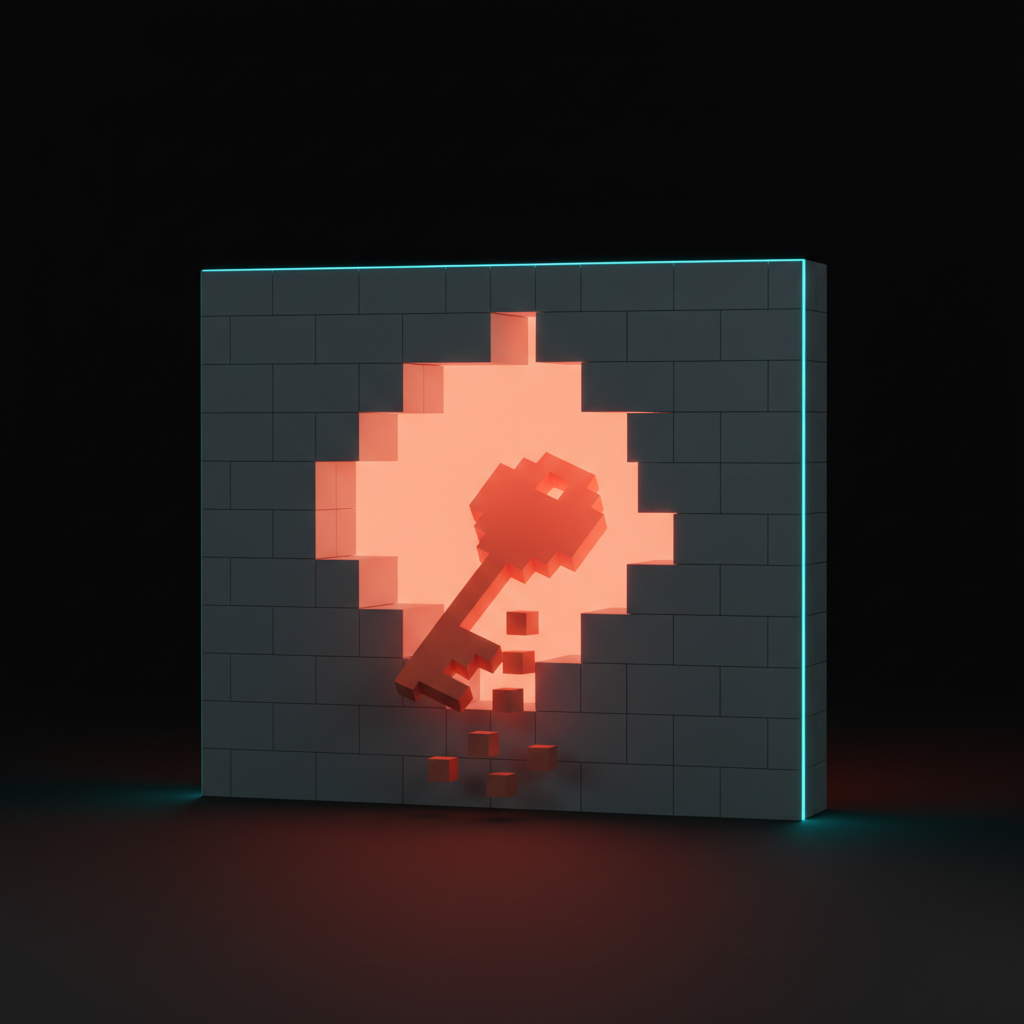
- API keys and secrets in the wrong layer. Generated frontends frequently handle secrets client-side because the fastest path to "it works" is often to put the key where the code runs. Anyone who opens DevTools finds it immediately.
- No rate limiting on public endpoints. A signup route or a contact form with no rate limiting is an open abuse vector. Generated backends rarely add this by default because the AI has no reason to anticipate hostile traffic.
- Unprotected internal routes. Generated apps often protect the main dashboard but leave admin routes, API endpoints, or data exports completely open, because the builder never walked through the product as an unauthenticated user.
- Server-side validation missing. Client-side validation feels complete when you're building fast. Server-side validation is a separate layer that gets skipped when you're generating code from prompts rather than from security principles.
- No dependency audit. The npm packages bundled into generated code are whatever the AI reached for at training time. Some are unmaintained, some carry known vulnerabilities, and none were chosen by someone who read the security disclosure.
An exposed API key, a rate-limit-free endpoint, or an unprotected admin route is a liability the moment it ships. It just hasn't been discovered yet.
Branding that contradicts itself
AI build tools don't have memory across sessions. Every prompt is a fresh context. That means the font pairing from the landing page session, the color choices from the dashboard session, and the button styles from the onboarding session were each generated independently with no awareness of each other.
The result is a product where the marketing site looks like one company, the app looks like a second company, and the transactional emails look like a third. Each screen is internally consistent. Across screens, nothing matches.
This isn't a superficial problem. Brand inconsistency is the fastest signal to a sophisticated buyer that the product is rough. Investors notice it, and enterprise buyers notice it especially.
The gap between an AI-built MVP and a real product often isn't the features. It's the twelve places where the visual language quietly falls apart.
The fix isn't redesigning everything. It's establishing the system that keeps a brand consistent and doing one disciplined pass to apply it everywhere.
| Layer | What typically gets generated | What usually breaks |
|---|---|---|
| Logo | Single session, often usable | Color values never exported for reuse |
| Typography | Landing page gets one pairing | App UI uses a different stack entirely |
| Color | Prompt-matched palette | Hex values duplicated with slight errors |
| Components | Per-screen, not systematic | Button variants and input styles diverge |
| Emails | Separate tool, separate session | Completely disconnected from app brand |
| Error states | Often missing entirely | Blank or browser-default styling |
The UX that only makes sense to its maker
The curse of knowledge is a well-documented trap in product design. Once you understand how something works, you cannot unknow it, and you lose the ability to see what a first-time user sees. Vibe coding amplifies it by removing every friction point that would normally force a builder to explain their assumptions to someone else.
When the builder is also the prompter and the only tester, the mental model used to build the product is identical to the mental model used to navigate it. Flows that feel obvious to the builder were designed for someone who already knows what comes next. New users arrive with a completely different context, no prior exposure, and no patience for confusion.
Generated onboarding flows tend to be complete and logical from the builder's perspective and completely opaque to someone encountering the product for the first time. Every step makes sense to someone who already knows the destination.
The fix isn't AI. It's watching five people who aren't you try to use the product without any help from you. What they get stuck on is your UX debt.
Everything generated, nothing decided
Modern AI tools can generate all of it in minutes, the forms, the questionnaires, the onboarding steps, the email sequences, the landing copy, the pricing tiers. The problem is that generated quickly and decided strategically are not the same thing.
| Element | Generated | Decided |
|---|---|---|
| Pricing | Three tiers because that is the default pattern | Tiers matched to your cost, buyer research, and competitors |
| Copy | Fills the space on the page | Earns a conversion from a specific reader |
| Forms | Ask the questions the template suggests | Ask what qualifies a user or diagnoses a problem |
A generated pricing page takes three minutes. A decided one takes three weeks of thinking. The distinction doesn't show up in the demo, it shows up in conversion rates six months later.
The content strategy question every vibe-coded product has not answered is what every word on the product is doing, and for whom.
Why "it works" is not yet a business
A working demo is not a business. Neither is a working MVP. The gap between "it works" and "it holds up" is exactly where vibe-coded startups are failing in 2026.

Real businesses have things working demos don't:
- Consistent branding that builds trust at every touchpoint
- Security architecture that survives a penetration test
- Onboarding flows validated by people who aren't the founder
- Copy that moves a specific reader instead of filling a slot
- A data model that scales beyond the initial use case
- Monitoring, error alerting, and a plan for when something breaks
GitHub and Stripe didn't earn "trusted infrastructure" by shipping fast. They earned it by hardening what they shipped until that trust was warranted. PlanetScale's product looks like a company that takes data seriously because it was built to look like a company that takes data seriously, at every level of the stack. That is the bar a real business clears.
The scarce resource in 2026 isn't the ability to ship. AI made shipping nearly free. The scarce resource is judgment, security, and a coherent brand. None of those come out of a prompt.
How to harden what you already built
You don't need to rebuild anything. You need to audit, prioritize, and close the gaps in the right order.
| Risk | What it looks like | One thing to fix first |
|---|---|---|
| Security | Exposed keys, open endpoints, no rate limits | Move all secrets to server-side environment variables. Run npm audit today. |
| Brand | Inconsistent color, type, and components across pages | Export a single token file with your real hex values and type stack. Apply it everywhere in one pass. |
| UX | Flows only the builder understands | Run five usability tests with strangers. Fix the top three blockers before building new features. |
| Content | Generated copy with no strategic intent | Audit every CTA. Rewrite any that don't say a specific thing to a specific person. |
| Foundation | No monitoring, no error handling, no data review | Add error tracking (Sentry or equivalent) before anything else. It tells you what's actually breaking. |
The order matters:
- Security first, the only risk with immediate external consequences
- Brand second, because it compounds with every new screen you ship
- UX third, before a large user base locks in bad habits
- Content fourth, the slowest to show its damage
- Foundation in parallel, since monitoring reveals what the other four missed
A few other hardening moves that pay off early:
- Add a
Content-Security-Policyheader to every response - Audit every environment variable and confirm none are exposed to the client layer
- Set rate limiting on every public-facing endpoint before a launch drives real traffic
- Walk through the entire product as a logged-out user and list every route that loads
- Review every third-party package against its latest published security disclosure
Find more on building real products across the Brainy archive.
Bring it to Brainy
The hardening work is not glamorous and it is not fast when you are doing it alone, especially when you are also shipping new features and running the business at the same time. Most founders don't have a security background. Most don't have a brand systems background. Most haven't had time to run proper usability research.
Brainy's team audits AI-built products and turns them into real ones. We pressure-test the security surface, establish the brand system, fix the UX flows that are churning users, and rewrite the copy that isn't earning anything. We have worked with products built on every major AI tool including Lovable, Bolt, v0, Cursor, and Replit, and we know exactly where each one tends to leave the gaps.
The brief is simple. Bring us what you built, and we tell you what is actually wrong. Then we fix it.
You end up with a product worth trusting, not just one worth demoing.
Have Brainy harden your startup.
FAQ
What is vibe coding?
Vibe coding is building software by prompting AI tools to generate the code, design, and content, describing what you want in natural language and accepting the output without reviewing every line. The term spread widely in 2025 after Andrej Karpathy described the workflow, and it caught on fast because the tools genuinely work.
Is vibe coding a bad idea?
No. It is a real productivity multiplier that lets one person ship things that previously required a team. The risk is not in the approach, it is in treating a fast build as a finished product without auditing the security, brand, UX, and structural gaps the speed creates.
What is the biggest vibe coding security risk?
Exposed API keys and secrets on the client side are the most common and immediately exploitable problem. AI tools optimize for "it works," which often means putting secrets where the code runs, including in the browser. Any secret visible in DevTools is a live liability.
Does brand inconsistency really affect business outcomes?
It matters more as buyer stakes get higher. A consumer app can survive rough branding longer than a B2B product can. The more your buyer is evaluating trust before purchasing, the faster brand inconsistency destroys it, so for anything selling to businesses or handling sensitive data, contradictory visual language is an active sales problem rather than an aesthetic one.
Can I fix vibe coding risks without rebuilding the whole product?
Yes. Most hardening work is additive or corrective, not a rebuild. Secrets move to the server without touching the UI, a design token system applies across existing screens in one pass, and UX flows get revised one at a time from usability findings. The main exception is a deeply flawed data model, which sometimes needs structural change.
Build fast, then build it right
Vibe coding is not a mistake. The speed it unlocked is real and it changed what one person can build. The mistake is treating the first build as the final one without auditing what the speed created.
Security holes don't announce themselves. Brand debt compounds silently. UX problems look fine to the person who built the flow and are invisible walls to everyone else.
Generated content fills space without earning anything. These aren't hypothetical risks. They're the predictable output of a process optimized entirely for speed, with nothing optimized for soundness.
The founders who come out ahead are the ones who shipped fast and then hardened deliberately. Not because they were less confident in their build, but because they understood that "it works in the demo" and "it holds up in production, under scrutiny, under growth" are different things, and only one of them is a business.
Build fast. Then build it right.
You shipped something real, fast. Brainy can pressure-test it, close the security gaps, fix the brand, and turn it into a startup that holds up. Start a conversation with us.
Get StartedGet new papers by email
New Brainy papers in your inbox. Confirm once, unsubscribe anytime.