
The Design Job You Should Be Quitting
Half the design jobs posted on LinkedIn this week did not exist five years ago. The other half should not exist next year. Five design roles to walk away from, five worth running toward, and a five-question audit for whether to stay, retrain, or leave.
Half the design jobs posted on LinkedIn this week did not exist five years ago. The other half should not exist next year. Knowing which side your role sits on is the most important career decision you will make this decade.
Most designers are not making it. They are coasting in seats that look stable from the inside and read as silently obsolete from the outside. A senior product designer at a B-tier SaaS, an art director at a mid-size agency, an in-house brand designer cranking weekly templates. The salary still hits. The title still scans. The work is being absorbed in real time.
This piece names five design jobs that are dead-ends in 2026, five that are the new high-leverage seats, the conditions under which a "dead" job is actually worth keeping, and the audit that decides stay, retrain, or leave.
The five design jobs to walk away from
The market is sorting designers into two piles. Roles where AI compresses the workload faster than the role can absorb the change, and roles where AI is leverage on top of a job that still exists. These five sit firmly in the first pile.
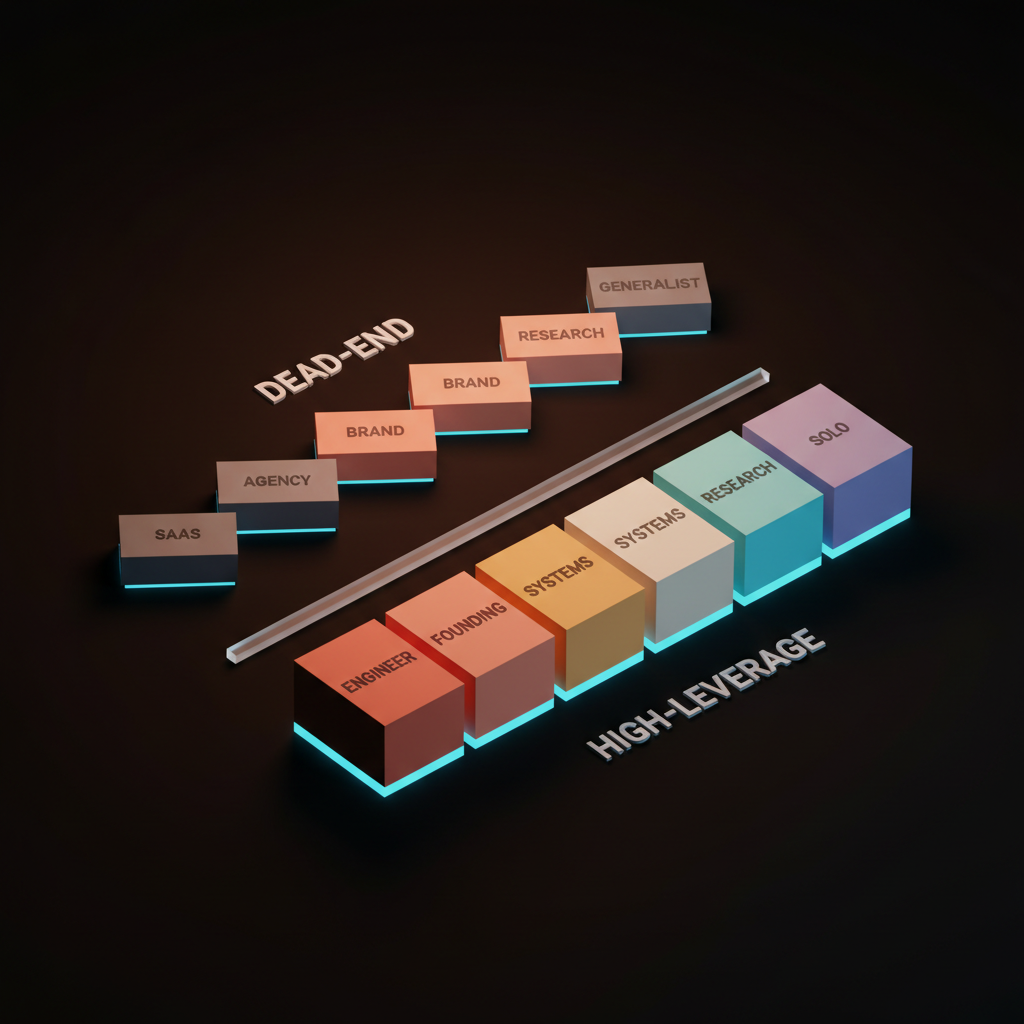
The pattern is consistent. Each of the five roles below is a job whose deliverable can be generated, scaffolded, or templated by tools the team already pays for. The role survives on inertia for another quarter or two, then the next reorg eats it.
Senior product designer who only ships Figma files
The most exposed seat in 2026 is the senior product designer at a SaaS company whose entire output is Figma files thrown over the wall to engineering. A junior with Cursor, a v0 subscription, and a design engineer ships the same surface in a third of the time. The senior PD without a code-fluent practice or a system ownership story is the most expensive part of that pipeline, and finance has noticed.
The work is not gone, the seat is. Companies are restructuring around design engineers and AI orchestrators, and the death of the senior designer is showing up in flat senior headcount and rising design engineer headcount across Linear, Vercel, Anthropic, Brex, and Ramp. If your weekly output is Figma files and your last shipped component went through three rounds of handoff, the rung is sliding under you.
Agency-side art director shipping marketing assets at scale
The agency-side art director who runs a team producing weekly marketing assets at volume is in trouble. Generative tools collapsed the unit cost of brand-adjacent assets to near zero. Banner sets, social variants, paid ad creative, motion bumpers. Work that filled three creatives' weeks now ships in an afternoon by one person running Midjourney, Runway, and Figma with AI.
Mid-tier agencies are quietly cutting the AD layer or rebranding it as "AI creative director" at lower comp and higher output. Some shops adapt and become design-engineering-fluent campaign teams. Most do not. If your agency still bills hourly on asset volume, the meter is running.
In-house brand designer cranking weekly templates
The in-house brand designer at a non-design-led company whose week is social templates, email headers, sales decks, and webinar covers is doing work that Canva, Figma's AI features, and a marketing coordinator with a brand kit do at 80 percent quality. The role exists because it predates the tooling, not because the tooling cannot do the job.
Marketing notices first. The brand designer becomes a bottleneck on volume, then a tax on volume, then a line item in the next budget review. The roles that survive own the system, set the rules the AI tools follow, and ship campaign-level work the templates feed off. Anyone whose week is a queue of one-off requests is the cheapest part of the org to optimize.
UX researcher whose synthesis layer was the entire job
The UX researcher whose primary deliverable was synthesis, the affinity diagrams, the theme clusters, the highlight reels from twelve interviews, is watching the synthesis layer get absorbed by AI. Dovetail, Notably, and Marvin already cluster transcripts, surface themes, and generate summaries good enough for a Tuesday standup.
The qualitative depth of research did not get automated. The judgment of what to study, the rapport during the interview, the sharp question that breaks the actual problem open, that is still human work. The Lite version of the role, synthesis-as-deliverable, is being eaten. If your week is mostly transcript tagging, three jobs are collapsing into two.
The "design generalist" with no system, no shipping, no specialization
The generalist with a portfolio of mocks, no system ownership, and no shipping ability is the role with the least defensible position in 2026. The market wants depth or shipping, often both. Range without either reads as junior at five years in, and senior generalist is becoming a euphemism for cannot place this person.
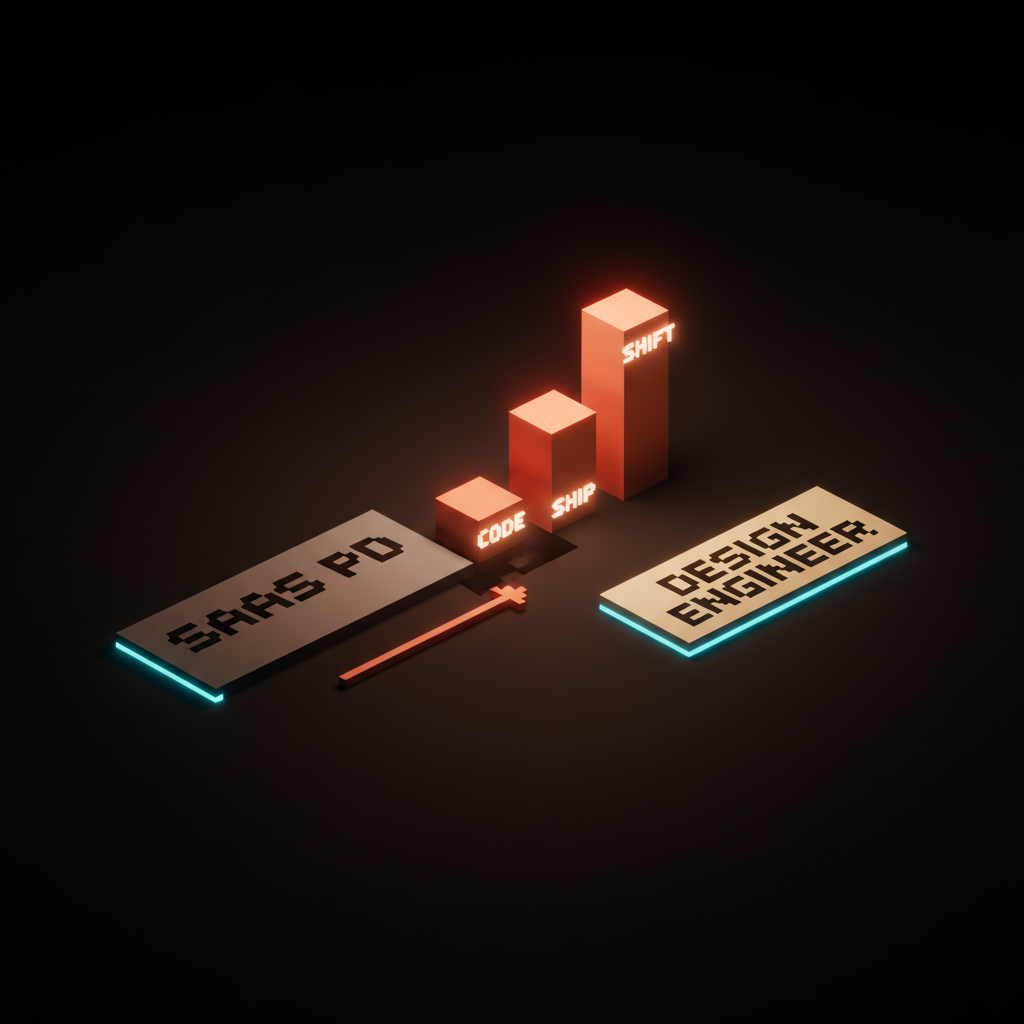
The fix is not more range, it is a wedge. Pick a system, ship in code, own a surface, write in public, build the anti-portfolio artifacts that prove the wedge. A generalist with a shipped product and a public trail reads as a founding designer in waiting. Without either, a contractor.
The five design jobs worth running toward
Five seats are absorbing the headcount the dead-end roles are losing. Each pays better than the role it replaced, climbs faster than the old career ladder allowed, and has a public hiring trail that proves the bar.
The pattern across all five is the same. Code or system fluency, taste as the load-bearing skill, and AI used as leverage instead of as a threat. If your next move is not toward one of these, you are choosing the slower lane on purpose.
Design engineer at a product company
The design engineer is the seat that quietly won 2026. Linear, Vercel, Anthropic, Stripe, Anysphere, Browser Company, and Granola all run design engineering as a named role and pay senior frontend engineering bands for the work. US senior lands 220k to 350k total. Staff clears 400k.
The job is a designer who ships in code and owns the design system as the live source of truth. Not a fancier designer, not a duller frontend engineer. The four-artifact port stack, one shipped product, a small component library, three decision logs, one motion demo, gets you the senior interview if the craft is real.
Founding designer at an AI-native startup
The founding designer at an AI-native startup is equity-heavy, scope-heavy, taste-led. Brand, product, marketing site, and design system in one chair, reporting to the founder, shipping against the founder's taste directly. Equity is real. Cash is below market. Ceiling is unbounded.
This is where the taste is the last moat thesis pays out hardest. AI-native companies ship fast, throw away half, and need a designer who can run that loop without choking. Wrong fit is brutal. Right fit is the role designers tell stories about for the next decade.
Brand systems lead at an AI company
The brand systems lead at an AI company is the high-leverage role almost no one is talking about. The job is to design the system that the agents and the humans both ride on. Component library, voice and tone, motion, illustration, the whole identity, built so the AI tools producing on-brand work at volume look like the brand and not the model.
Anthropic, OpenAI, Anysphere, and the next tier of AI labs are all building this seat. The deliverable is a system that scales across surfaces the founder never personally reviews. With a distribution by design practice and a system ownership track record, this is the seat where both compound.
Design lead inside a research org
The design lead inside a research org survives because qualitative judgment cannot be automated and the stakes are high. Anthropic alignment, DeepMind safety, Stripe Press, Apple human interface, Adobe research. Small teams, long horizons, real influence. Comp is competitive, often above product design at the same company. The seat rewards system depth, writing ability, and a willingness to operate in ambiguity for years.
Independent design engineer or studio of one
The studio of one collapsed in cost and exploded in leverage between 2024 and 2026. AI tools turned solo work that required three contractors into a one-person operation shipping at agency quality. The Pieter Levels archetype, the Brian Lovin archetype, the Linear-design archetype.
A solo running Cursor, Claude Code, v0, and a tight Figma-to-code AI design workflow ships at three to five times the velocity of a 2022 solo studio. Rates compound on shipping speed, not hours billed. Top operators clear mid-senior in-house comp with full ownership and no manager.
When a "dead" job is actually still worth keeping
Not every dead-end role is dead in every context. Three conditions keep a role on the first list alive, sometimes for years past the cycle.
A senior product designer at a regulated bank, a healthcare system, or a defense contractor is not in the same exposure curve as a senior PD at a B-tier SaaS. Compliance, audit, accessibility, and risk review keep the role load-bearing. The work is slower, comp is steady, the role survives. If the regulated context is genuine, the seat is worth holding while you build a side practice.
An in-house brand designer at a design-led company is a different role entirely. Apple, Nike, Glossier, Hermes, MoMA. They are not running templates, they are setting standards, and the standard is the product. If your CEO can name three current designers on the team by their actual work, you are at a real brand seat.
A UX researcher whose qualitative depth is the actual product, not the synthesis output, is also safe. Senior researchers at Anthropic, Stripe, Pinterest, and Airbnb ship long-horizon work AI cannot replicate because the work is the relationship, not the deliverable. If last quarter's research changed a roadmap, the role is real. Outside those three conditions, the role is the same role on every list.
The five-question role audit
A five-question test for whether your current role is dead-end or load-bearing. Honest answers only. Hedging here is how the next reorg surprises you.

- Could a junior plus Cursor plus six months of training do your job at 80 percent quality? If yes, the seat is exposed. The 80 percent gap is the gap a hiring manager closes the next time the headcount review runs.
- Does your weekly output survive Lovable or v0 generating five candidate variants per minute? If your week is variant production, the answer is no. If your week is system rules, brief writing, or shipping decisions, the answer is yes.
- Are you the decision-maker on what ships, or the spec-writer for someone else to decide? Decision-makers survive. Spec-writers without code fluency or shipping authority do not.
- Does your portfolio show shipped product or static mocks? Shipped product compounds, mocks evaporate. If your last live URL is from 2023, the trail has gone cold.
- Is your next promotion a real promotion, or a title bump that rewards ten more years of the same skill? If the senior version of your role does the same work as the mid version with more meetings, the rung is decorative. Climb a different ladder.
If you answered no to three or more, the role is on the dead list. If you answered yes to four or more, you are in the right seat and should stay another year. Two-and-three is the gray zone where retraining beats quitting.
How to make the move without quitting tomorrow
Most designers do not need to quit. They need to retrain, ship, and pivot inside or near the same company. Six to twelve months, in parallel with the day job.
Start by shipping side projects in code. Cursor or Claude Code plus a small Next.js or Astro project plus one weekend a month produces a public GitHub history within a quarter. Not a portfolio piece, a real shipped thing with a live URL. Pair it with the speed is the brand instinct the new ladder rewards.
Apply to design engineer roles even when your portfolio is mostly mocks. The four-artifact stack, one shipped product, one component library, three decision logs, one motion demo, opens the door. Named teams are not looking for ten years of frontend, they are looking for taste plus shipping. Two of those artifacts ship in two weekends.
Negotiate the title shift internally if the company is willing. A senior PD who quietly becomes the de facto design engineer on a feature team can surface that work in a six-month review and ask for the role and the comp. Some companies say yes immediately, some need to be shown the work, some never get there. Knowing which kind your company is is the actual decision.
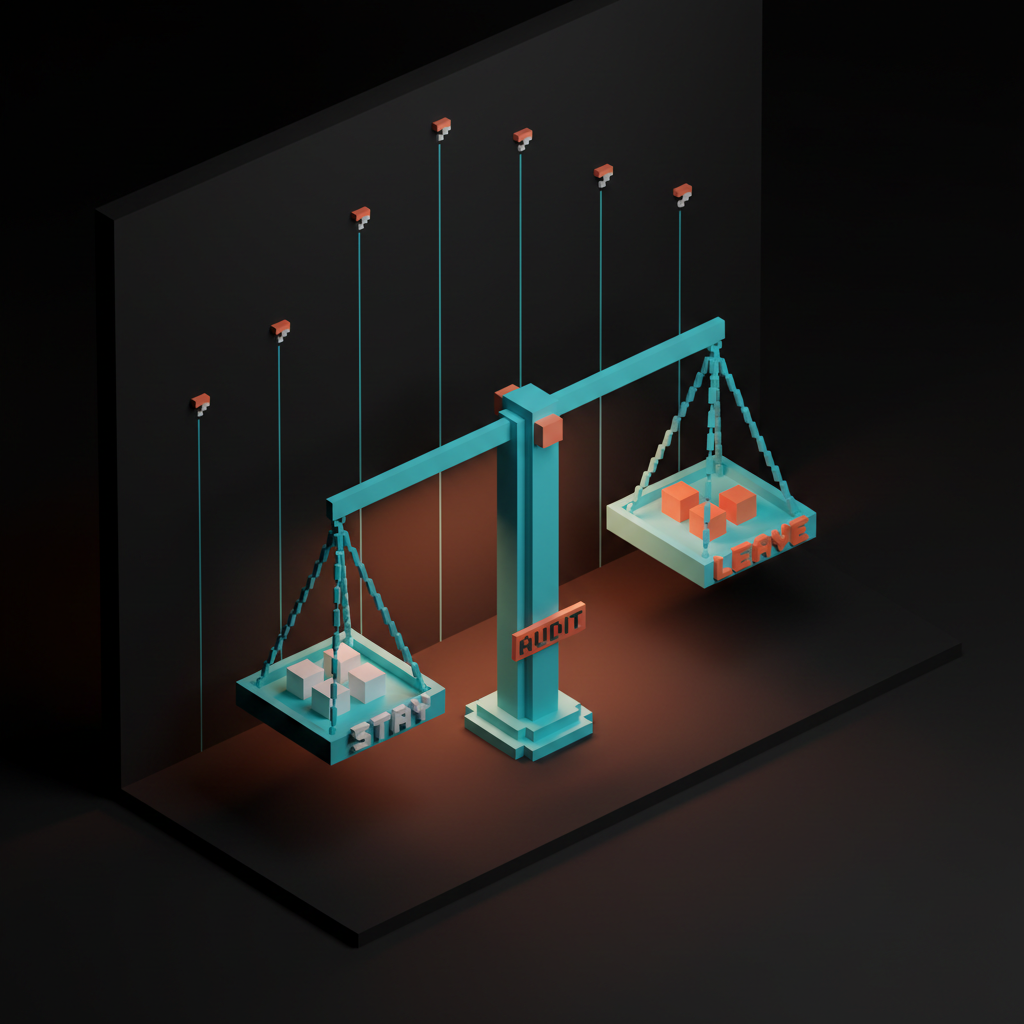
The stay-or-leave audit, seven questions
Run these seven before the next quarterly review. Score yourself honestly.
- Did you ship a real product surface to real users in the last 90 days?
- Did you write or ship code into production in the last 90 days?
- Is your team headcount growing, flat, or shrinking?
- Has your manager named two specific skills they want you to build this year?
- Is the company hiring design engineers, AI orchestrators, or design system leads?
- Do you know one designer at one of the named high-leverage companies, well enough to ask for a referral?
- If you had to leave on Friday, would your portfolio survive a 90-second skim by a senior hiring manager today?
Three or fewer yes answers is leave territory. Four to five is retrain inside the role. Six or seven is stay and double down.
FAQ
How do I know if my design job is actually a dead-end?
Run the five-question audit honestly. If a junior with Cursor and six months of training could do your job at 80 percent quality, if your weekly output is variants Lovable can generate in seconds, and if your portfolio is mostly mocks instead of shipped product, the seat is exposed. Three no answers out of five means the role is on the dead list.
Should I quit my design job in 2026?
Probably not tomorrow. Most designers should retrain, ship side projects in code, and pivot inside or adjacent to the same company over six to twelve months. Quit when you have a destination, a port stack of artifacts, and one specific role at one named company you are aiming for. Quitting without those three is a year of unemployment dressed up as a sabbatical.
What design jobs will pay the most in 2026 and 2027?
Design engineer at a named product company tops the band, 220k to 350k US senior, 400k staff and above. Founding designer at an AI-native startup pays less in cash but the equity ceiling is higher. Brand systems lead at an AI company is the third-highest band, often paid like a senior product role with director-level scope.
Pick a side, the sorting is already happening
The market is sorting designers into two groups, and the sort is mostly done by 2027. The first group ships in code, owns systems, runs AI as leverage, and works in the five seats above. The second group keeps making variants in Figma at companies that will not need them next year.
You are not stuck in the second group. The move is real, the timeline is six to twelve months, and the named teams hire on a port stack you can build in two weekends plus a quarter of consistent shipping. The hard part is not the skill build. It is admitting which list your current seat is on.
If you want help moving from a dead-end design seat to a high-leverage one, hire Brainy. We build the brand, craft, and AI workflow layer that gets designers onto the new ladder. The roles that pay in 2026 and 2027 are the ones already hiring in public. The audit is the first move.
If you want help moving from a dead-end design seat to a high-leverage one, Brainy ships the brand, craft, and AI workflow layer that gets designers onto the new ladder.
Get StartedGet new papers by email
New Brainy papers in your inbox. Confirm once, unsubscribe anytime.