
Taste Is the Last Moat: How Designers Build Judgment in the AI Era
When everyone has Claude, Cursor, Lovable, and v0, taste is the only thing left that scales differentiation. A working playbook for designers to build judgment deliberately, the four engines that grow it, and a weekly routine that turns taste from vibes into a measurable skill.
Every designer in 2026 has the same toolbox. Claude, Cursor, Lovable, v0, Figma with AI baked in, Midjourney, a stack of Skills, a prompt library that took an afternoon to copy. The tool layer commoditized in eighteen months. The only thing left that scales differentiation, the thing AI cannot copy by reading your repo, is taste.
Most designers still talk about taste like a personality trait. A vibe. An eye. A gift. That framing is wrong, and it is why most designers stop growing at year four. Taste is a skill. Built on purpose. Compounds on a schedule. The designers who treat it that way pull away from everyone else inside one quarter.
This is the playbook. What taste is, why it is the last moat, the four engines that grow it, a weekly routine, and the math on the two designer futures forming in 2026.
Taste is a skill, not a personality trait
Taste is high-resolution pattern recognition built from many reps, plus critical comparison, plus clear principles. Not preference. Not opinion. Not vibes. Preference says I like blue. Opinion says I think this works. Taste says this works because the contrast hierarchy carries the eye through the four states in the order that matches the user's job, and here is what to cut to make it cleaner.
The mechanical definition tells you exactly what to build. Pattern recognition needs reps. Critical comparison needs side-by-side work and a sharper eye than yours. Clear principles need writing. None of that is a personality trait. All of it is training.
Why taste is the last moat in 2026
When every designer ships with Claude, Cursor, Lovable, and v0, the work that used to separate a junior from a senior happens in a prompt. Layout, hierarchy, components, variants, animation, copy, the whole production layer collapses to a few good runs of an AI tool. The designer who operates the stack ships in an afternoon what used to take a week. So does the designer two seats over.
What scales differentiation when the production layer is identical is judgment. Taste is the layer above the prompt. It is what you accept and reject from the model output, which of eighteen variants gets shipped and which seventeen get killed. Naval Ravikant called it the new leverage. The model has seen every reference and still cannot tell you which one belongs in this room for this audience for this brand.
The split in 2026 is not AI versus no-AI. Every working designer uses AI. The split is taste versus no-taste, and it is brutal.
What taste actually is, mechanically
Taste is the speed at which you can look at two options and know which one is better, plus the language to explain why. Speed plus articulation.
Speed comes from reps. The designer who has looked at ten thousand landing pages with a critical eye sees the difference in a second. The designer who has looked at three hundred takes a minute and gets it half right. Articulation comes from writing. The designer who can say the contrast ratio fights the eye flow, the type pairing leaks tension, the negative space is doing two jobs, has built principles. The one who says it just feels off has not.
Reflex without articulation collapses the moment a client pushes back. Articulation without reps is theory. Taste is both firing together.
The four engines that grow taste
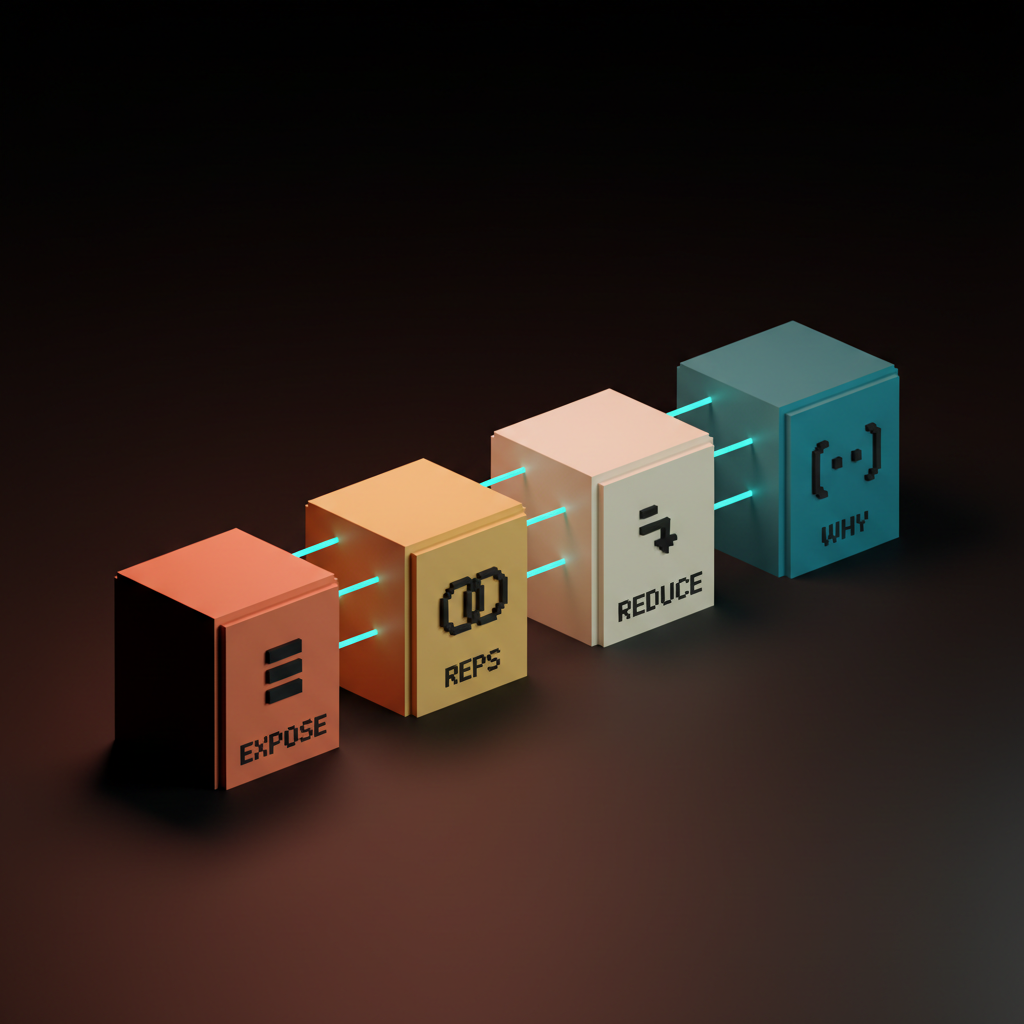
Taste does not arrive. It gets built. Four engines compound it: deliberate exposure as a curation diet, forced reps with critique, the reduction test, and articulating why. Run all four and taste compounds in months, not years. Run none and you plateau in a chair full of stock components.
Engine one, deliberate exposure as a curation diet
Most designers consume design. Curation builds. Consumption is scrolling Dribbble, Mobbin, Behance, and SiteInspire for an hour and feeling like you learned something. You did not. You built a vague aesthetic mood and zero pattern library. Curation is choosing one piece a day, saving it to a named library with a written note on what it does well and badly, and revisiting weekly to compare.
A curation diet has rules. One source, narrow scope, written log, weekly review. Brian Chesky ran a version of this at Airbnb. He kept a tight library of products he believed in, looked at them often, and made the team articulate what was good and bad about each.
Mobbin is not a curation diet. It is a buffet. Choose. Save. Annotate. Review.
Engine two, forced reps with critique
Reps without critique build muscle memory for mediocrity. The only way taste compounds is reps that get torn apart by a sharper eye than yours. Without that, you spend a year practicing your own bad habits and call it experience.
Forced reps means a real cadence. One piece shipped per week, one fifteen-minute critique with someone better than you, one written rewrite of what they said back in your own words. Find a senior, a creative director, or a peer with sharper instincts and trade critiques. If you do not have one, build a small group of three and run rotating critique. The point is the eye, not the title.
Design education works in studios with a master and fails in a vacuum with a course. The master is the critique loop.
Engine three, the reduction test
The reduction test is a runnable protocol, not a metaphor. Rick Rubin runs it on records. He cuts every part of a song that is not earning its place, then restores the smallest one that brings the song back. The version that survives is the floor. Dieter Rams ran the same protocol on products. Less but better was a working method, not a tagline.
Run the reduction test on every piece you ship. Take the layout. Cut a section. Does it still work. Cut another. Cut the heading style variation. Cut the secondary CTA. Cut the third color. Cut the gradient. Cut until the design breaks, then restore the smallest element that brings it back. That is the floor, and the floor is what you ship.
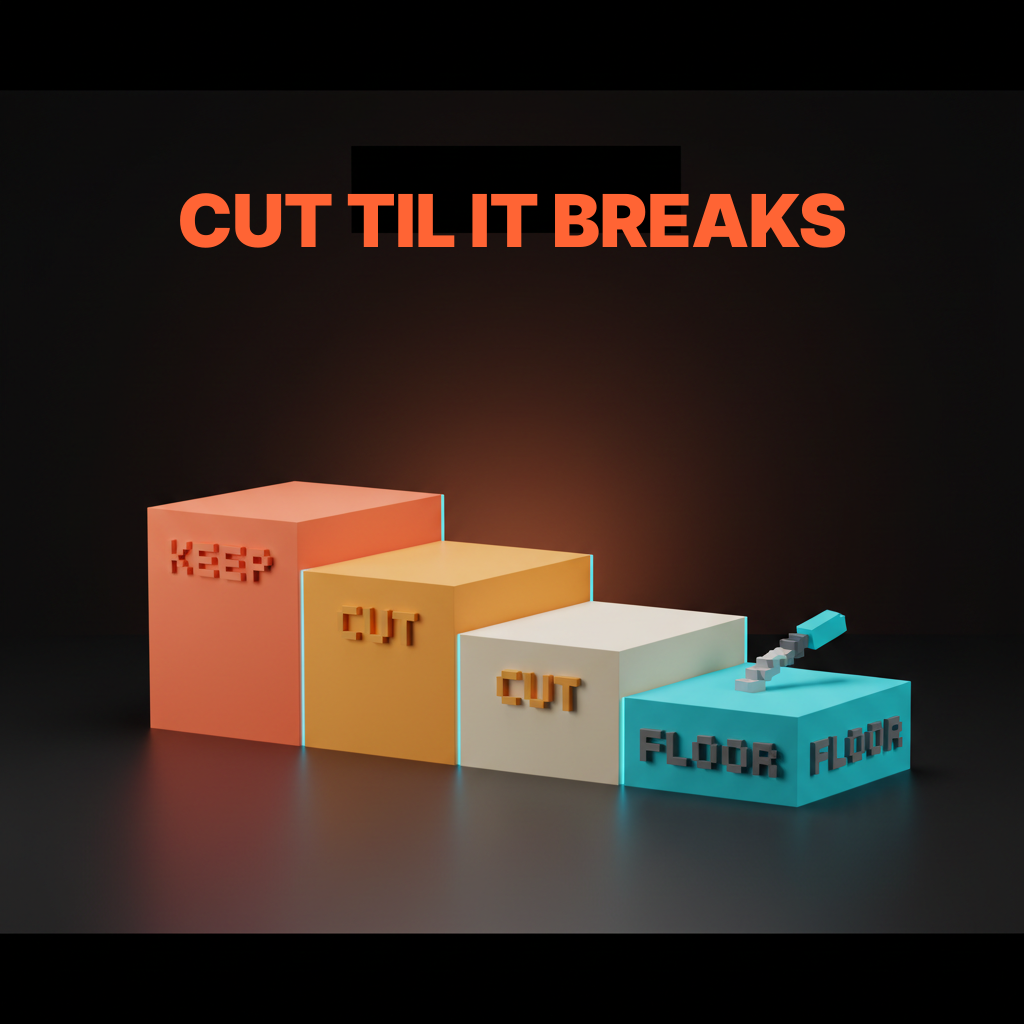
The test does two things. Builds the muscle for less, and teaches you which elements were earning their seat. Most designers cannot tell the difference until they have run cut-and-restore a hundred times. The hundredth time is when taste compounds.
Engine four, articulate why
A designer who cannot say why a design works has not built taste. They have built reflex. Reflex collapses the moment a client pushes back, the moment AI gives you eighteen variants and asks which one you want.
The practice is small and boring. Every piece you finish, write three sentences. What is working and why. What is not working and why. The principle the work is built on. Six months in, you have a written principle library that survived contact with a hundred real pieces. That is taste in language form.
Steve Jobs ran this loop in public. The iPod presentations, the iPhone reveals, the Apple Park talks. He could say why each decision was made in a sentence. Chris Bangle did the same in his BMW design lectures, explaining the principle behind each line instead of showing renders.
The references that earned the right to be cited
Six people across six fields with the same operating system. Rick Rubin in The Creative Act treats taste as listening before judgment, and reduction as the act of finding the floor. Dieter Rams in his ten principles treats taste as discipline, less but better as a working method. Steve Jobs treated taste as the willingness to say no to a thousand good ideas to ship one great one. Chris Bangle treated taste as the principle behind every line. Naval Ravikant treats taste as judgment, the leverage that compounds when production cost goes to zero. Brian Chesky treats taste as a curation diet studied deeply.
Same operating system, different vocabulary. Taste is mechanical. It is built. It is defended in language. It rejects more than it accepts.
A designer's weekly taste-building routine
Taste compounds on a weekly schedule. Yearly intentions do nothing. The routine is small, boring, and non-negotiable.
Monday. Curation. Choose one piece of work, save it to your named library, write three sentences on what it does well and badly. Twenty minutes.
Tuesday. Reps. Ship one piece, real or self-assigned. Forty-five minutes minimum, no AI on the first pass.
Wednesday. Critique. Trade with a sharper-eyed peer. Fifteen minutes receiving, fifteen giving. Write the rewrite of what you heard.
Thursday. Reduction. Take Tuesday's piece. Run cut-until-it-breaks. Restore the smallest fix. Note what survived.
Friday. Articulation. Write the three-sentence principle log on the week.
Weekends off, or read one chapter of Rubin, Rams, or Bangle. Five days, ninety minutes total most days. Run it for a quarter and the difference shows up in your work, your portfolio, and your rate.
If you want help building this into a real practice, hire Brainy. BrandBrainy ships the craft layer AI cannot generate. ClaudeBrainy ships the Skill packs and prompt libraries that turn AI into leverage on top of taste, not a substitute for it.
The trap of mistaking exposure for development
Scrolling design feeds all day feels like building taste. It is not. Exposure without curation, comparison, or articulation is the most efficient way to plateau. The designer who scrolls Mobbin for an hour a day for a year has built a vague sense that things should look modern. The designer who curates one piece a day with notes has a pattern library that is starting to compound.
The trap is comfortable. It is the design version of watching cooking shows and never cooking. If your hour with design content does not end with a saved piece, three sentences of analysis, and a comparison to two pieces in your library, the hour built an aesthetic mood, not taste.
The honest math, two designer futures in 2026
AI-augmented designers split into two groups in 2026. The split is not subtle. It is the difference between a senior rate and an output factory.
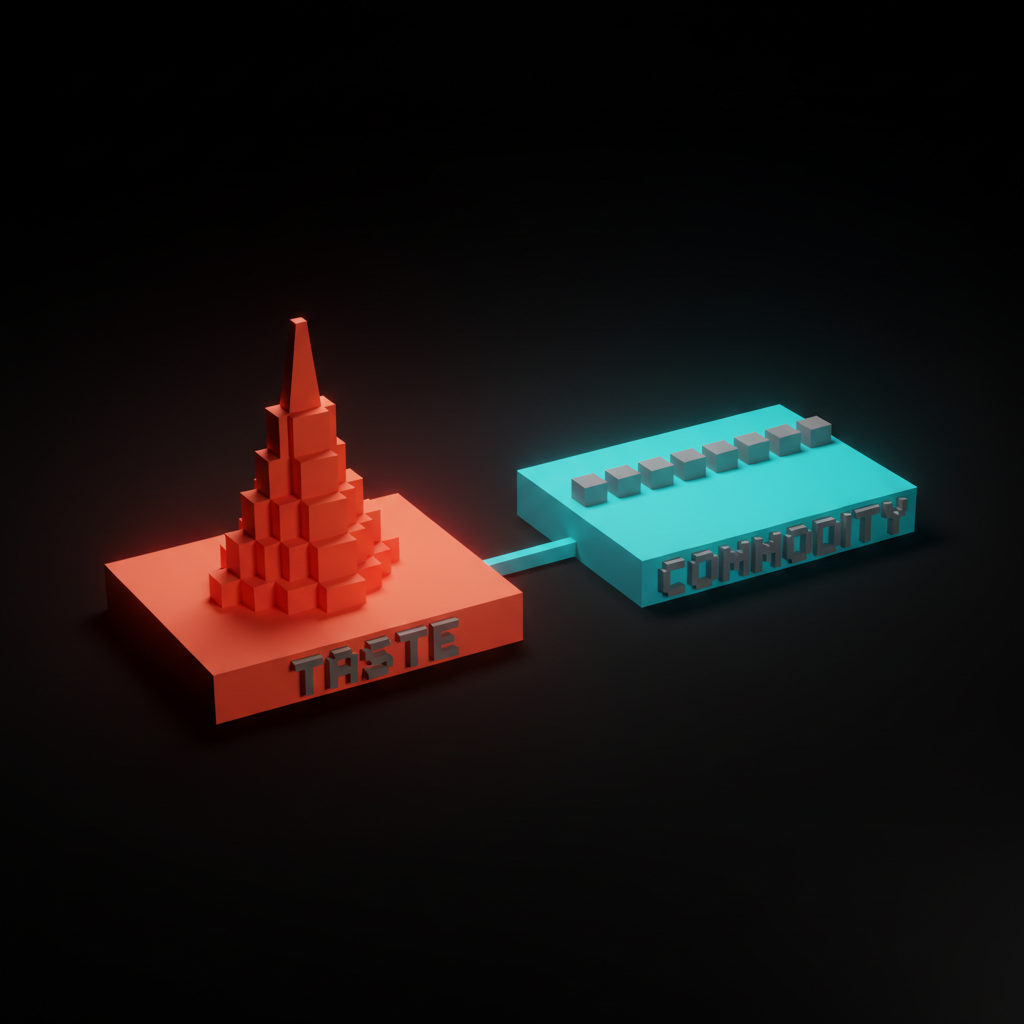
The first group ships AI-augmented work with taste. They reject ninety percent of the model output, ship the ten percent that is right for the brief, and charge for the judgment, not the production. They run AI-augmented design pricing at premium rates because the deliverable is the rejection rate, not the variant count. They build Claude Skills that encode their taste so the model produces work shaped by their principles. They climb the new design career ladder faster than the old one allowed.
The second group ships AI-augmented work without taste. They accept whatever the model gives them, dress it up with visual hierarchy tricks, and race competitors to a lower price. They become commodity output factories. The market eats them by 2027.
AI multiplies whatever you bring to it. Bring taste, AI is leverage. Bring no taste, AI is exposure.
How taste shows up in AI-augmented work
Taste is not visible in the output of an AI-augmented designer. It is visible in what they reject. The clean signal in 2026 is the rejection rate. A designer with taste runs AI, gets eighteen variants, ships one, kills seventeen, and can articulate each rejection. A designer without taste picks the most polished and ships it.
When you hire in 2026, ask to see the rejected versions, not the shipped one. The shipped piece tells you nothing because AI ships polished work for everyone. The rejected pile tells you how high the floor of their judgment is.
FAQ
Is design taste real or is it just preference?
Taste is real and it is mechanical. High-resolution pattern recognition built from reps plus critical comparison plus clear principles. Preference is what color you like. Taste is the speed at which you know which option is better and the language to explain why.
Can you develop design taste deliberately?
Yes, and it is the only way. The four engines are deliberate exposure as a curation diet, forced reps with critique, the reduction test, and articulating why. Run all four on a weekly schedule and taste compounds in months.
Why is taste more important now that AI exists?
AI commoditized the production layer. Every designer ships with the same stack and gets similar polished output. The only thing left that scales differentiation is judgment, which is what you reject and why.
What is the reduction test?
A protocol from Rick Rubin and Dieter Rams. Cut every element until the work breaks, then restore only the smallest one that brings it back. The version that survives is the floor. Run it on every piece you ship.
How long does it take to build design taste?
A quarter of weekly curation, reps, critique, reduction, and articulation produces visible movement. A year produces senior-level judgment. Most designers never run the engines, which is why most plateau at year four.
Start the engines this week
Three moves. First, set up the curation library. One folder, one source, three sentences per saved piece, weekly review. Second, find one critique partner and book the standing fifteen minutes. Sharper eye than yours, no negotiation. Third, run the reduction test on the next piece you ship. Cut until it breaks. Restore the smallest fix.
If you want help building taste into a working practice, hire Brainy. BrandBrainy ships the craft layer AI cannot generate. ClaudeBrainy ships the Skill packs and prompt libraries that turn AI into leverage on top of taste. The two designer futures forming in 2026 split on judgment, and the next quarter is the window to land on the right side.
If you want help building taste into a working practice, BrandBrainy ships the brand and craft layer that AI cannot fake, and ClaudeBrainy ships the Skill packs and prompt libraries that turn AI into leverage instead of commodity output.
Get StartedGet new papers by email
New Brainy papers in your inbox. Confirm once, unsubscribe anytime.