The Logo Audit
Twelve questions, five failure modes, and the moment to restart. A diagnostic for any logo about to ship.
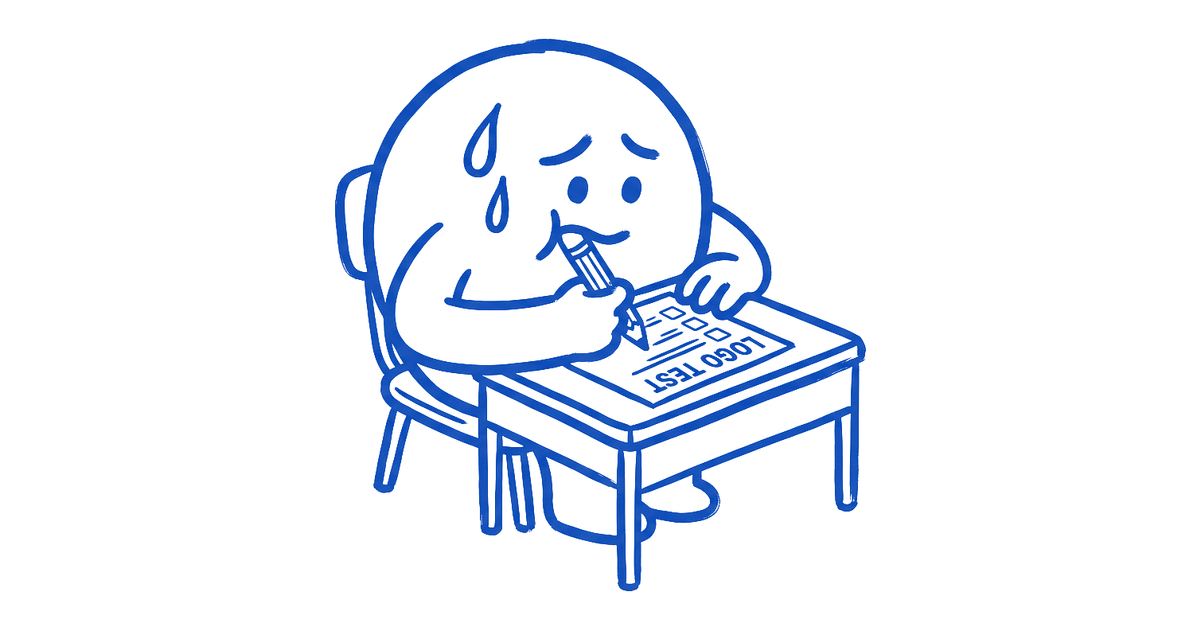
Most bad logos do not get killed because nobody checked them. They get shipped because everyone checked them on instinct, in a Figma frame, at one size, against a white background, with the designer in the room. That is not an audit. That is a vibe.
A real logo audit is twelve questions and five failure modes. You run them in order, in writing, before the file leaves your machine. If the mark fails three or more questions or sits inside any failure mode, you do not iterate. You restart.
Why the audit exists
Logos are the cheapest brand decision to get wrong and the most expensive to fix. A bad website costs a redesign. A bad logo costs every printed asset, every uniform, every signage install, every favicon, every social avatar, every legal filing, and the entire equity stack the mark was supposed to carry.
The audit exists because the room where logos get approved is the wrong room. The mark looks great at 800 pixels on a Mac display next to the designer who made it. It does not look great as a 16-pixel favicon on a tab nobody asked for, or embroidered on a polo at one inch tall, or rendered in single-color print on a shipping label.
A checklist forces the mark out of the approval room and into the conditions it actually has to survive. Apple, Nike, FedEx, and Stripe all have marks that hold under those conditions. Most logos shipped this year do not.
The 12-question logo audit
Twelve questions, four categories, three questions each. Run every question in order. Mark pass or fail. No "kind of," no "depends on context." If a question makes you hedge, that is a fail.

Form questions: the shape itself
1. Does it work in a single color? Print the mark in pure black on white and pure white on black. If it loses meaning, structure, or readability in either, the form is doing too much. The Nike Swoosh and the Apple silhouette pass before color enters the conversation.

2. Does it survive a 16-pixel favicon? Render the mark at favicon scale and look at it on a browser tab next to ten other tabs. If you cannot identify it at a glance, the mark has too much detail. Linear, Vercel, and Loops all hold at favicon size because the mark is one shape, not five.
3. Is the negative space intentional? Read the negative space guide and the Gestalt principles primer. The space inside and around the mark should be doing work, not waiting.
The FedEx arrow is the canonical example. Less canonical, more useful: every great mark has one negative-space decision the designer can defend in a sentence.
Function questions: how it gets used
4. Does the lockup work horizontal AND stacked? Most marks live in two configurations: a horizontal lockup for site headers and a stacked lockup for social avatars and app icons. The grid systems guide covers why both lockups need consistent optical alignment, not pixel alignment. If the mark only works in one, the brand will reinvent the lockup in production, badly.
5. Does it scale from billboard to button? Run the mark at 2000 pixels, 200 pixels, 64 pixels, and 16 pixels in the same review. Stripe holds at all four. Most marks fall apart somewhere between 200 and 64.
6. Does it survive single-color reproduction? Embroidery, foil stamp, laser etch, fax, single-color print, low-res screen. If the mark requires a gradient to read, it cannot ship to half the surfaces a brand actually lives on. The glossary entry on logomark covers why this matters more than designers admit.
Resilience questions: time and surfaces
7. Will it look dated in five years? Hold the mark next to logos from 2008, 2014, and 2020. If your mark looks like it belongs in any of those years, it will look like it belongs in 2026 by 2031. Trend handcuffs are the slowest failure mode and the most common.

8. Does it survive on a competitor's color? Place the mark on a red background, a blue background, and a yellow background. If the mark only works on its custom brand color, the mark is not a logo. It is a sticker.

9. Does it survive a screenshot in a presentation? Drop the mark into a PowerPoint slide a stranger built. If it pixelates, color-shifts, or fights the slide, the export pipeline will fail every time the mark leaves the brand team.
Identity questions: what it actually says
10. Could a stranger describe it in one sentence? Show the mark to a person who has never seen the brand. Ask them to describe it. If they need three sentences or trail off, the mark has no anchor.

Anthropic's mark is a single twist. Notion's is two letters in a square. Both describe in five words.
11. Does it differ from the three closest competitors? Pull the marks of the three nearest competitors and place all four in a row. If your mark blends, the why every SaaS looks the same problem has eaten the brand. Differentiation is not a nice-to-have, it is the function.

12. Does it carry the brand's actual story? Not a story you wrote in the deck. The story the company actually tells.
If the founder says the brand is about precision and the mark feels playful, the mark is wrong. Cal.com, Resend, and Linear all carry their actual story in the mark.
The 5 failure modes that kill logos
Twelve questions catch most problems. Five failure modes catch the rest. These are patterns, not points. A mark that sits inside one of these failure modes will fail multiple audit questions and probably should not have been started.

1. The gradient trap. A mark that only reads with its custom gradient. Strip the gradient, the form collapses. Most "vibrant" tech logos from 2020 to 2023 sit in this trap.
The Instagram mark survives because the icon underneath the gradient is still a camera. Most marks do not have a camera underneath.
2. The bevel survivor. A mark designed in 2008 that never got cleaned up. 3D bevels, drop shadows, inner glows, plastic gradients.
The brand has moved on, the mark has not. Bevel survivors fail the single-color test, the favicon test, and the dated test simultaneously.
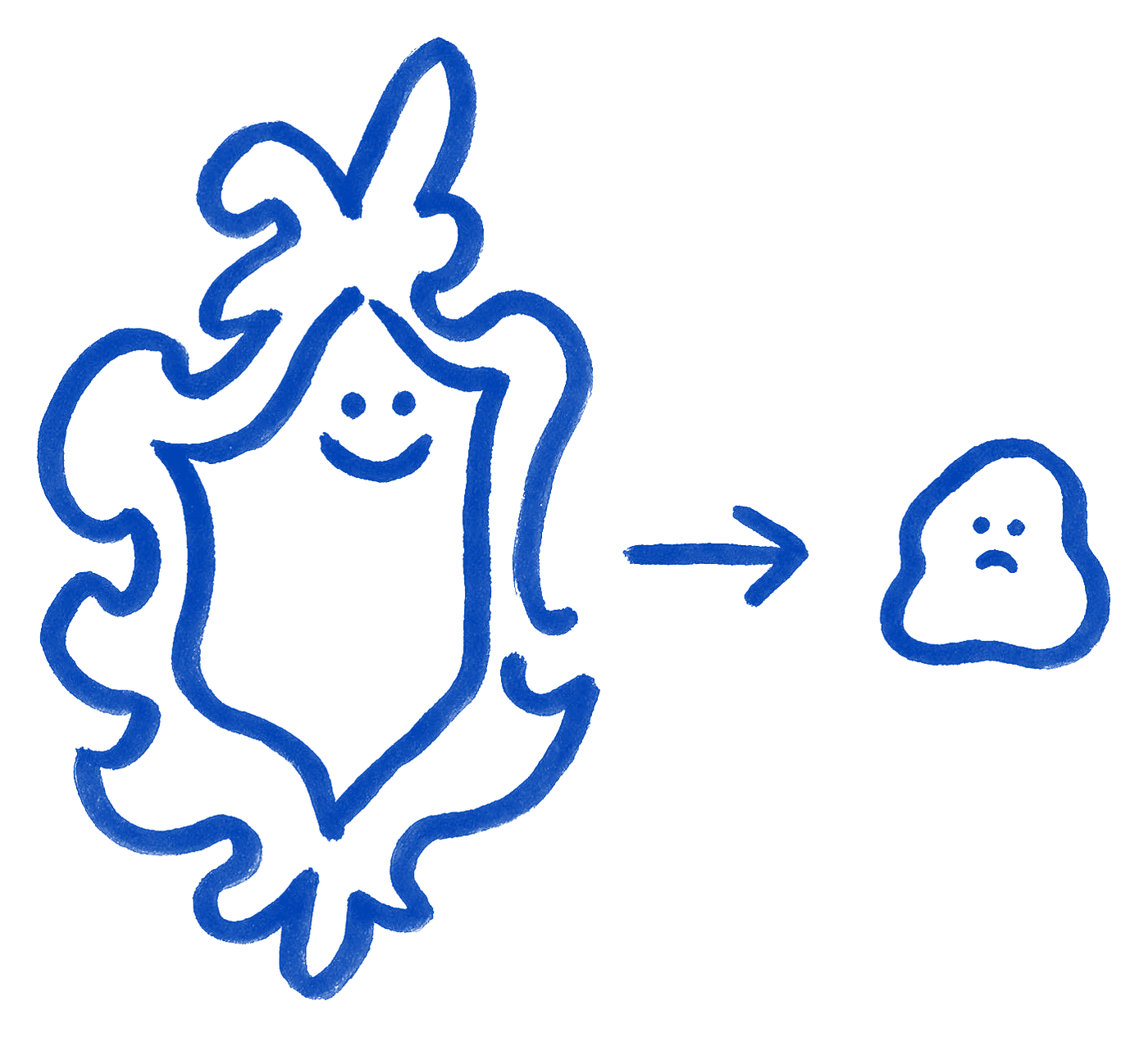
3. The scale collapse. A mark that holds at 800 pixels and breaks at 64. Too many strokes, too many pieces, too much detail crammed into too little space.
The mark is a beautiful illustration. It is not a logo.
Meaning and trend failures
4. The meaning gap. A mark that does not say anything. Pretty shape, no anchor.
The audit question every meaning-gap mark fails is "could a stranger describe it in one sentence." If the answer is "it is a circle, I guess," the mark has no story to carry.
5. The trend handcuff. A mark that looks exactly like the marks shipping that quarter.

Geometric sans wordmarks in 2020. Squishy gradients in 2021. Brutalist serifs in 2024.
A mark handcuffed to a trend has a five-year shelf life by design. Apple's mark has shipped for forty years because it never chased a trend.
The pass-fail math
Score every question pass or fail. No middle. The math is simple and brutal.

-
12 of 12 pass: ship it.
-
10 or 11 pass: fix the failing items, then re-audit. Usually a one-week iteration.
-
8 or 9 pass: the mark has a structural problem. Two weeks of rework, then re-audit.
-
7 or fewer pass: restart. The mark is not salvageable as a fix, it is a restart pretending to be a refinement.
The math feels harsh because most logos in the wild would score 6 or 7. That is the point. The audit is the screen the brand should have run before it shipped.
When to ditch and restart
Three signals tell you the mark is past iteration and into restart territory. Any one of the three is enough.
The brief was wrong. If the audit reveals the brand story has changed since the brief, the mark cannot evolve into a different story. Restart with the real brief. Fast.
The mark fails a structural question. Single-color reproduction, scale, lockup variants. These are not fixable with a kerning pass. They require a different mark.
The team is defending the mark instead of using it. If every conversation about the logo is about why someone does not understand it, the mark is wrong. A logo that needs defending in the room will need defending in the wild for the rest of its life.
Restarting feels expensive. Shipping a bad mark is more expensive. The glossary entry on logotype covers the cleanest path back, which is usually a wordmark before a custom symbol.
What real audits look like
A working audit is a one-page sheet. Twelve check boxes, the five failure mode names with a yes-or-no, and a verdict line at the bottom. Run it printed, not on screen. The print forces the mark into the same conditions the audit is testing for.

Run the audit three times before ship: by the designer who made the mark, by a designer who did not, and by a non-designer who has never seen the brand. Three audits, three sheets, side by side. If the three sheets disagree on more than two questions, the mark has a clarity problem the team has not seen yet.
The audit is also the right artifact to send to the client. A defended mark is a mark with a one-page audit attached. The piece on why every SaaS looks the same covers the broader sameness problem the audit was built to surface.
Run the audit before the client does
Every client runs an informal audit the moment they see the mark. They run it badly, in the wrong room, with the wrong tests. The designer's job is to run the real audit first.
Twelve questions. Five failure modes. One pass-fail sheet. The mark either survives or it does not.
Apple, Nike, FedEx, Stripe, Linear, Vercel, Anthropic, Loops, Resend, Notion, Cal.com all survive. Most marks shipping this year would fail. The audit is the cheapest tool a designer can carry, and the one most likely to save a brand from a logo it will spend a decade unwinding.
FAQ
How long does a logo audit take?
A first-pass audit takes 30 to 45 minutes per mark. The twelve questions take roughly two minutes each, the failure-mode pass takes ten minutes, and the verdict takes five. Three independent audits stacked side by side takes a half day, which is still cheaper than a week of rework on a mark that should have been killed earlier.
Should clients see the audit?
Yes. A one-page audit attached to a logo presentation reframes the meeting from taste to evidence. Clients argue with taste. They rarely argue with a checklist that says the mark fails at favicon scale and on a competitor's brand color.
Can I audit a logo I am not redesigning?
Yes, and you should. Run the audit on a brand's existing mark before you take a redesign brief. The audit tells you whether the brief is asking for a refresh, a rework, or a restart. It also gives you the receipts to defend the recommendation.
CTA
Want a logo that survives the audit before it ships? Brainy designs marks that pass scale, contrast, meaning, and trend tests before the client ever sees them, and we ship the audit sheet alongside the file. Hire Brainy for a logo your brand can use for the next decade, not the next quarter.
Want a logo that survives the audit before it ships? Brainy designs marks that pass scale, contrast, meaning, and trend tests before the client ever sees them.
Get StartedGet new papers by email
New Brainy papers in your inbox. Confirm once, unsubscribe anytime.