
Minimalist Logo Design: Less Mark, More Meaning
The five principles behind minimalist logos that actually work. One idea per mark, geometric foundation, and the reduction process that gets you there.
The most recognized logos in the world are the simplest ones. The Apple apple, the Nike swoosh, the Target target. None of them need explanation, decoration, or a paragraph of context. They work because they removed everything that was not essential and kept the one thing that was.
That is minimalist logo design. Not "less effort." More decisions.
What Minimalist Logo Design Actually Means
Minimalist logo design is the practice of reducing a mark to its most essential visual elements while maximizing recognition and meaning. Every shape, line, and space earns its place or gets cut.
This is not the same as "simple." A simple logo can be lazy. A minimalist logo is deliberate. The difference is in the decision-making behind each element that stays and each element that goes.
Five Principles That Define the Style
1. One Idea Per Mark
The strongest minimalist logos communicate a single concept. The FedEx arrow. The Amazon smile-arrow from A to Z. The Beats headphone in the "b." Each one does one thing and does it completely.
The moment a logo tries to communicate two ideas simultaneously, it stops being minimalist. It becomes a puzzle. Puzzles are for games, not for marks that need to register in a fraction of a second.
2. Geometric Foundation
Most minimalist logos are built on circles, squares, triangles, or combinations of these. Geometric shapes are universal. They do not need cultural context to be understood. They read cleanly at any size from a favicon to a billboard.
Mastercard's overlapping circles. Google's four-color G built on a perfect circle. The Olympic rings. Geometry gives a mark structural integrity that organic shapes cannot match at scale.
3. Maximum Negative Space
Negative space is not emptiness in minimalist design. It is an active element. The space around and inside the mark defines its shape as much as the positive forms do.
The NBC peacock uses negative space between colored wedges to form the bird's body. The white space is doing half the work. When you learn to design with negative space instead of against it, your marks get cleaner, lighter, and more memorable.
4. Works in One Color
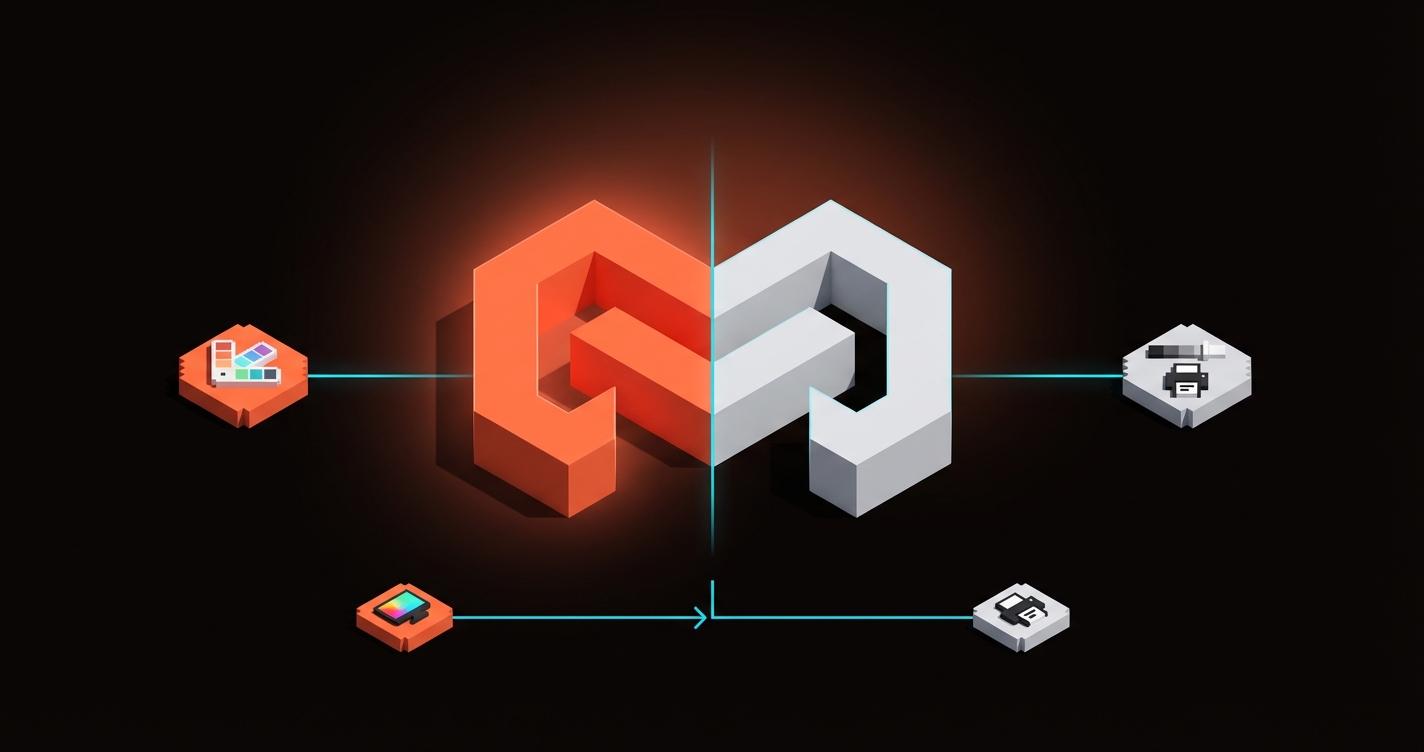
If a logo breaks when you remove the color, the form is not strong enough. Every minimalist logo must hold its structure in pure black on white. Color adds personality, but the silhouette carries the identity.
This is also a practical requirement. Logos appear on invoices, embossments, watermarks, and single-color printing. A mark that depends on its color palette for recognition is a mark that fails in half the contexts it will actually be used in.
5. Scalability Without Loss
A minimalist logo looks the same at 16 pixels (favicon) and 16 feet (storefront sign). No detail is lost because there is no detail that can be lost. Every line is thick enough to render at small sizes. Every shape is distinct enough to read at distance.
This is where over-detailed logos fail. Fine lines collapse at small sizes. Tight spacing fills in when printed. Minimalist marks avoid these traps by design, not by accident.
The Reduction Process
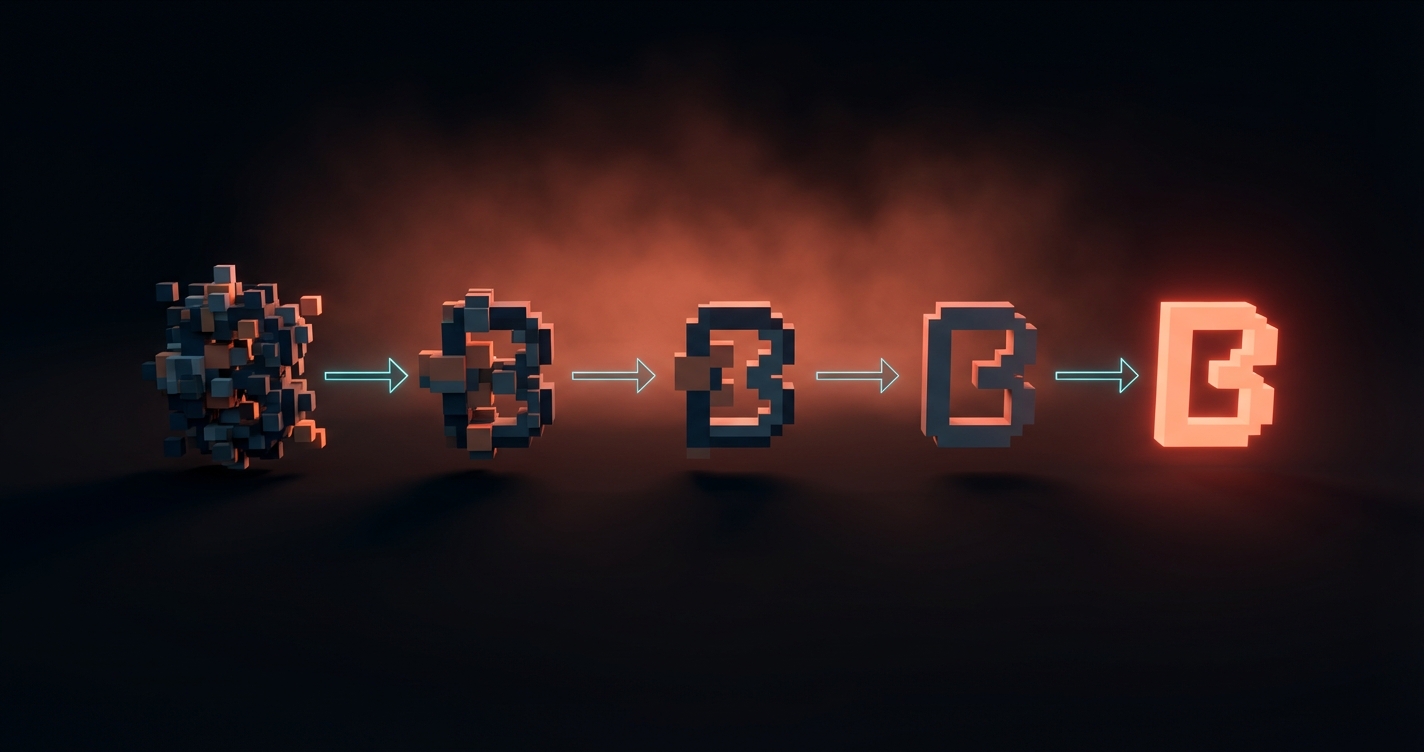
Building a minimalist logo is not starting minimal. It is arriving at minimal through reduction.
- Start with meaning. What is the one thing this brand believes or does? Write it in five words or fewer. That sentence is the brief for the mark.
- Sketch wide. Generate 30 to 50 rough concepts. Do not edit yet. Quantity forces you past the obvious ideas.
- Filter ruthlessly. Which sketches communicate the core idea in the fewest shapes? Circle those. Kill the rest.
- Refine geometry. Rebuild the survivors on a grid. Snap to circles, align to baselines, regularize curves. Geometry cleans up the intuitive sketch into a systematic mark.
- Test at extremes. Print at 12mm. View on a phone screen. Project on a wall. If it holds at all three sizes, the form is solid. If it breaks at any size, simplify further.
When Minimalism Is the Wrong Choice
Minimalism is not universally correct. Some brands need ornament, detail, or craft in their marks.
Heritage brands with a century of history often need marks that carry visual weight and tradition. Stripping them to a geometric shape can erase the story.
Artisan and craft brands sell the handmade, the imperfect, the human. A perfectly geometric mark contradicts the brand promise. Hand-lettering or illustrated marks serve these brands better.
Brands in crowded minimal spaces. If every competitor in your category already uses a clean geometric mark, adding another one makes you invisible. Sometimes the strategic move is to be the maximalist in a sea of minimalists.
FAQ
What makes a logo minimalist?
A minimalist logo uses the fewest possible visual elements to communicate one clear idea. It relies on geometric shapes, negative space, and strong silhouettes rather than detail, texture, or decoration. It works in one color and at any scale.
How many shapes should a minimalist logo have?
Most effective minimalist logos use one to three shapes. The fewer the shapes, the stronger the mark. If you need more than three shapes to communicate your idea, the idea might be too complex for a single mark.
Is minimalist logo design cheaper?
No. Minimalist logos often cost more because the reduction process requires more iterations and more strategic thinking than adding detail. Arriving at simplicity is harder than arriving at complexity. You are paying for the decisions that were made, not the lines that were drawn.
Need a logo that says more with less? Brainy designs marks that last.
Get StartedGet new papers by email
New Brainy papers in your inbox. Confirm once, unsubscribe anytime.