
ब्रांड वॉयस और टोन: 2026 में इसे कैसे परिभाषित करें, दस्तावेज़ीकृत करें और लागू करें
ब्रांड वॉयस और टोन की मूलभूत गाइड: वॉयस बनाम टोन, पाँच असली ब्रांड आर्केटाइप, और AI युग के लिए अपनी गाइड कैसे बनाएं।
वॉयस वो है जो आप हैं। टोन वो है जिस तरह आप अभी इस इंसान से बात कर रहे हैं। ज़्यादातर brands के पास दोनों में से कोई नहीं है, और यह खाई तब दिखती है जब टीम में दूसरा writer जुड़ता है।
यह था short version। Long version यह आर्टिकल है: craft level पर वॉयस और टोन का असली मतलब क्या है, 2026 में पाँच असली brands उन्हें कैसे इस्तेमाल करते हैं, और अपनी वॉयस को ऐसे format में कैसे document करें जो इंसानी writers और AI generators दोनों के लिए काम करे। अगर आप theory पहले से जानते हैं तो teardowns पर जाएं। पूरी तस्वीर चाहिए तो यहीं से शुरू करें।
वॉयस वो है जो आप हैं, टोन वो है जो आप अभी बोल रहे हैं
वॉयस स्थिर होती है। यह हर brand copy में रहने वाली एक consistent personality है, चाहे किसने लिखा हो या किस platform पर दिखे। अगर आपकी copy किसी competitor की copy से swap कर दें और readers को फर्क न पड़े, तो आपके पास brand voice नहीं है। आपके पास बस शब्द हैं।
टोन बदलती है। वही brand जो Instagram पर dry joke मारती है, billing error email में clear और direct होनी चाहिए। यह inconsistency नहीं है। यह scale पर लागू की गई emotional intelligence है।
ज़्यादातर brands जो गलती करती हैं वो यह है कि वे tone को ऊपर से लगाई जाने वाली चीज़ की तरह treat करती हैं। एक "friendly" overlay। एक "casual" checkbox।
Tone decoration नहीं है। यह context, platform, और reader की emotional state के हिसाब से आपकी voice की real-time calibration है। आपकी voice constant रहती है। आपकी tone room पढ़ती है।
यह distinction operationally मायने रखता है क्योंकि इनके लिए अलग-अलग tools चाहिए। Voice को एक बार principles के set के रूप में document किया जाता है। Tone को हर उस context में map किया जाता है जहाँ आपका brand touch करता है। एक guide जो इनमें से सिर्फ एक capture करती है वो writers को ठीक उन्हीं moments पर guess करने पर छोड़ देती है जब उन्हें सबसे ज़्यादा clarity की ज़रूरत होती है।
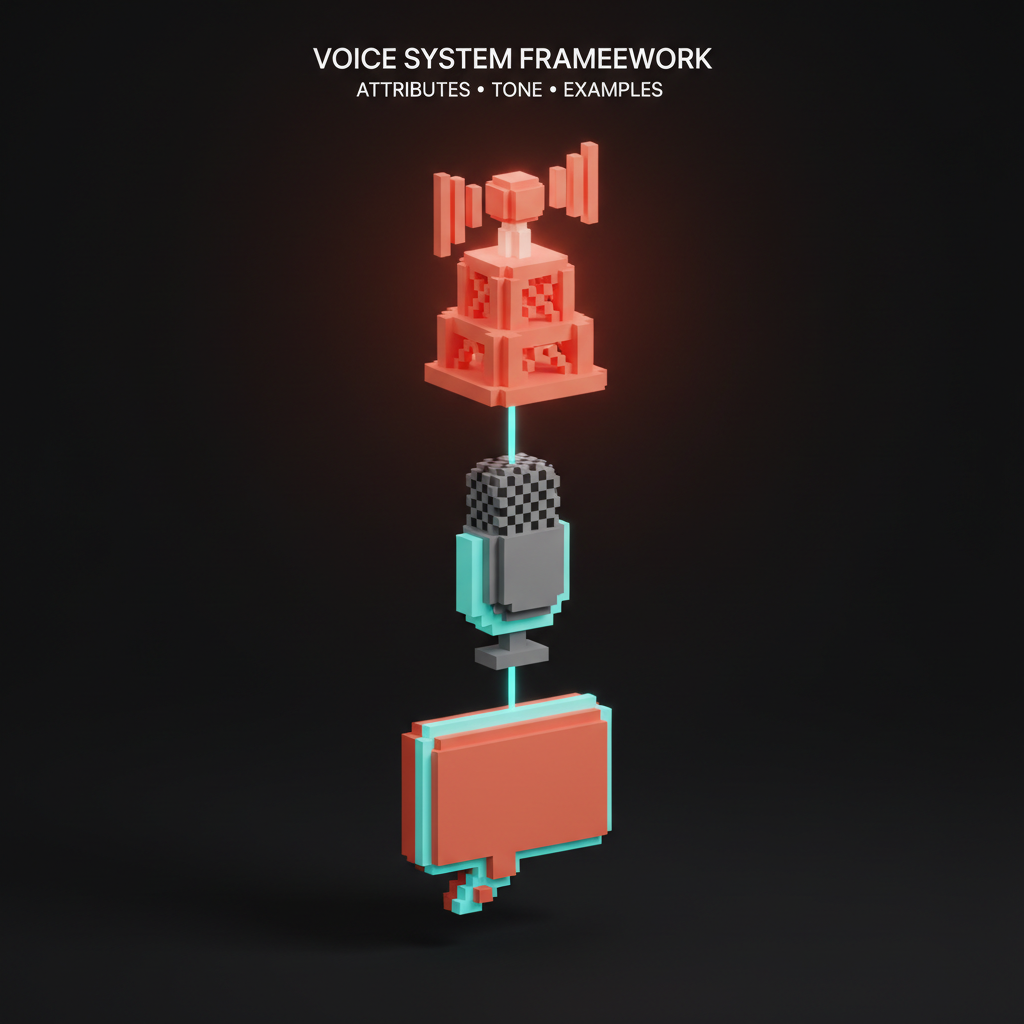
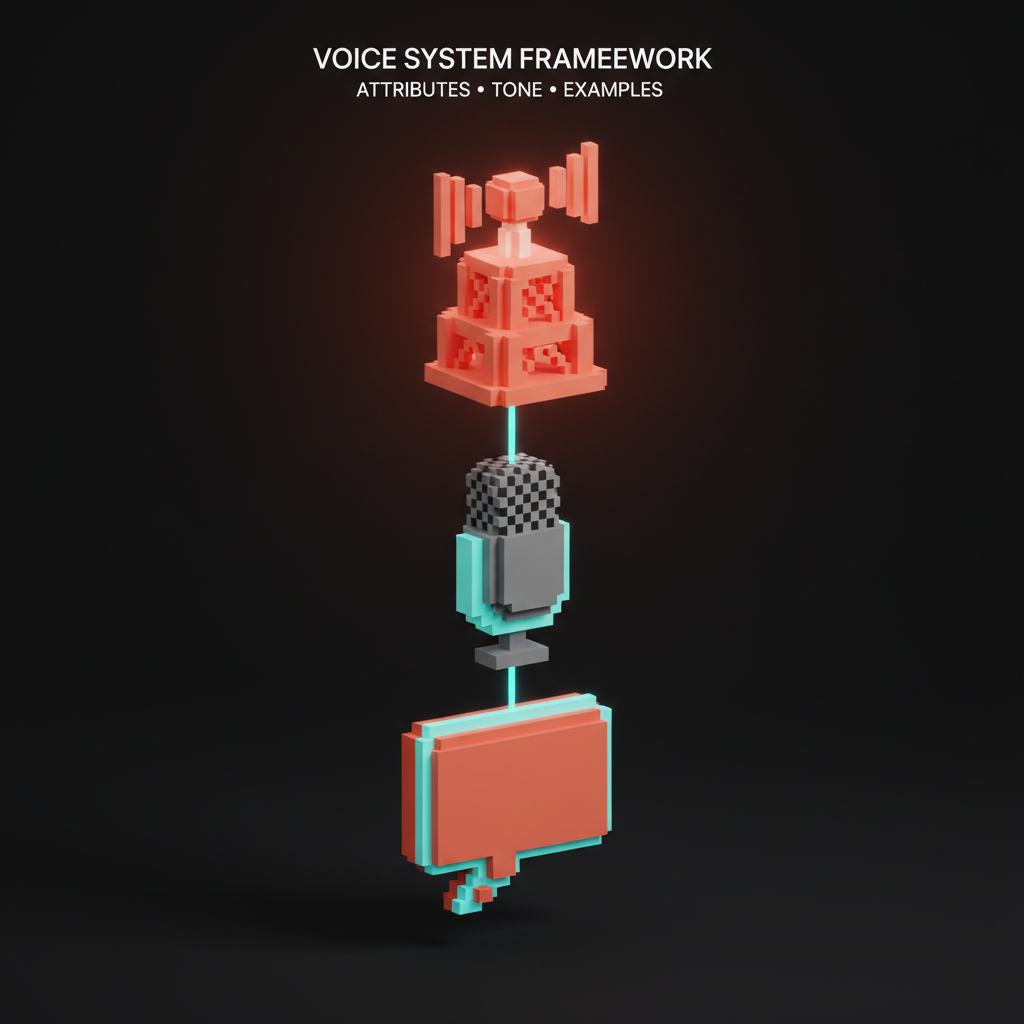
एक voice system की तीन layers
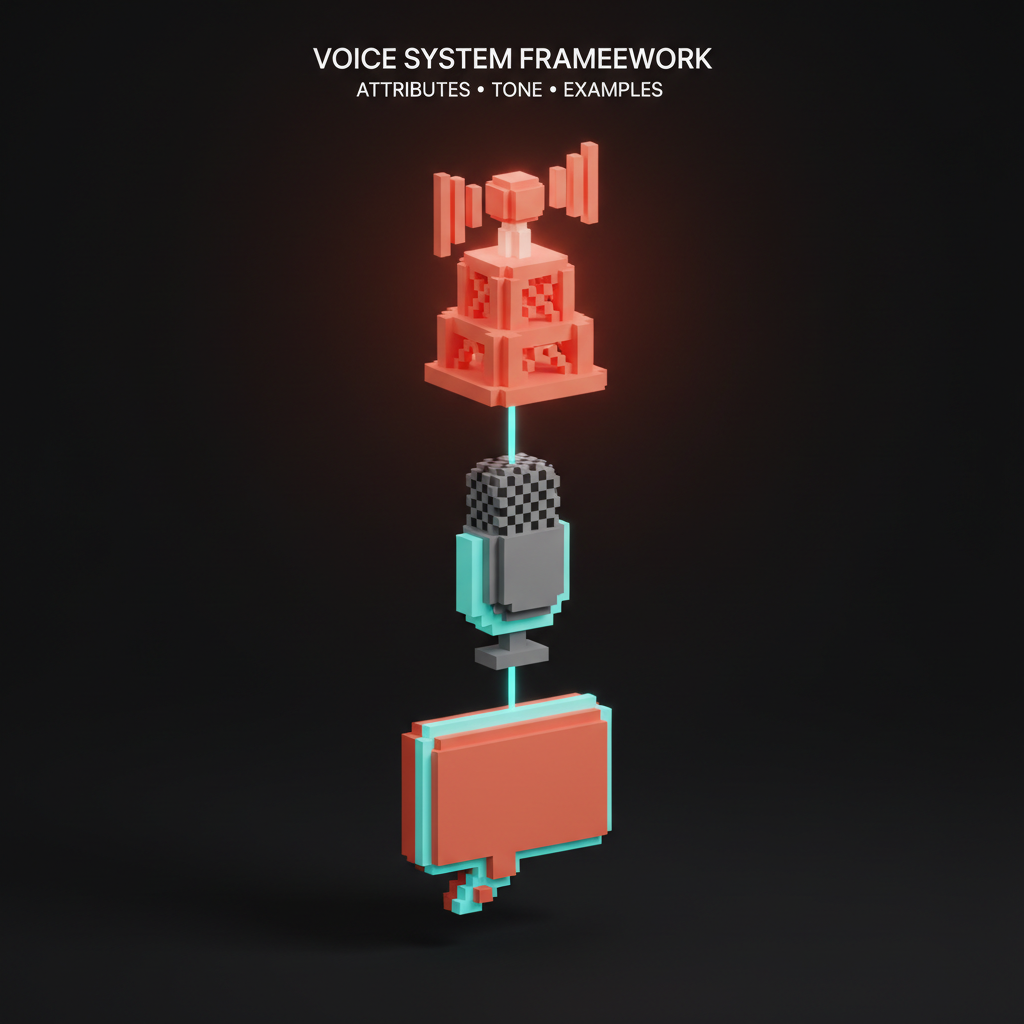
एक workable voice system में exactly तीन layers होती हैं। कोई भी apply करने की कोशिश से पहले तीनों को लिखित में रखें।
-
Voice attributes brand के core में personality को describe करते हैं। "Friendly" या "professional" जैसे generic शब्द skip करें और "pragmatic but warm" या "opinionated without being combative" try करें। ज़्यादातर voice guides यहीं रुक जाती हैं, इसीलिए ज़्यादातर voice guides fail होती हैं।
-
Tone spectrum voice को चार से छह real emotional contexts (marketing, onboarding, error states, support, social) में map करता है। हर एक के लिए दिखाएं कि "turned up" और "turned down" कैसा दिखता है। यहीं आप वो error-state copy पकड़ते हैं जो लगती है जैसे किसी legal department ने लिखी हो।
-
Applied examples सबसे fast-learning layer हैं। Live copy से पाँच real sentences लें और हर एक को अपनी voice में सही और गलत तरीके से side by side लिखें। एक writer जो "your password is incorrect" को "that password didn't match, want to try again?" के साथ देखता है वो seconds में voice सीख लेता है।
पाँच brand voices एक नज़र में
| Brand | Archetype | एक-लाइन विवरण | कभी नहीं कहता |
|---|---|---|---|
| Mailchimp | Warm-pragmatic | पहले helpful, फिर personality | Jargon, pressure, formality |
| Discord | Casual-inclusive | उस community की तरह sounds करता है जिसे host करता है | Corporate, distant, formal |
| Headspace | Calm-deliberate | Voice product experience है | Urgent, hypey, loud |
| Innocent | Playful-honest | Full personality, कोई pretense नहीं | Serious, defensive, corporate |
| Hey | Opinionated-anti-corporate | Voice एक competitive positioning weapon की तरह | Neutral, hedged, deferential |
ये पाँच archetypes consumer और prosumer brand voice के ज़्यादातर terrain को cover करते हैं। इनमें से कोई भी दूसरे से बेहतर नहीं है। सही archetype वो है जो आपके brand के actual होने से और आपके customers के actual response से match करे। ऐसा archetype copy करना जो product पर fit न हो, यही है जब आप Discord की casualness किसी B2B legal tool पर लगाते हैं।
Mailchimp: warm-pragmatic, canonical playbook
Mailchimp marketing space में सबसे ज़्यादा studied brand voice है, और अच्छे कारण से। उनकी public content style guide 2015 से copywriters के लिए required reading रही है।

Voice को actually जो काम करवाता है वो guide नहीं है। यह उसमें baked hierarchy है: useful पहले, personality बाद में। हमेशा।
Mechanism prioritization है। Mailchimp तीन अलग-अलग copy contexts में same voice use करता है:
- Error messages: बताते हैं क्या हुआ और आगे क्या करना है
- Onboarding copy: perform किए बिना सिखाती है
- Marketing copy: oversell किए बिना explain करती है
Warmth कभी point नहीं होती। यह बस वो तरीका है जिससे useful चीज़ deliver होती है।
वो line जो archetype को capture करती है: "Send better email।" तीन शब्द।
Transformation के बारे में कोई adjective नहीं। आपके future के बारे में कोई promise नहीं। एक direct instruction जो reader को capable adult की तरह treat करती है। यही पूरी voice है छह characters में।
जहाँ यह fail होता है जब दूसरे brands इसे try करते हैं: वे warmth को mimic करते हैं और usefulness को skip करते हैं। नतीजा approachable copy होती है जो कुछ नहीं कहती। Mailchimp personality earn करता है क्योंकि information हमेशा पहले आती है। Information हटाइए और आपके पास एक chatty brand है जिसे लोग पाँच मिनट बाद quietly exhausting पाते हैं।
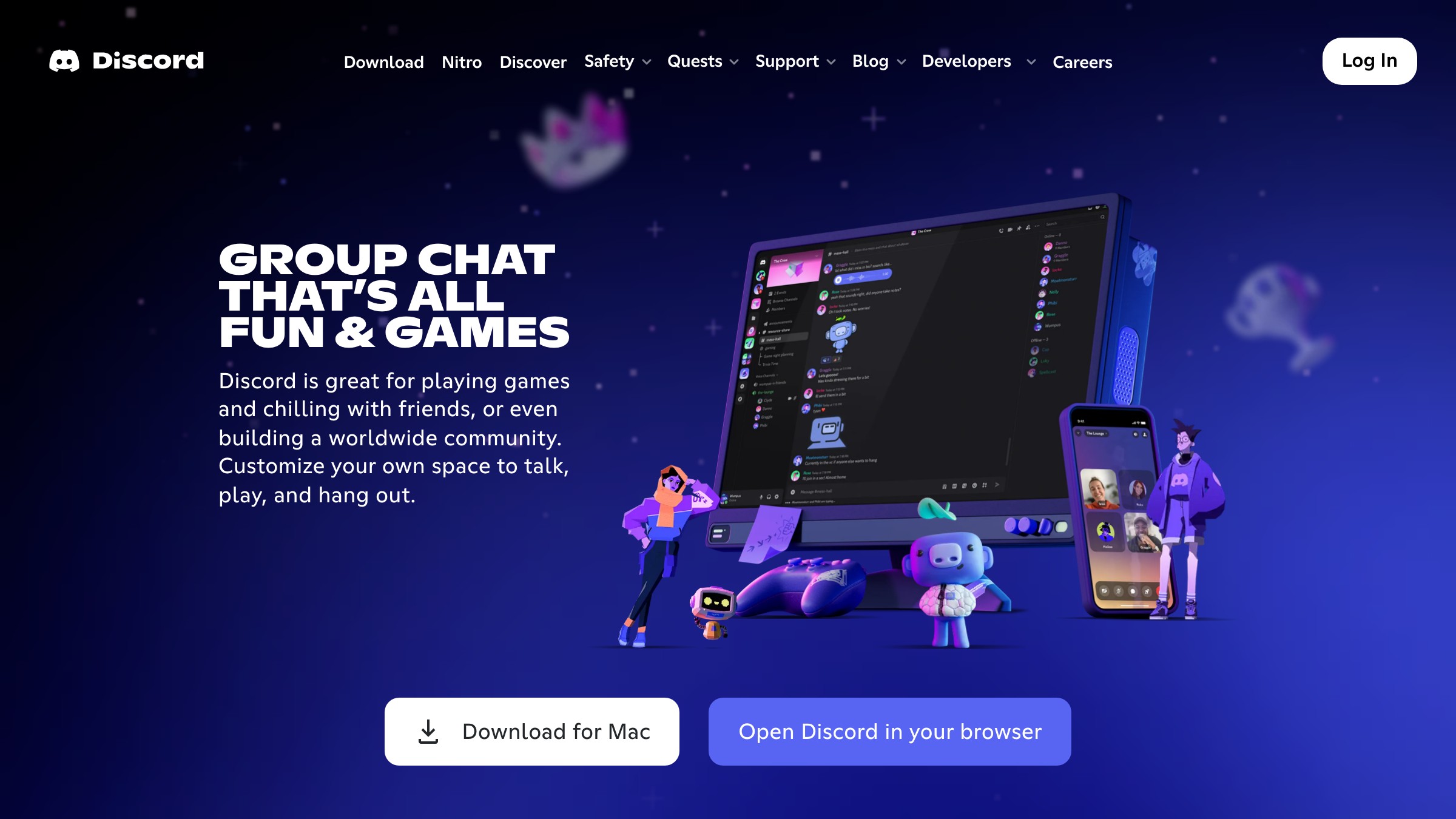
Discord: casual-inclusive, community contract की तरह voice
Discord की copy इतनी casual है कि बहुत से brand designers instinctively इस पर distrust करते हैं। Colloquial phrasing। एक register जो लगता है जैसे किसी 24-year-old ने 2am पर लिखा। कुछ UI strings जो almost unfinished feel होती हैं।
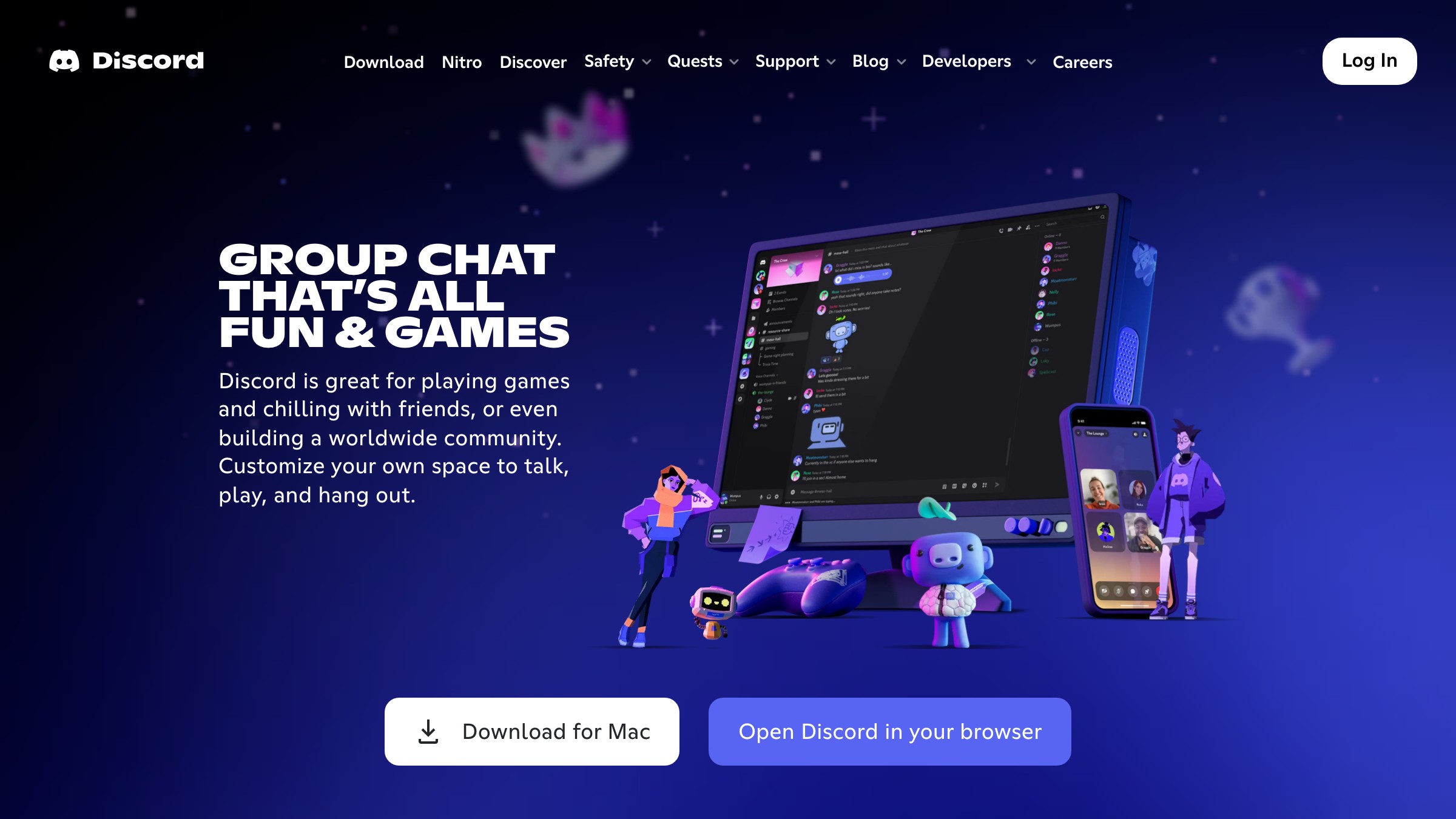
यही तो point है। Discord की copy एक community platform describe नहीं करती। यह community membership perform करती है। जब product copy उन लोगों की तरह sounds करती है जो product use कर रहे हैं, तो copy एक social contract बन जाती है: तुम भी यहाँ belong करते हो।
"Your place to talk" एक feature description नहीं है। यह ownership का offer है। Informality brand guidelines में oversight नहीं है। यह strategy है, documented और deliberate।
जहाँ यह fail होता है: intentional inclusivity के बिना casualness insider language बन जाती है। Discord इससे बचता है क्योंकि casual register broad और low-barrier है, एक gamer, study group, और art collective सभी के लिए simultaneously accessible। कोई भी brand जो lowercase और colloquial tone copy करे लेकिन इसे narrow audience archetype पर apply करे वो cool दिखने की कोशिश में लगी लगती है। Cool दिखने की कोशिश ही सबसे fast way है cool न होने की।
Headspace: calm-deliberate, voice as the product experience
Headspace एक meditation app describe नहीं करता। Copy पहली meditation है। इसके बारे में सब कुछ तीन concurrent mechanisms से slowing down का act है:
- Short sentences जो reader की pace नीचे force करते हैं
- Low-frequency vocabulary जो cognitive friction से बचती है
- Rhythm जो breathes करती है, cadence में deliberate pauses के साथ
Mechanism transfer है। Voice nervous system को यह सिखाती है कि product use करना कैसा feel होगा, इससे पहले कि person app कभी खोले।
"Be kind to your mind" "Achieve your mindfulness goals" से अलग तरह से land करता है। पहला एक permission structure है। दूसरा एक productivity tool है जिसमें breathing होती है।
यह इस list पर सबसे product-integrated voice है। Headspace copy जो promise करती है और product जो deliver करता है, उनके बीच detachment afford नहीं कर सकता। एक frenetic homepage headline पूरे UX को contact पर undermine कर देगी। Voice और product experience एक single system हैं।
जहाँ यह fail होता है: calm-deliberate flat पढ़ता है अगर writer slow और boring के बीच का फर्क नहीं समझता। Mechanism pacing है, passivity नहीं। Headspace copy में अभी भी personality है। यह बस इसे दिखाने की कभी जल्दी में नहीं होती।
अगर आप इस आर्टिकल के principles को अपने brand पर apply करवाना चाहते हैं, तो Brainy से अपना brand voice system बनवाएं। हम पूरा system ship करते हैं: voice attributes, tone map, applied examples, और एक AI-ready documentation layer जिसे maintain करने के लिए workshop की ज़रूरत नहीं।
Innocent: playful-honest, voice as the whole personality
Innocent Drinks एक UK fruit-juice brand है जिसकी पूरी go-to-market strategy, अपने core में, एक copywriting strategy है। Product एक crowded refrigerator में commodity juice है। Copy किसी भी तरह से commodity नहीं है।
Mechanism radical honesty है जो warmth के साथ deliver होती है। Innocent admit करता है जब कुछ imperfect होता है। यह एक committee की तरह नहीं, एक person की तरह लिखता है।
इसके cartons के side panels ऐसे पढ़े जाते हैं जैसे किसी ऐसे इंसान के notes हों जो genuinely खुश है कि आपने bottle उठाई। Innocent की copy पूरे site और packaging पर same four-beat pattern follow करती है:
- Greeting से शुरू करो
- एक छोटा fact offer करो
- एक छोटा joke land करो
- आपको ऐसे treat करो जैसे एक इंसान ने juice खरीदी हो, न कि एक consumer ने beverage product के साथ engage किया हो
नतीजा: copy जो brand asset बन गई है। Recipe interchangeable है। Voice नहीं है।
जहाँ यह fail होता है: brand और product के बीच कोई separation न होने वाली full-personality voice structurally brittle होती है। अगर quality drop होती है, तो hide होने के लिए कोई professional distance नहीं है। Innocent ने एक ऐसा brand बनाया है जहाँ personality ही trust है, जिसका मतलब है कि किसी भी trust breach से वो ज़्यादा hard hit होती है जितना एक more neutral brand पर होती। यह एक trade-off है जो commit करने से पहले जानने लायक है।
Hey: opinionated-anti-corporate, voice as a positioning weapon
Hey, Basecamp का email product है। अगर इस list पर हर दूसरा brand voice को more likable होने के लिए use करता है, तो Hey voice को more polarizing होने के लिए use करता है। Homepage copy एक email service describe नहीं करती। यह email की current state पर indictment है।
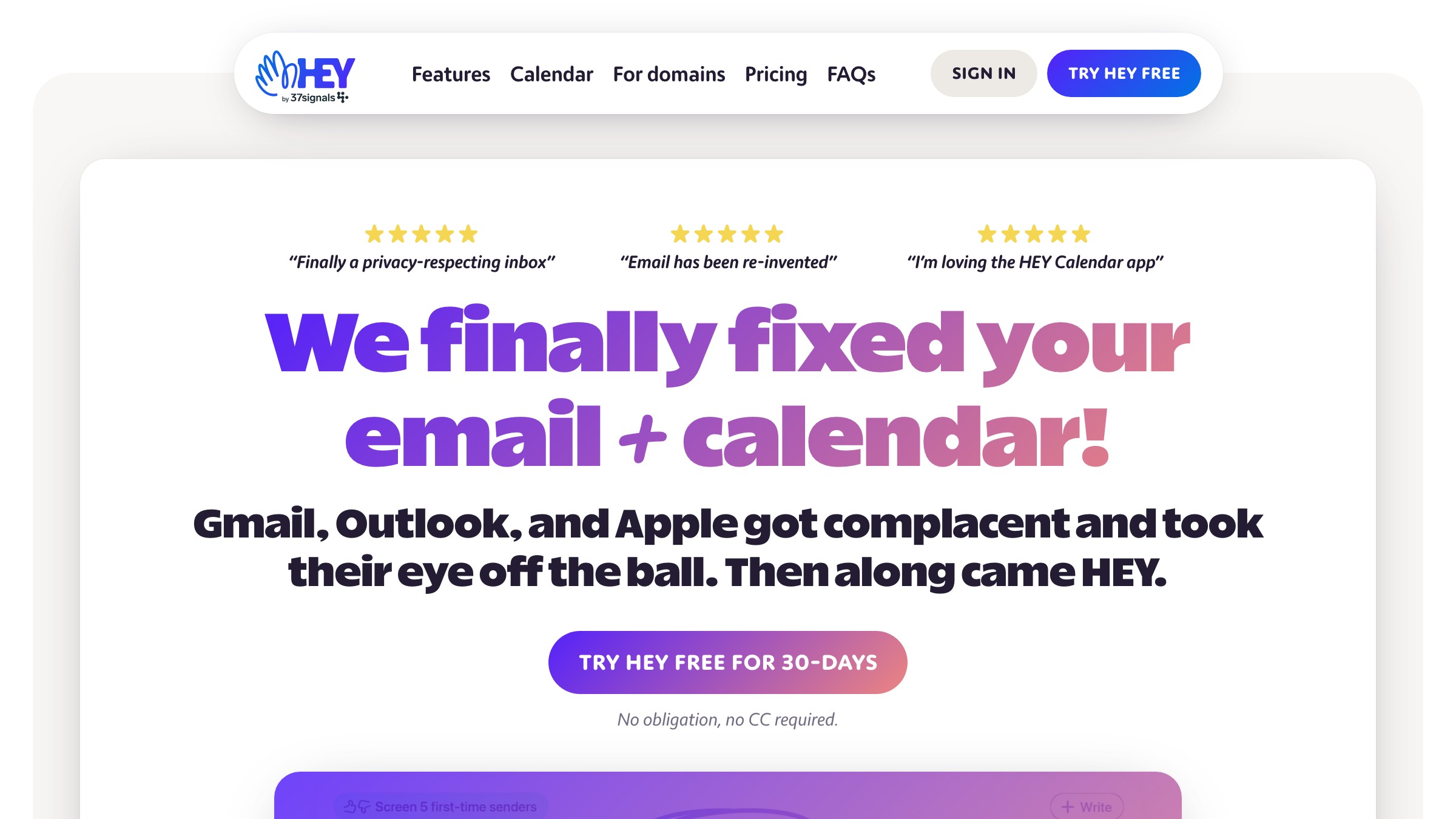
Mechanism explicit value conflict है। Hey नाम लेता है उसका जिसके खिलाफ है:
- आपके inbox में tracking pixels
- Algorithmic sorting जो messages hide करती है
- Advertiser interests को अपना attention surrender करना
यह naming ही positioning है। Voice एक competitive weapon है जो copy के रूप में deliver होती है। उनकी site की lines confrontational की हद तक blunt हैं, industry practices को नाम से call out करती हैं और आपको invite करती हैं कि आप भी उनसे bothered हों।
हर वो इंसान जो Hey का homepage पढ़कर सोचता है "यह too aggressive है" self-selected out हो गया। Voice सबके लिए नहीं है। यही strategy है।
एक brand जो हर possible customer acquire करने की कोशिश में है, यह voice hold नहीं कर सकती। Hey इसे hold करता है क्योंकि Basecamp का 20-year track record है जो वो कहता है वो mean करने का।
जहाँ यह fail होता है: opinionated-anti-corporate age out हो जाता है अगर opinion किसी moment से attached है न कि किसी principle से। अगर आपने जिस competitor को name किया वो dominant enemy नहीं रहा, तो positioning की edge खो जाती है। Hey structurally sound है क्योंकि इसका enemy systemic है, surveillance-era email, न कि कोई specific product। Voice तब तक relevant रहती है जब तक problem real है।
AI era के लिए voice document कैसे करें
2026 में ज़्यादातर brand voice guides के साथ problem यह है: वे इंसानों के लिए लिखी गई थीं। वे nuance, implication, और professional judgment पर rely करती हैं। एक experienced copywriter "warm but direct" पढ़ता है और years of work से जानता है इसका मतलब क्या है। एक AI generator "warm but direct" पढ़ता है और एक hedge produce करता है।
AI के लिए voice document करने का मतलब है उन चीज़ों के बारे में explicit होना जो experienced writers intuitively handle करते हैं। इसके लिए एक different document structure चाहिए, different philosophy नहीं।
एक voice document में क्या include करें जिसे AI apply कर सके:
-
Operational definitions के साथ Voice attributes। बस "warm" नहीं। Warm का मतलब है writer reader की side पर है, second-person phrasing में show up होता है, और friction solve करने से पहले उसे acknowledge करता है। यह exclamation marks या empty affirmations में show up नहीं होता।
-
हर attribute के लिए एक not-a list। "Warm is not: cheerful for its own sake, filler positivity, brand के बारे में किसी भी चीज़ पर 'amazing' कहना।"
-
Before/after rewrites। Live copy से पाँच real sentences। Corporate version और brand version side by side, labeled। यह सबसे fast training data है आपके पास।
-
Replacements के साथ Banned phrases। "Avoid jargon" नहीं, जो too vague है। इसके बजाय, उन specific corporate-speak words को name करें जो आपका brand कभी publish नहीं करेगा, plus हर एक के लिए plain-language replacement। List itself teaching tool बन जाती है।
-
Tone context map। एक table जो दिखाए कि voice surface के हिसाब से कैसे adjust होती है। AI को compass नहीं, map दें।
एक voice JSON जो आप system prompt में paste कर सकते हैं
सबसे fast-applying voice document एक structured block है जिसे आप directly system prompt या AI assistant configuration में paste करते हैं।
{
  "brand": "YourBrand",
  "voice_attributes": ["pragmatic", "warm", "direct"],
  "never_say": ["utilize", "ideate", "deliverables", "scalable"],
  "always_prefer": ["short sentences", "second person", "active voice"],
  "tone_contexts": {
    "marketing": "confident, specific, no exclamation marks",
    "error_states": "plain, solution-first, never apologetic in tone",
    "social": "shorter, drier, one idea per post"
  },
  "example_rewrites": [
    {
      "wrong": "Utilize our end-to-end platform to maximize deliverables.",
      "right": "It handles the heavy lifting. You focus on the work."
    }
  ]
}
इसे अपने ChatGPT custom instructions, अपने Claude project system prompt, या अपने internal AI writing assistant में paste करें। Specificity ही इसे काम करवाती है। Vague adjectives vague outputs produce करते हैं। Specific examples specific outputs produce करते हैं।
Product surfaces पर voice कैसे apply करें
एक voice guide जो सिर्फ marketing copy cover करती है अधूरी है। Brand voice हर जगह show up होती है जहाँ कोई इंसान आपके शब्द पढ़ता है, और यह rarely consistent रहती है जब तक किसी ने explicitly पूरे territory map नहीं किया हो।
| Surface | Voice की प्राथमिकता | सामान्य गलती |
|---|---|---|
| Marketing headlines | Brand POV से lead करें | Generic benefit statements |
| Onboarding copy | Useful पहले, personality बाद में | Clarity की ज़रूरत पर cute होना |
| Error states | Plain, human, solution-oriented | Legal-speak या robotic defaults |
| Transactional email | Efficient, on-brand markers के साथ | बाकी सब से completely अलग register |
| Social media | Shorter, more conversational | Repurposed long-form copy paste की गई |
| Product UI strings | सही होने पर invisible, गलत होने पर jarring | Engineers द्वारा लिखी गई, कभी reviewed नहीं |
| Support documentation | Authoritative और approachable | Passive voice, excessive hedging |
Product UI strings इस list पर सबसे neglected surface हैं। ये अक्सर product managers या engineers द्वारा लिखी जाती हैं जो एक functional problem solve कर रहे हैं, voice problem नहीं।
एक modal जो पढ़ता है "Are you sure you want to proceed with this action" और एक modal जो पढ़ता है "Ready? This can't be undone" दोनों काम करते हैं। सिर्फ एक आपके brand की तरह sounds करता है।
UI string examples को explicitly voice guide में लिखें वरना वे हमेशा room में सबसे cautious person की तरफ drift करेंगे।
वो voice audit जब आपके पास कोई नहीं है
ज़्यादातर brands जिन्हें voice guide की ज़रूरत है उनके पास नहीं है क्योंकि zero से शुरू करना abstract feel होता है। यहाँ single working session में audit कैसे करें।
-
Live copy के 20 pieces collect करें। Homepage, एक recent marketing email, तीन social posts, एक error message, एक onboarding screen, एक product page। Print या screenshot करें। आपको पूरी range चाहिए।
-
Same sentence को पाँच तरीकों से लिखें। "We help teams communicate better" जैसा एक neutral statement लें। पाँच versions अलग-अलग personalities के साथ लिखें, फिर उन्हें aloud पढ़ें। वो चुनें जो सबसे ज़्यादा आप जैसा लगे और उसे और push करें।
-
Never-says list लिखें। एक ऐसा sentence क्या है जो आपका brand कभी publish नहीं करेगा, भले ही information सही हो? "Utilize our end-to-end platform to maximize scalable deliverables।" अगर यह obviously wrong लगता है, तो आपके पास पहले से एक voice है जिसे आपने बस अभी तक लिखा नहीं है।
आपके पास पहले से जो voice है उसे reverse-engineer करें
-
आपकी highest-confidence copy ढूंढें। हर brand के पास copy का एक piece है जो तब लिखा था जब वे बस खुद थे, जैसे founder का पहला email या एक sitting में लिखा गया landing page। वो piece आपका voice anchor है। Sentences निकालें और उन rules को reverse-engineer करें जो वे follow करते हैं।
-
Inconsistencies ढूंढें। अपने homepage को एक recent transactional email से compare करें, फिर एक Instagram caption को एक product page से compare करें। कहाँ feel होता है जैसे different brands हैं? वे gaps वो जगहें हैं जहाँ आपकी voice guide को सबसे specific rules की ज़रूरत है।
-
First draft लिखें, ship करें, और add करते जाएं। तीन attributes definitions के साथ, पाँच banned phrases, तीन before-and-after rewrites, और tone map table तीन से पाँच pages में fit हो जाते हैं और एक functional voice guide बनाते हैं। इसे real copy के खिलाफ refine करें जैसे-जैसे आती है, किसी workshop में नहीं जो 40-page document produce करे जो कोई नहीं खोलता।
Common voice failure modes
ज़्यादातर voice failures dramatic नहीं होते। ये slow accumulations हैं। आप उन्हें तभी notice करते हैं जब कोई reader कहता है "यह अब आप जैसा नहीं लगता" और आप identify नहीं कर पाते कब बदला।
Too generic। Voice guide कहती है "friendly, professional, approachable।" यह simultaneously हर brand और कोई भी brand describe करता है। Generic attributes generic copy produce करते हैं। Specificity voice guide का entire point है, उसके ऊपर decoration नहीं।
Copy by committee। हर वो इंसान जो copy touch करता है एक edge smooth करता है, एक point soften करता है, legal के लिए एक hedge add करता है, joke हटाता है क्योंकि meeting में किसी को हँसी नहीं आई। नतीजा ऐसी copy है जिस पर कोई object नहीं करता और कोई remember नहीं करता। Voice systems consensus से मरते हैं। एक इंसान को voice own करना चाहिए और इसे defend करने का authority होना चाहिए, भले ही CMO disagree करे।
Voice जो surface के हिसाब से बदलती है। Marketing एक startup की तरह sounds करती है। Legal pages एक law firm की तरह sounds करती हैं। Social एक intern की तरह sounds करता है जो अपना personal account run कर रहा है।
हर surface को एक अलग kingdom की तरह treat किया जाता है। यह almost always एक org problem है, कोई single person cross-surface voice own नहीं करता, इसलिए हर team अपने judgment के साथ अपने defaults से apply करती है।
Voice जो badly age होती है। Slang, internet vernacular, और cultural references की half-lives होती हैं। Brands जो current internet humor के आसपास personality build करते हैं वे उन brands से ज़्यादा जल्दी dated हो जाते हैं जो consistent point of view के आसपास build करते हैं। Mailchimp का "Send better email" 2015 से अब भी काम करता है। 2015 के memes के आसपास बना 2015 brand voice नहीं करता।
Voice जिसे कोई enforce नहीं करता, और इसे कैसे fix करें
Guide है, लेकिन कोई नहीं खोलता। यह Notion में या एक Figma page पर रहती है जिसे कोई नहीं खोलता। New writers इसे पढ़े बिना onboard हो जाते हैं।
Voice guides self-executing नहीं होतीं। किसी को publish होने से पहले new copy को guide के खिलाफ read करना होता है, और यह किसी का actual job होना चाहिए।
FAQ
Brand voice और tone में क्या फर्क है?
Voice आपके brand की fixed personality है। यह सभी copy, सभी channels, और सभी writers में consistent रहती है। Tone वो है जिस तरह आप उस personality को एक specific context, audience, या emotional moment के लिए modulate करते हैं। Same voice, different tone: Mailchimp हमेशा warm और pragmatic है, लेकिन welcome email में warmth billing error notification से ज़्यादा turned up है।
Brand voice guide कितनी लंबी होनी चाहिए?
जितनी ज़रूरत हो copy के अगले piece को better बनाने के लिए, और एक शब्द भी लंबी नहीं। एक functional starter guide में definitions और examples के साथ तीन से पाँच voice attributes, एक never-say list, पाँच before-and-after rewrites, और एक tone context map होती है।
यह तीन से पाँच pages में fit होती है। Larger organizations को ज़्यादा की ज़रूरत हो सकती है, लेकिन short start करें और specificity add करते जाएं जैसे-जैसे real copy gaps reveal करे। 40-page document जो कोई नहीं खोलता voice guide नहीं है, यह एक workshop का monument है।
क्या आपके पास strong brand voice हो सकती है और फिर भी markets में flexible रह सकते हैं?
हाँ, लेकिन इसके लिए deliberate planning चाहिए। Voice attributes fixed रहते हैं। Tone context map को cultural और market-specific calibrations include करने के लिए expand किया जाता है।
Innocent की UK-playful voice English-speaking markets में reasonably well travel करती है लेकिन continental Europe के लिए significant adaptation की ज़रूरत थी। Adaptations को explicitly document करें बजाय regional teams को scratch से solve करने देने के जो पाँच different brand personalities produce करती हैं।
FAQ: AI और team alignment के लिए लिखना
AI generators के लिए brand voice prompts कैसे लिखते हैं?
Specificity। Generic voice prompts generic outputs produce करते हैं। AI को voice attributes, never-say list, before-and-after examples, और specific task के लिए explicit tone context दें।
Brand copy के तीन से पाँच real examples at its best feed करें। System prompts जिनमें example rewrites शामिल हों dramatically ज़्यादा consistent results produce करते हैं उन system prompts से जो adjectives list करते हैं।
अगर team members voice के बारे में disagree करें तो क्या?
यह almost always एक लिखित guide न होने और gut feel से decisions लेने का symptom है। Fix है guide लिखना और एक person को voice owner designate करना। Voice के बारे में disagreements document creation process में belong करती हैं, launch से पहले Thursday 4pm की copy review में नहीं। अगर आप deadline पर voice के बारे में actively fight कर रहे हैं, तो guide पहले से overdue है।
Brand voice guide को कितनी बार update करना चाहिए?
साल में एक बार recent live copy के sample के खिलाफ review करें। Update करें जब आप ऐसी copy पाएं जो current guide well cover नहीं करती, fixed schedule पर नहीं। Never-say list में add करें जब phrases creep in हो गए हों जिन्हें officially banned करने की ज़रूरत हो। Core attributes को तब तक rewrite न करें जब तक brand genuinely reposition न हो गया हो, और समझें कि core voice change करना एक brand strategy decision है, content calendar decision नहीं।
अपनी voice को accident से होने देना बंद करें
आपका publish किया गया हर copy piece एक voice decision है। सवाल यह है कि क्या यह intentional था या default। Brands जो early voice define करते हैं वे हर writer, हर agency, और हर AI generator को एक target देते हैं जिसे hit करना है। जो brands इसे skip करते हैं उन्हें वो मिलता है जो current writer को सही लगा, जो हर बार एक अलग answer होता है।
इस आर्टिकल के पाँच brands ने voice systems बनाए जो writer turnover, agency changes, और platform shifts survive करते हैं। उनमें से किसी ने यह accident से achieve नहीं किया। उन्होंने इसे लिखा, हर उस इंसान को दिया जो copy touch करता था, और एक review process बनाया जो इसे honest रखता था।
Voice के नीचे बैठने वाली visual layer के लिए, brand identity guidelines cover करती है कि written और visual systems कैसे connect होते हैं। Voice जिसका हिस्सा है उसकी full picture के लिए, full brand identity playbook से शुरू करें। अगर आप समझना चाहते हैं कि आपके customers brand को आपके intention से अलग तरह से क्यों perceive करते हैं, तो brand identity और brand image के बीच का फर्क सही अगला read है।
और brand identity breakdowns के लिए, पूरा archive वहाँ है।
Brainy से अपना brand voice system बनवाएं।
Need a voice and tone system that survives 200 writers, three agencies, and an AI generator, not a tagline doc nobody opens? Brainy ships brand identity.
Get Started