
Designers Are PMs Now
The senior designer job is functionally a PM-with-taste. The role merger already happened. Here is what a designer-PM owns in 2026, why design budgets are being cut, and the practical moves to stay employable.
The senior designer job in 2026 is a PM-with-taste. The IC role merger already happened. Pretending it is still coming is the reason design budgets are being cut.
If your last twelve months were pushing pixels in Figma and waiting for a PM to write the spec, the market stopped paying for that role. The job that replaced it owns the spec, the metrics, the ship date, and the user research. Same chair, same Figma file, different deliverable.
The role merger already happened
The merger is structural, not seasonal. Headcount got cheaper to consolidate than to coordinate, AI took the production load off the bottom of the role, and surviving design ICs absorbed the discovery, spec, and ship-date ownership that used to sit with a separate PM. The market priced two roles into one and moved on.
You can see it in the listings. "Product designer" descriptions in 2026 read like PM descriptions with a Figma line item bolted on. Roadmap input, metric ownership, eval criteria, customer interviews, write-ups, ship-date accountability. Figma is now table stakes, not the job.
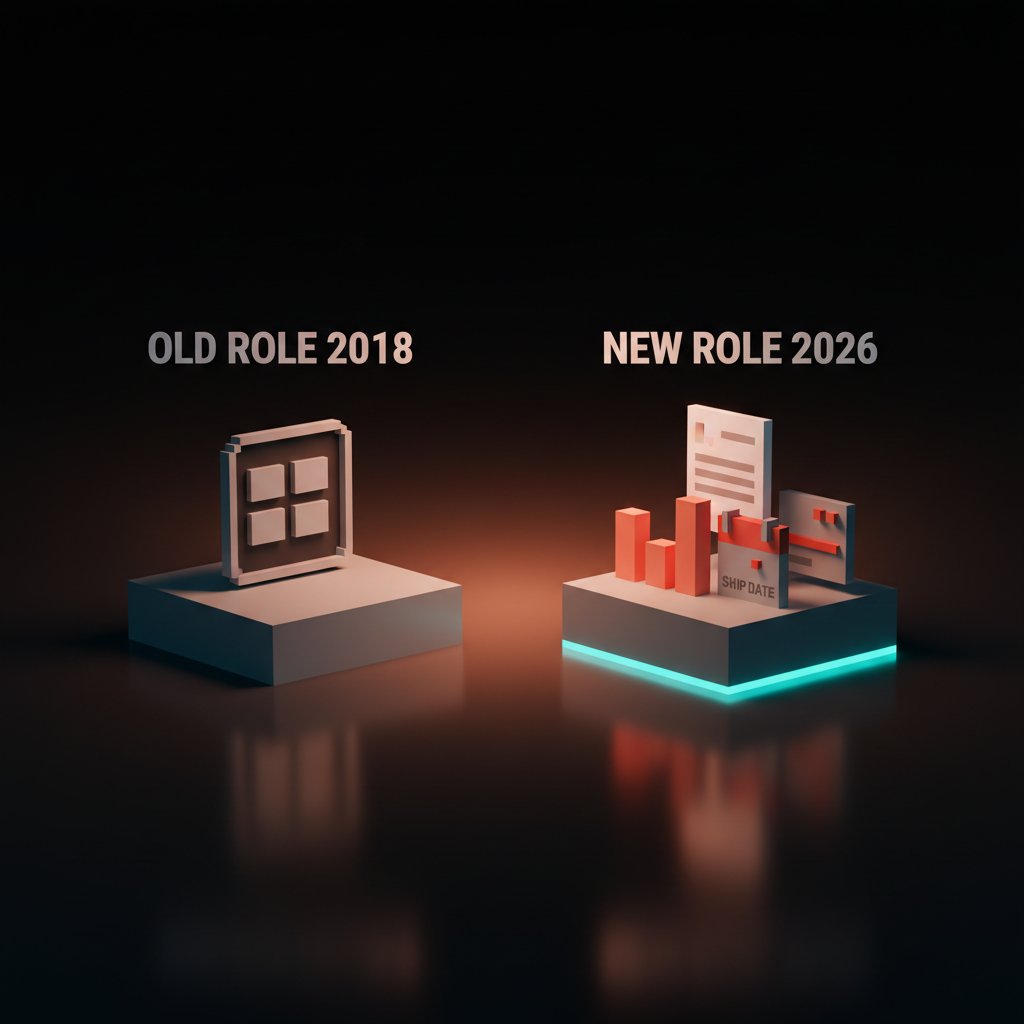
Teams that already ran this way did not lay anyone off. Teams still running the 2018 split, designer pushes screens, PM writes spec, engineer builds, did. Same headcount, two fates, one structural reason.
What a designer-PM actually owns
The new IC role has five owned artifacts. Miss any and another role is doing the work, which is the first signal yours is redundant.
-
The spec. Not a Figma flow. A written doc that names the problem, the user, the success metric, the failure modes, and the cut lines. The Figma file is the appendix.
-
The metric. A single named number the work moves. Activation rate, conversion lift, retention curve, latency, NPS on a target segment. If you cannot name the number this ship moves, the work is decoration.
-
The ship date. A real date, on a real calendar, the team holds you to. Slipping it in 2026 is a designer-PM problem, not a team problem.
-
The user research. Five interviews you ran, a survey you wrote, a session you watched, a Sentry trace you read. See the user research glossary for what this means at the IC level.
-
The write-up. A short, public-facing post-launch doc covering what shipped, what moved, what did not, and what the team learned. The artifact your manager forwards up the chain.
Owning the artifact means writing it, sharing it, defending it in review, and being on the hook when it is wrong. Co-authoring with a PM is fine. Waiting for one to write it is not.
How Linear, Stripe, Vercel, Anthropic, Figma run design ICs
The companies shipping the cleanest software at the highest velocity already operate this way. They did not announce a reorg. They just stopped hiring the old role.
Linear's design ICs run the spec. Karri Saarinen has said for years that Linear's designers own the problem, the proposal, the implementation, and the ship. The PM function exists, but artifact ownership sits with the designer and the engineer who pair on the surface. The anti-dashboard approach to product views is a designer-PM call, not a PM-down spec.
Stripe's design output is PM-shaped. The designer who owned Stripe's new pricing surface owned the model, merchant interviews, rollout plan, and metric. The Figma file resolved late, after spec and data were locked. Same discipline visible in the pricing page problem.
Vercel's design org is a product partner unit, not a service team. Designers hold the surface, ship the launch post, and own the dashboard metric. The stack in marketing site stack 2026 is owned by designers who ship code and write specs, not by a PM who briefs them.
Anthropic's product designers ship eval criteria. The eval is the spec, the metric, and the test. A designer who cannot write the eval for their surface is not on the team that ships it.
Figma's design ICs write PRDs. The PRD-or-no-PRD debate ended when Figma's design team started writing them. The company that taught the industry to take Figma seriously also taught its own designers to take the spec seriously.
Five companies, one pattern. Design ICs own the document, the number, and the date. Not as a stretch project. As the job.
Old role vs new role
The market shift is not a vibe. It shows up in the artifacts a senior designer ships and the conversations they lead.
| Dimension | Old role (2018 to 2022) | New role (2026) |
|---|---|---|
| Primary artifact | Figma file | Written spec, Figma is the appendix |
| Success measure | Design review approval | A named product metric moved |
| Ship date ownership | "Whenever the team is ready" | A real date the IC holds |
| User research | Read the report a researcher wrote | Run five interviews yourself |
| Roadmap input | "Designers should be in the room" | Designer wrote the roadmap line |
| Eval criteria | None | Designer wrote the test for the surface |
| Post-launch write-up | PM wrote it | Designer wrote it |
| Coordination model | Briefed by PM, hands off to engineer | Pairs with engineer, no intermediary |
| What gets cut first | The IC who only ships pixels | The redundant PM seat above them |
The right column is not aspirational. It is the active job at every company still hiring designers in 2026. The left column got automated, consolidated, or laid off.
Why design budgets are getting cut
Design budgets are not getting cut because the work stopped mattering. They are getting cut because two roles were doing one job, and AI made the production layer cheap enough that the redundancy hit a finance dashboard.
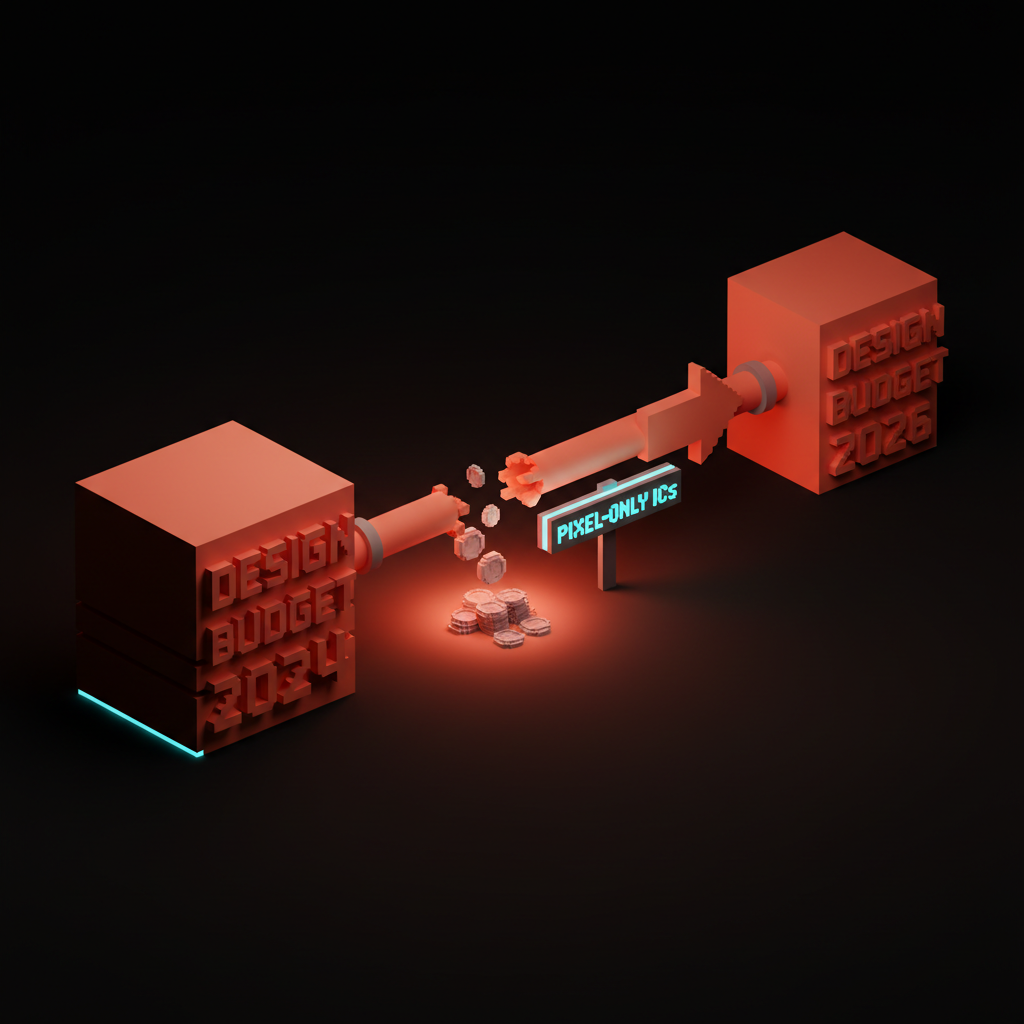
The math is unforgiving. A team with a designer who pushes Figma and a PM who writes the spec costs roughly twice a team with a designer-PM who does both. AI handles the production grind that used to justify the second seat, so one of the two roles loses funding.
The role that loses is the one that did not absorb the spec, the metric, and the ship date. In most orgs that cut, that has been the designer, because designers historically defined themselves by the Figma artifact instead of the product outcome.
The teams that did not get cut are where the designer became the PM and the PM moved up or merged out. Same headcount, fewer titles, more output per seat.
A CFO eyeing a design org for cuts is not asking "is design valuable." They are asking "which seat ships the artifact that moves the metric." Seats that cannot answer by name go first. The pattern is brutal, accurate, and visible in every Q1 2026 layoff list.
What still gets you hired in 2026
Five moves. Run them in parallel, not sequentially. None require permission.
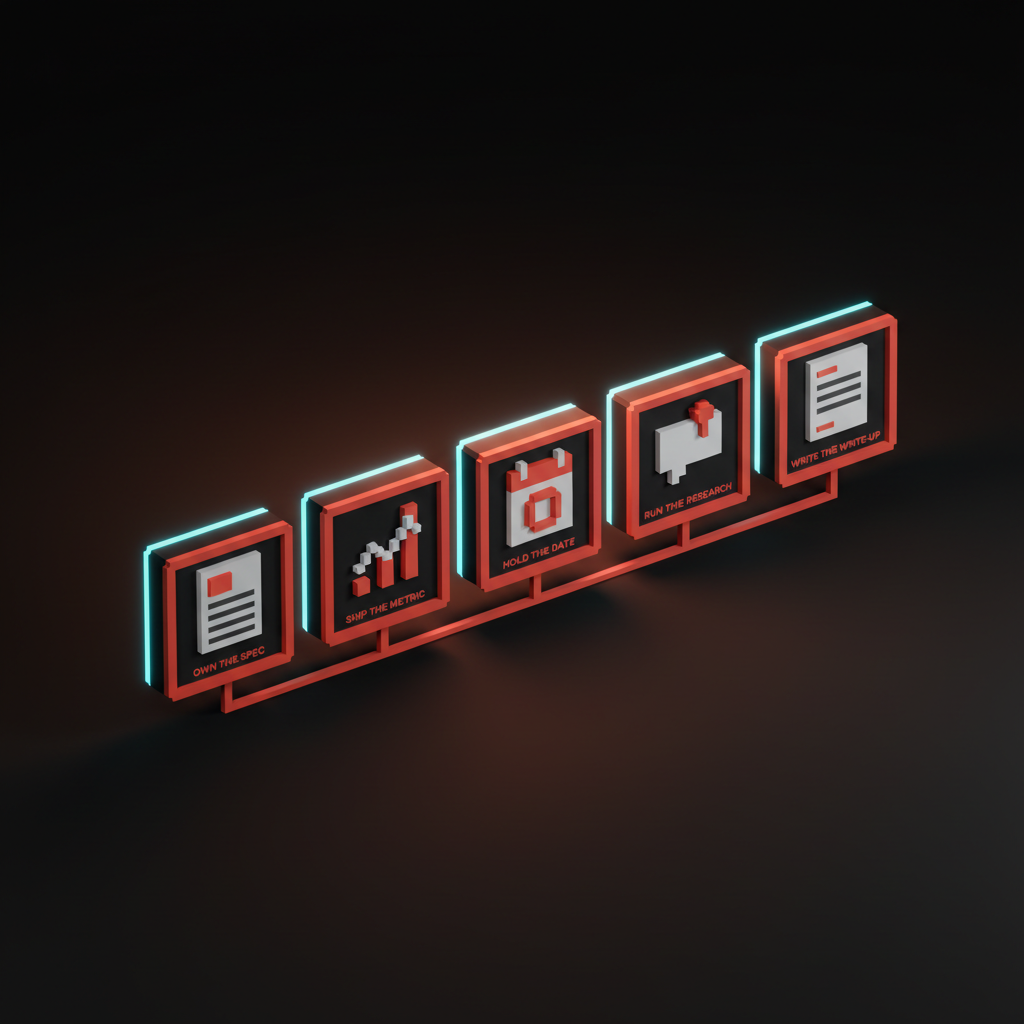
-
Own the spec. Pick the next surface you are shipping and write the spec yourself. One page. Problem, user, metric, failure modes, cut lines. Send it to your PM, or your manager if there is no PM.
-
Ship the metric. Name a single number the next ship will move. Get the dashboard wired before the design review, not after. Reference the design system as the production layer, never as the work itself.
-
Hold the date. Write a ship date on a calendar and tell the team. Slip it once, learn the lesson, never slip it twice.
-
Run the research. Five user interviews per surface, minimum. Fifteen-minute calls, recorded, transcribed by Otter or Claude, summarized by you. Quote the user in the spec. Surfaces like onboarding without onboarding are impossible without this.
-
Write the write-up. Within five business days of ship, post a one-page launch summary. What shipped, what moved, what did not, what the team learned. Make it the artifact your manager forwards.
Run those five for two quarters and your role inside the company is structurally different, regardless of your title. Run zero of them and your role is the line item the next reorg consolidates.
The same ownership shows up in every surface a designer-PM ships. How the loading state is the product and the settings page problem get treated is the difference between a designer who owns the surface and one who decorated it.
The juniors who panic-bookmarked this
If you have less than three years in the industry, the move is simpler and more urgent. Do not panic. Recalibrate the year.
The old career path was a senior IC at year five who pushes Figma at the highest level. That path no longer exists for new grads.
The path that does exist is a year-three IC who writes specs, runs research, owns metrics, and ships. The bar moved up and to the left, and so did the timeline.
In practice, three things. Stop measuring your portfolio in shots and start measuring it in shipped surfaces with metrics attached. Stop apprenticing under a PM and start apprenticing under a senior designer-PM. Pick a side project where you own the spec and the ship, even if the ship is small.
Juniors who do this in 2026 are seniors by 2028. Juniors who keep posting Dribbble shots are still juniors in 2028, in a market that does not hire juniors anymore.
Stop pretending the merger is coming
The merger is not a trend. It is the structural shape of design IC work in 2026. The senior designer who owns the spec, the metric, the ship date, and the user research is still hired, still funded, and still respected as a peer to engineering.
The senior designer who only ships Figma is the role the market priced out, automated away, and is now actively cutting. Pretending otherwise is the most expensive move a design IC can make this year. Same Figma file, same chair, different job.
If you want to keep your seat, take the artifacts. The spec, the metric, the date, the research, the write-up. Nobody is going to give them to you. The IC who reaches first is the one the company protects in the next reorg.
FAQ
Are designers really doing PM work now, or is this just senior IC inflation?
Both, but mostly the first. The IC role merger is real at every company hiring designers in 2026, and it shows up in job descriptions, artifact ownership, and layoff patterns. Senior IC inflation is a label problem on top of a structural one. The work itself, spec ownership, metric ownership, ship-date ownership, user research, write-ups, is the senior IC job regardless of what the title says.
Does this mean PMs are getting replaced by designers?
No. The IC layer of PM and designer collapsed into one seat, and the PM function moved up the org or specialized. Senior PMs still exist, owning portfolios, strategy, market positioning, and cross-team coordination.
The IC PM who briefed designers and waited for engineering is the role that merged. The designer-PM and the senior PM are the two surviving shapes.
What if I just want to design and not deal with metrics or specs?
That is a reasonable preference. It is also one the 2026 market does not pay senior salaries for. You can keep that role at agencies that bill by the hour, in pure visual or brand work, or as a contractor on production tasks.
Inside a product org with a salary band attached to "senior designer," that role is the one being consolidated. The market is allowed to change, and so is your career strategy.
CTA
If you want a design partner that operates as a designer-PM unit by default, owns the spec, the metric, and the ship date, and writes the launch post when the work goes live, hire Brainy. We design products the way the market pays for in 2026, not the way it paid in 2018.
Want a design partner who ships specs, ship dates, and shipped product instead of just screens? Brainy operates as a designer-PM unit by default, owning the spec, the metrics, and the launch.
Get StartedGet new papers by email
New Brainy papers in your inbox. Confirm once, unsubscribe anytime.