
Logo Redesign Process: 7 Steps from Audit to Rollout
The full logo redesign process from audit to rollout. Real examples from Pepsi, Burger King, Mailchimp, and Johnson & Johnson, plus real timelines and costs.
Logo Redesign Process: 7 Steps from Audit to Rollout
Most logo redesigns fail before anyone touches a sketch. They fail because someone decided the logo "looks dated" without defining what business problem that actually causes. A logo redesign is a strategy decision dressed as a craft project. The process exists so the strategy survives every surface the mark eventually lands on.
When a logo redesign is actually justified
The right question is not "does it look old?" The right question is: what is the logo failing to do?

Legitimate triggers for a full redesign process:
- The business model shifted and the mark signals the wrong category
- A merger, acquisition, or split changed what the company is
- The mark fails at small sizes, on dark backgrounds, or in digital contexts it never needed to survive before
- Brand equity research shows target customers can't recognize or describe the mark
- Legal forced a change (Toblerone lost rights to its Swiss mountain silhouette in 2023 and had to rework the packaging mark to remove the "of Switzerland" visual claim)
Not legitimate triggers:

- A new CMO with opinions
- A competitor's recent refresh
- Three years since the last update
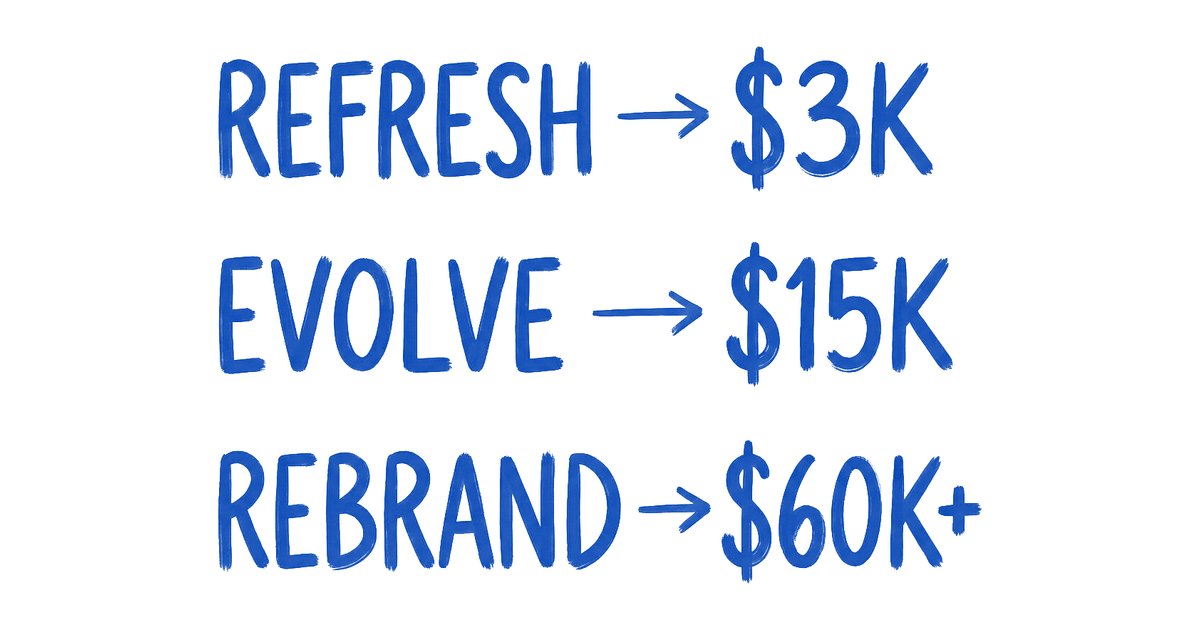
Refresh vs. evolve vs. rebrand: choosing the depth
Pick the depth before you pick up a pen. Getting this wrong is how a two-week refresh becomes a six-month rebrand no one budgeted for.

| Depth | What changes | What stays | Timeline | Cost range |
|---|---|---|---|---|
| Refresh | Kerning, weight, color calibration | Wordmark structure, symbol | 2–4 weeks | $3K–$15K |
| Evolve | Letterforms, symbol redraw, color system | Core identity logic | 6–12 weeks | $15K–$60K |
| Rebrand | Everything | Nothing required | 12–24 weeks | $60K–$300K+ |
Mailchimp's 2018 work with Collins is a clean evolve: Freddie got a tighter redraw and the wordmark went bolder, but the identity logic stayed intact. Burger King's 2021 work by JKR is also an evolve with nostalgia intent, pulling the brand back to its 1969–1994 flat aesthetic. Twitter to X in 2023 is a rebrand, and the textbook case of equity erasure: one of the most recognized bird marks in tech swapped for a generic letter with no transition plan.

Step 1: Audit what you have
Document everything that currently exists before exploring new directions.
Collect every logo variant in use: wordmarks, icons, lockups, reversed versions, app icons, favicons, embroidery files, signage files. Then check what is actually deployed versus what sits in the official brand folder. They are almost always different. Note which variants break at small sizes, on dark backgrounds, or in missing formats.
Then look at brand perception. Review how competitors use marks in the same category. Pull any existing brand equity research. Ask sales and customer success what customers call the company and whether they can describe the logo unprompted.
The audit report becomes the brief anchor. Without it, you are redesigning from opinion.
Step 2: Strategy interview
The audit tells you what exists. The strategy interview tells you what the mark needs to do.
Run structured interviews with founders, marketing leadership, and if budget allows, a sample of customers.
The questions that matter:
- Where does the brand compete in five years?
- What should customers feel in the first three seconds?
- Which signals can the mark not afford to lose?
- What has the brand outgrown?
Document answers and look for contradictions. Leadership often disagrees, and surfacing those disagreements before exploration starts is the job.
The output is a design brief. How to create a brand identity covers the full brand context, but for this step you need at minimum: one clarity statement, three to five executional constraints, and a ranked list of what the mark must communicate.
Step 3: Exploration round
Three to five directions. Not ten, not one.
Each direction answers the brief differently:
- Wordmark refinement
- Symbol abstraction
- A new mark architecture entirely
Present them as printed concept pages, not polished final comps. Printed keeps the conversation strategic instead of drifting into pixel feedback.
The exploration round is not a gallery to browse. It is a strategic filter: which creative direction solves the brief? Not "which one do we like?"
Push back on preference language. The chosen direction connects back to the strategy interview, not to comfort. See logo design process from scratch for the mark construction layer.

Step 4: Refinement and decisions
One direction moves forward. Everything else stops.
Refinement tightens the chosen concept across four axes:
- Letterform geometry
- Spatial relationships
- Optical corrections
- Color system
This is where logo grid construction matters, and where negative space gets considered if the concept has symbolic potential. Present two to three refinement variants at this stage, not six. Variants at refinement are micro-decisions like tighter tracking or alternate icon weight, not another round of exploration.
Refinement sign-off is binding. Agree in writing before building the variant system. Every extra round of open exploration doubles project cost.
Step 5: Variant system and rules
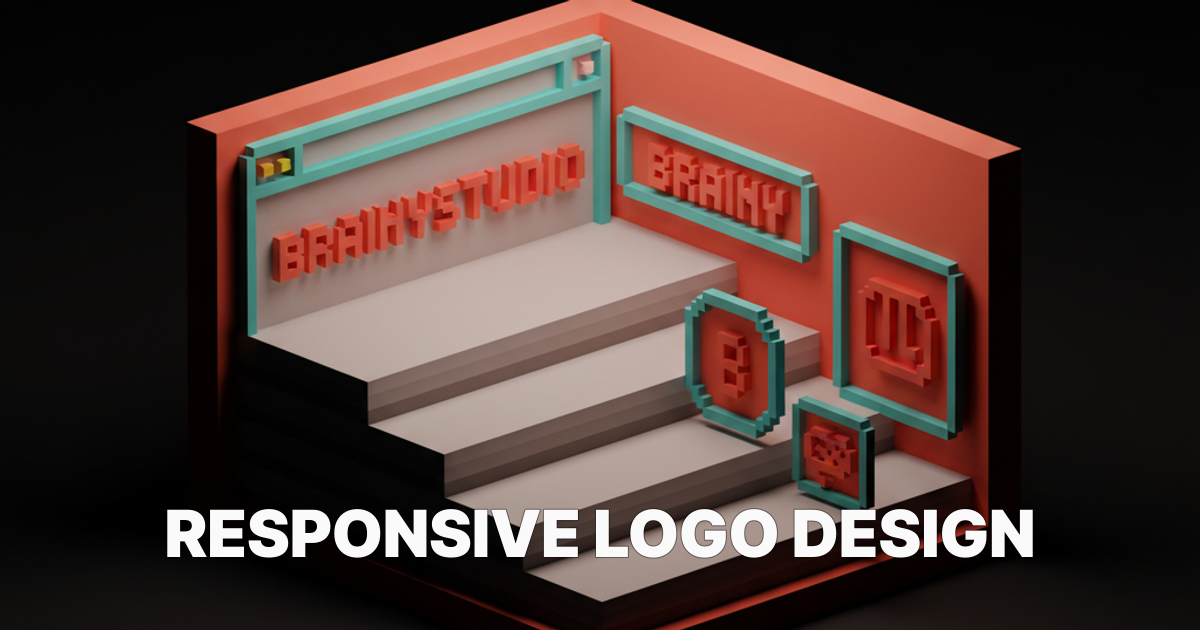
The hero mark alone will not survive rollout. The variant system decides whether the redesign actually works across all the places the brand lives.
Every logo system needs at minimum:
- Primary lockup in full color
- Reversed lockup on dark backgrounds
- Symbol only (app icon, favicon, embroidery)
- Wordmark only (for contexts where the symbol crowds the layout)
- Monochrome in black and white
- Minimum size rules in pixels and millimeters
- Clear space rules with real measurements
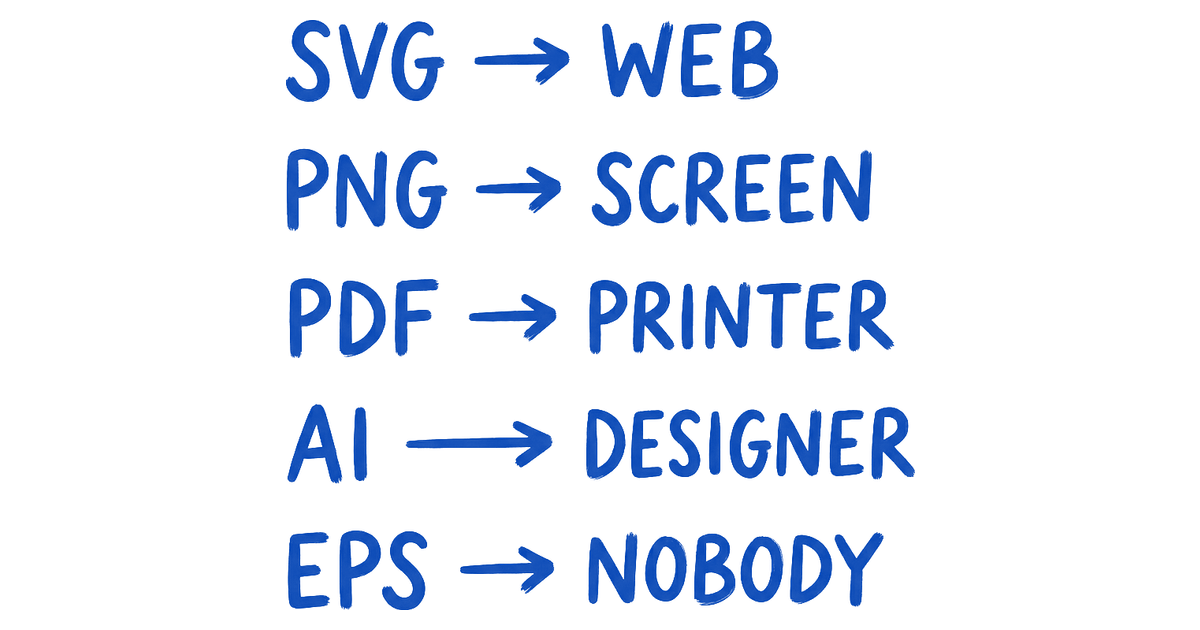
Most teams underbuild here. They deliver a primary lockup and a few PNGs, then six months later the brand is inconsistent everywhere. The full brand identity guidelines spec covers what this document needs.
Step 6: Rollout plan
The rollout plan is half the work and the part most teams underprice.
Map every touchpoint where the old mark lives:
- Website and app icons
- Social profiles
- Email signatures
- Signage and vehicle wraps
- Packaging and uniforms
- Merchandise
- Legal filings
- Press assets and ad creative
Assign an owner and a deadline to each. Stagger the rollout by priority: digital first, then physical. Rollout without a cutover plan produces a brand that looks like two different companies at once.
Gap's 2010 disaster was partly a rollout failure. The mark leaked before official comms, the internet wrote the story, and Gap reversed within a week. Even a stronger design couldn't have survived that sequencing.

Step 7: Comms and launch
How you announce the redesign matters as much as the redesign itself. Prepare a brand story: why you changed, what you kept, what the mark now signals. This is for the customers who built a mental model of the old mark, not the design community.
Burger King's 2021 rollout included a full "why we went back" narrative that acknowledged the retro shift and gave customers a frame for it. Pepsi's 2023 return to the retro circle leaned on nostalgia and heritage.
Have every channel asset ready before you announce: press kit, brand story, social graphics. Give partners and press twenty-four hours of early access. The worst launches let the internet write the story.
Real redesigns that worked (and one that did not)
Six redesigns, four wins and two warnings. Pick depth from the outcome, not the aesthetic.

| Brand | Year | Depth | Designer | What it solved | Outcome |
|---|---|---|---|---|---|
| Burger King | 2021 | Evolve | JKR | Generic fast-food aesthetic; needed distinctiveness | Widely praised; restored brand character |
| Mailchimp | 2018 | Evolve | Collins | Digital-first identity; Freddie needed refinement | Clean lift; mark works at every size |
| Pepsi | 2023 | Evolve | PepsiCo in-house | Anniversary reconnection to heritage | Positive reception; clear narrative |
| Johnson & Johnson | 2023 | Rebrand | Wolff Olins | Consumer-to-MedTech pivot needed a new signal | Strong reception; signals the business shift |
| Tropicana | 2009 | Evolve | Arnell Group | Nothing broken; redesign was a solution without a problem | 20% sales drop in two months; reversed |
| 2023 | Rebrand | Internal | Business pivot to X Corp | Destroyed an estimated $5B+ in brand equity |
Tropicana 2009 is the canonical audit-skipped redesign. The orange-and-straw iconography had near-100% recognition in the OJ category. The redesign stripped it with no strategic justification.
Johnson & Johnson 2023 is the counterexample: the company was pivoting its identity from consumer goods to MedTech, and the new handwritten J was a deliberate signal to an entirely different buyer base in the MedTech sector. Same craft category, opposite strategic logic, opposite outcomes.
Pricing realities and timelines
Pricing scales with scope, not with hours. Use this table as a sanity check before signing a statement of work.
| Scope | Timeline | Cost range | Who does it |
|---|---|---|---|
| Refresh | 2–4 weeks | $3K–$15K | Freelancer, small studio |
| Evolve | 6–12 weeks | $15K–$60K | Mid-size studio |
| Full rebrand | 12–24 weeks | $60K–$300K+ | Specialist agency |
| Enterprise rebrand | 6–18 months | $300K–$2M+ | Top-tier agency |
A well-run evolve by a mid-size studio produces better outcomes than a $200K rebrand without a proper audit. The biggest cost driver is brief quality before exploration starts. Every open-ended "we'll keep exploring until it feels right" clause doubles the cost.
Signoff checklist
Run through this list before any handoff so nothing load-bearing slips.
- Business problem documented and agreed upon
- Depth locked before exploration starts
- Full audit completed and archived
- Strategy interview documented with contradictions surfaced
- Exploration round: three to five directions presented
- One direction locked in writing before refinement begins
- Full variant system built (primary, reversed, symbol-only, wordmark-only, monochrome)
- Minimum size and clear space rules documented
- Rollout touchpoint map completed with owners and deadlines
- Comms narrative written before announcement
- Digital assets updated before physical rollout begins
FAQ
Common questions on scope, timeline, and cost.
How long does a logo redesign take?
A refresh takes two to four weeks. An evolve takes six to twelve weeks. A full rebrand takes twelve to twenty-four weeks. Any agency quoting two weeks for a full rebrand is skipping the audit or the strategy interview.
What is the difference between a logo refresh and a rebrand?
A refresh updates execution without changing identity logic: tighter kerning, color recalibration, better digital formats. A rebrand changes what the mark communicates, usually because the business itself has changed.
How much does a logo redesign cost?
Refreshes run $3K to $15K. Evolves run $15K to $60K. Full rebrands start at $60K and go to $300K or more depending on scope and agency tier. The biggest cost driver is brief quality before exploration starts.
Can I redesign my logo without losing brand equity?
Yes, if you preserve the signals that carry recognition. Burger King kept the palette, wordmark structure, and name. Mailchimp kept Freddie. Pepsi kept the globe and brand colors. What you strip is as strategic a decision as what you add.
When should I not redesign my logo?
When a new CMO prefers a different aesthetic. When a competitor recently changed their mark. When the business is in a sales crisis. When no one can answer what the new mark needs to communicate that the current one does not.
Considering a redesign? Brainy runs the full seven-step process with the audit, the variant system, and the rollout pack included.
Get StartedGet new papers by email
New Brainy papers in your inbox. Confirm once, unsubscribe anytime.