
The Death of the Mockup: Why Designing in Code Won 2026
Static mockups had a great run. In 2026 they lost the race. AI now turns prompts into running components faster than any designer can ship a flat Figma frame. The case for designing in code, the new stack that won, the honest tradeoffs, and the design role that survives.
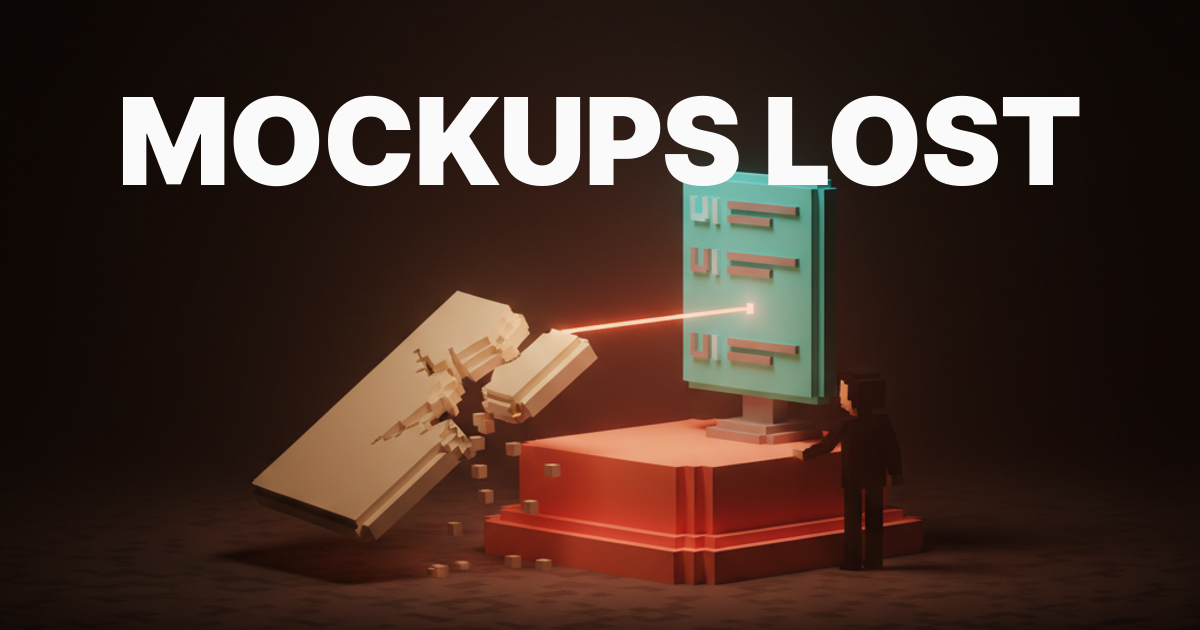
The mockup is dead. Not as a sketch, not as a thinking tool, not as a moodboard. As a deliverable. The flat Figma frame that designers have been shipping as the final artifact for fifteen years lost the race in 2026, and it lost it to a running component an engineer can deploy the same afternoon.
This is not a hot take. AI now turns a paragraph of intent into a working React component faster than most designers can place a header in Figma. Design tokens replaced artboards as the source of truth. Studios still selling Figma decks as final deliverables in 2026 are losing briefs to teams shipping live code, and the price gap is widening every quarter.
The case for designing in code, the stack that won, the honest tradeoffs, and the role that survives.
The mockup is dead and the bench beat it
The mockup-as-deliverable era is over, and the studios still selling Figma decks as finals in 2026 are pricing themselves out of the brief. The mockup workflow had a clean logic for fifteen years. Designer ships flat frames in Figma. Engineer translates frames into code. Stakeholders approve the frames. Production catches up later, sometimes never. That logic broke when production stopped being the bottleneck.
In 2026, the bottleneck is judgment, not output. AI ships the production layer in minutes. The flat Figma frame is now the slowest part of the pipeline, not the fastest, and clients have noticed. A team that produces a running component in an afternoon ships and learns four cycles before the team producing a hi-fi mockup ships once.
The mockup did not die because designers got worse. It died because the bench got better.
What actually changed in 2026
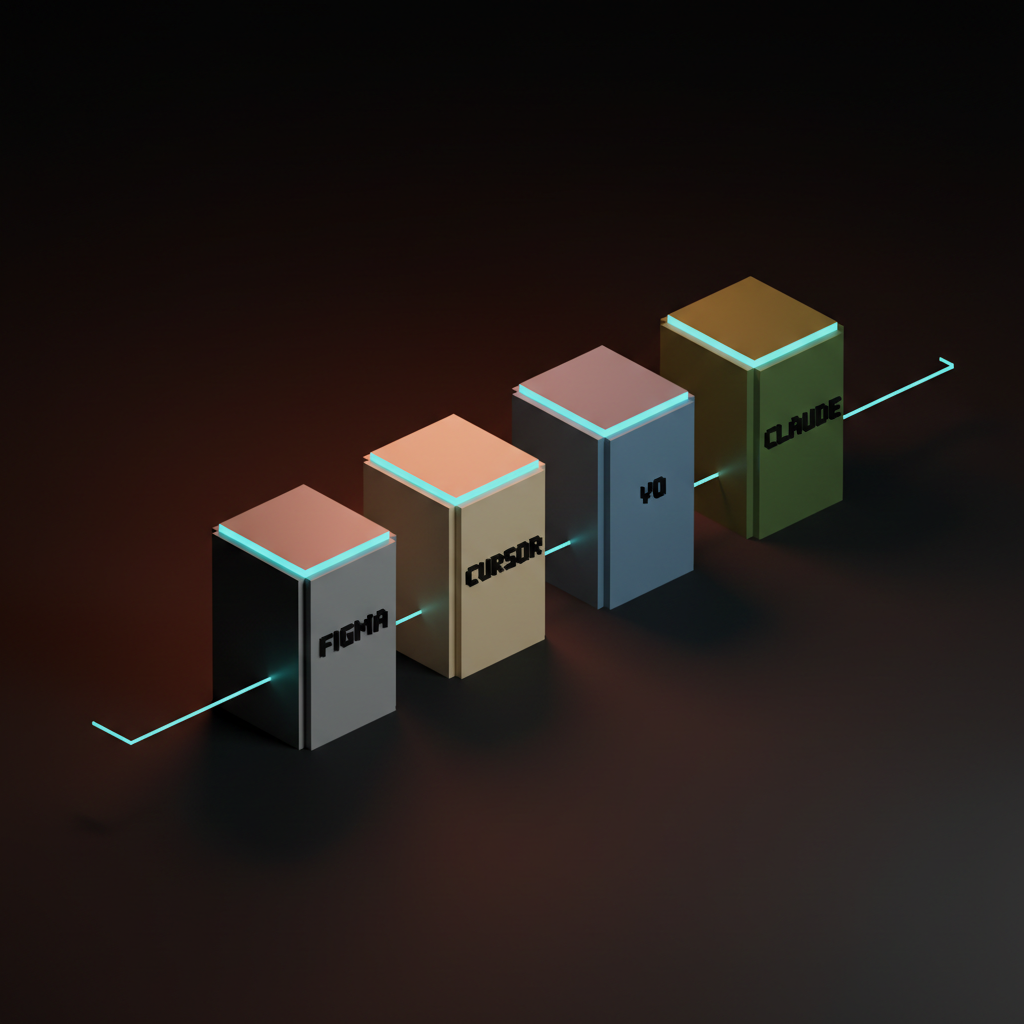
The shift was not one tool, it was a stack reaching critical mass at once. Figma Make turned Figma frames into emit-ready React. Cursor with shadcn made design-faithful components cheap to produce. v0, Bolt, and Lovable closed the prompt-to-product loop for full apps. Claude Code put a real coding agent on a real repo, with humans in the diff. Design tokens, formalized in the W3C draft and adopted by every serious team, became the canonical source of truth instead of the artboard.
Each of those existed in some form before 2026. What changed is they all matured in the same window. The combined output is a workflow where the running app is the artifact and the artboard is a draft, not the other way around.
Figma Make turned Figma into a code emitter
Figma Make collapsed the gap between artboard and codebase by emitting React components directly from frames. Frames stopped being the deliverable the moment Figma itself made them a draft. Designers using Make do not hand a frame to engineering, they hand a working component a sprint can drop into the repo with minor cleanup.
Make is not perfect. Generated code still needs a senior eye, the token mapping is still partial in legacy files, and complex interactive logic still needs human work. None of that matters for the question of whether a flat frame is the deliverable in 2026. It is not. Figma decided that itself.
Combined with Dev Mode and the Figma MCP, the entire flow from Figma to a running app collapsed from a multi-day handoff to a same-day round trip.
Cursor and shadcn made design-faithful code cheap
Cursor with shadcn took the labor out of building accessible, on-brand components, and that labor is exactly what the mockup workflow used to justify. A designer who needed a "design-faithful" production component used to spend a week annotating spacing, type, color, states, and handing it to engineering. Cursor and shadcn produce that component on demand, with token-aware variants, accessible by default, in fifteen minutes.
The combination matters. Cursor edits a real repo with a real diff. shadcn ships components as code you own, not as a package you depend on. Tailwind tokens map cleanly into both. The result is design-faithful production code at the cost of a Figma frame, which retired the most common reason to ship Figma in the first place.
v0, Bolt, and Lovable closed the prompt-to-product loop
v0 from Vercel, Bolt from StackBlitz, and Lovable closed the loop from prompt to a running, deployable app in minutes. None of these tools are perfect. All three are faster than producing a hi-fi mockup of the same surface.
v0 wins the design-faithful component layer because it speaks shadcn and Tailwind natively. Bolt wins the full-stack browser prototype because it stands up a backend in the same session. Lovable wins the founder MVP because it is built for non-engineers shipping product without a dev shop. Each of them turns intent into a working surface at the speed clients expect a moodboard.
When clients see that a working app exists in the time a moodboard used to take, the moodboard stops winning the brief.
Claude Code put real-time collab on a running app
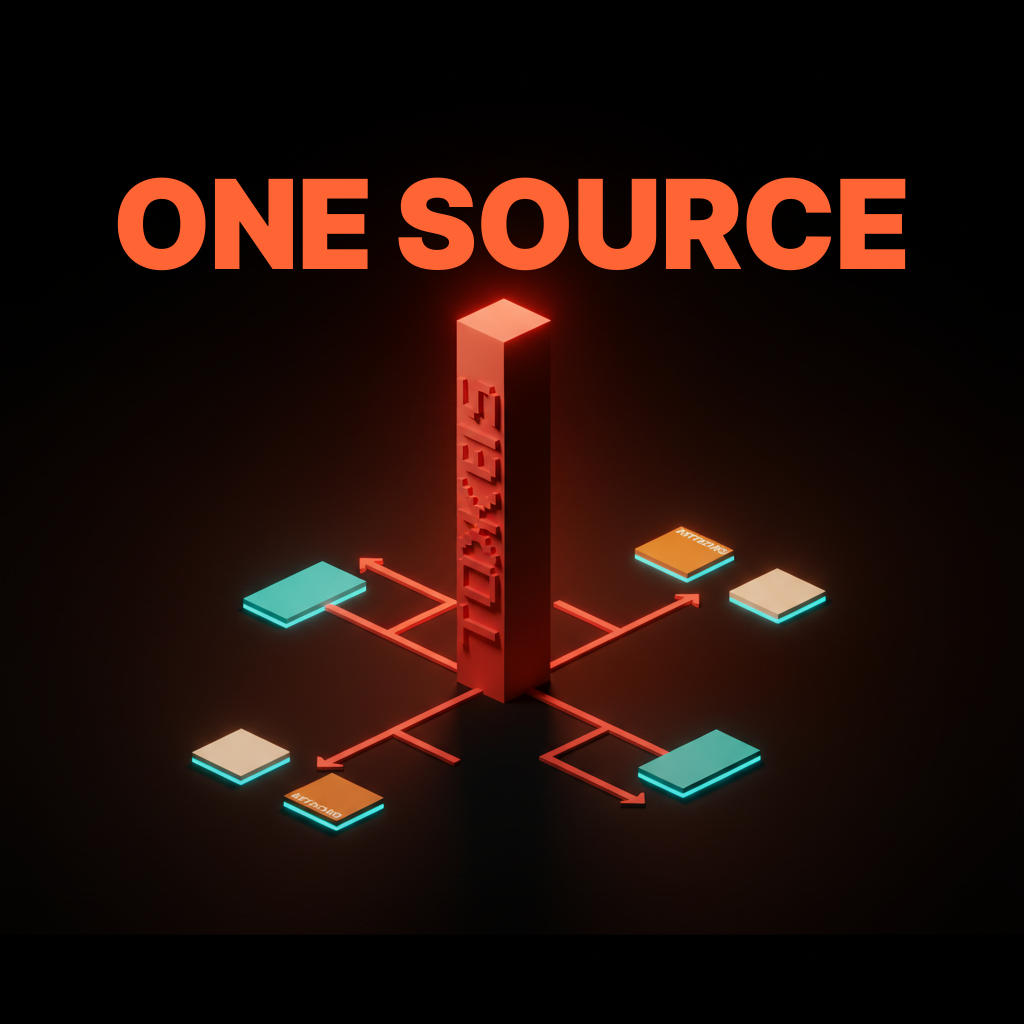
Claude Code on a real repo gave designers and engineers a shared working surface that is the live product, not a representation of it. The pattern is simple. Designer pairs with Claude Code on the running app. Edits a component. Tests the change in the browser in the same minute. Engineer reviews the diff. Ships.
That collab loop is the closest thing to designing on a whiteboard the industry has seen since CSS shipped. Except the whiteboard is the production app, the marker is a real component change, and the eraser is a git diff. The mockup workflow cannot compete with a loop that tight.
If you want the deeper teardown of how that loop works on a real codebase, see vibe coding for designers and AI code editors compared.
Design tokens became the source of truth
Tokens, not artboards, are the canonical source of truth in 2026. That single change retired most of the Figma-as-final-deliverable workflow. When color, spacing, typography, radius, motion, and elevation live in a token file the design tool reads and the codebase reads, the artboard is a render of the tokens, not a definition of them.
The W3C Design Tokens spec, Style Dictionary, Tailwind theme files, and the token plug-ins in Figma all converged on the same idea. Tokens upstream, every surface downstream. A team running this way edits the token file, watches Figma update, watches the running app update, and ships. There is no flat artboard worth shipping as a final deliverable in that flow because the token file already is one.
This is the part most studios still selling Figma decks have not internalized, and it is why their prices are getting cut. For the upgrade path, see design handoff from Figma to dev.
Where mockups still win in 2026
Mockups still earn their seat for four jobs. Pretending otherwise is dishonest, and it is the kind of overclaim that gets the rest of this argument dismissed.
First, early ideation. A flat Figma frame at the divergence stage is faster than booting a code editor for a thirty-minute "what if it looked like this" round. Second, brand sketches. Logo work, identity exploration, type studies, color systems pre-implementation, those still belong in a flat artboard or in Illustrator before a token file exists. Third, pure visual exploration without a stack. New product categories, mood-first concepts, things that have no codebase yet. Fourth, client presentation of brand-level decisions where the surface is not the deliverable, the system is.
Everything else, every screen that ships to a real user, every component that lives in a product, every page that gets indexed, belongs in code in 2026.
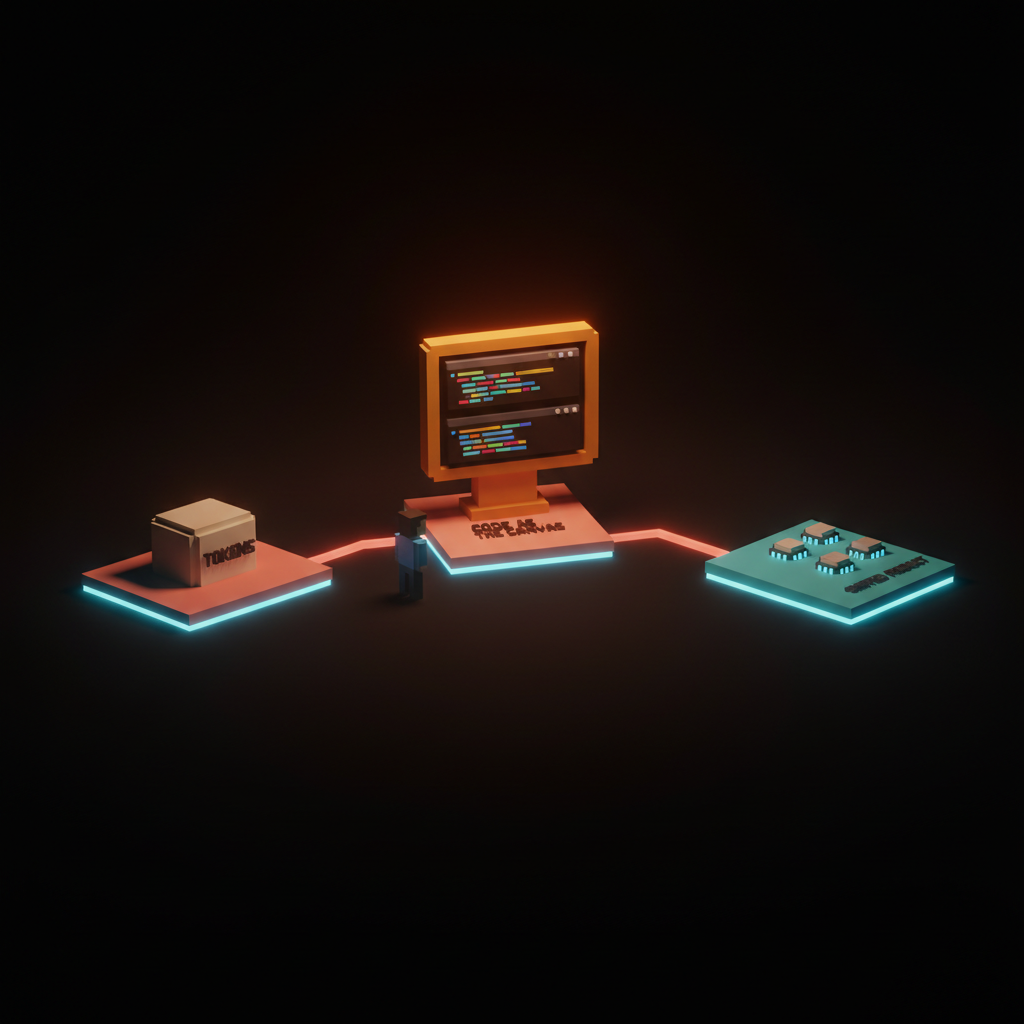
The new role, designers as live composition editors
The designer of 2026 is a live composition editor on a running app, not a flat-file producer. The work is judged by the shipped surface, not the artboard. The deliverable is a deployed component, not a frame.
That role is more demanding, not less. A live composition editor reads code, edits tokens, ships a real diff, and is accountable for the running surface. It also pays better, because the work moves at production speed and the value is the judgment, not the variant count. The seniors making this shift are charging premium rates because the deliverable is a working app, not a deck a junior could have produced.
If you want a product UI shipped in code on the 2026 stack, hire Brainy. AppBrainy ships full product engineering with designers in the diff. ClaudeBrainy ships the Skill packs and prompt libraries that turn AI into the production layer of a real codebase.
How Linear, Vercel, Anthropic, and Anysphere actually work
The teams shipping the best product UI in 2026 share a workflow shape. Tokens upstream. Code as the canvas. AI as the production layer. Designers in the diff.
Linear's design team treats the codebase as the source of truth. Tokens live in the repo, components live in the repo, designers ship pull requests against the running app. Their changelog and feature pages are not Figma exports, they are the product itself. Vercel runs the same shape on its homepage and v0 surfaces, with designers shipping directly into the deployed app and using v0 to spin up new pattern variants in minutes. Anthropic's product team builds Claude product surfaces with designers reading and editing the actual app code, often with Claude Code itself as the production assistant. Anysphere, the Cursor team, eats its own dog food: designers work inside Cursor on the Cursor codebase, which is the strongest possible signal that the workflow is real.
The shape is consistent. None of these teams ship Figma as a final deliverable. All of them treat the artboard as a thinking tool and the running surface as the artifact.
The cautionary tale, studios still selling Figma decks in 2026
Studios still pitching Figma decks as final deliverables in 2026 are losing briefs to teams shipping live code. The price gap is widening every quarter, and the reason is not aesthetic, it is structural.
A studio quoting forty thousand for a Figma deck is competing with a team quoting fifty thousand for the same surface shipped in code. The client sees the same visual outcome, plus a deployed app, plus a token system, plus a running design system, for a quarter more. The math is brutal. The Figma-only studio loses the brief. Repeat that across a year and the studio is repricing or pivoting. Most are pivoting late.
This is not a prediction. It is happening on Calendly bookings right now. The studios that still treat the Figma deliverable as the product are training their clients to call the next vendor.
FAQ
Is the mockup actually dead?
The mockup is dead as a final deliverable for shipped product UI in 2026. It is alive and well as an early-stage thinking tool, a brand sketch surface, and a divergence canvas. The shift is in what the deliverable is, not in whether mockups have any role.
What does designing in code actually mean?
Designing in code means the designer ships changes to a real codebase, not a flat artboard. Edits tokens, edits components, runs the app, reviews the diff, deploys. The artifact is the running surface, not the frame.
Do designers need to learn engineering?
Designers need to read code, edit tokens, run a dev server, and review a diff. They do not need to write production-grade React from scratch. AI handles the heavy lifting on production code. The designer's job is composition, judgment, taste, and the running surface.
Is Figma over?
Figma is not over. Figma Make, Dev Mode, and the Figma MCP make Figma the entry point to the new workflow, not the exit. The artboard is a draft, the code is the deliverable, and Figma sits at the front of the pipeline.
What about brand work and identity design?
Brand and identity design still live in flat tools. Logos, type, color systems, identity sketches, those belong in Figma, Illustrator, or a sketchbook before any code exists. The shift is about product UI, not brand design.
What is the fastest way to make this shift?
Three moves. Learn shadcn and Tailwind tokens. Pair-design with Cursor or Claude Code on a real repo. Ship one component as a deployed pull request this quarter. The third move is the one that matters.
Get on the right side of the shift
The mockup workflow had a great run. In 2026 it lost the race to a running app, and the teams shipping product UI in code are charging more, learning faster, and winning briefs the Figma-deck studios used to own.
Three moves to get on the right side. First, move tokens upstream. Color, type, spacing, radius, motion, elevation. One file, both tools read it, no artboard owns it. Second, run shadcn or your equivalent on a real repo, pair with Cursor or Claude Code, and ship one component as a deployed pull request this quarter. Third, change the deliverable. Stop selling Figma decks as finals. Sell shipped components, deployed apps, running surfaces.
If you want a product UI shipped in code on the 2026 stack, hire Brainy. AppBrainy ships full product engineering with designers in the diff. ClaudeBrainy ships the Skill packs and prompt libraries that turn AI into the production layer of a real codebase. The studios still pricing Figma decks as finals will not be on the brief next quarter. Be on the brief.
If you want a product UI shipped in code on the 2026 stack, AppBrainy ships full product engineering with designers in the diff, and ClaudeBrainy ships the Skill packs and prompt libraries that turn AI into the production layer of a real codebase.
Get StartedGet new papers by email
New Brainy papers in your inbox. Confirm once, unsubscribe anytime.