
AI App Builders Compared 2026, The Head To Head Pick
The 2026 head to head review of v0, Bolt, Lovable, Same, and Replit Agent. Strengths, weaknesses, real workflow tests, verdicts, and category trajectory.
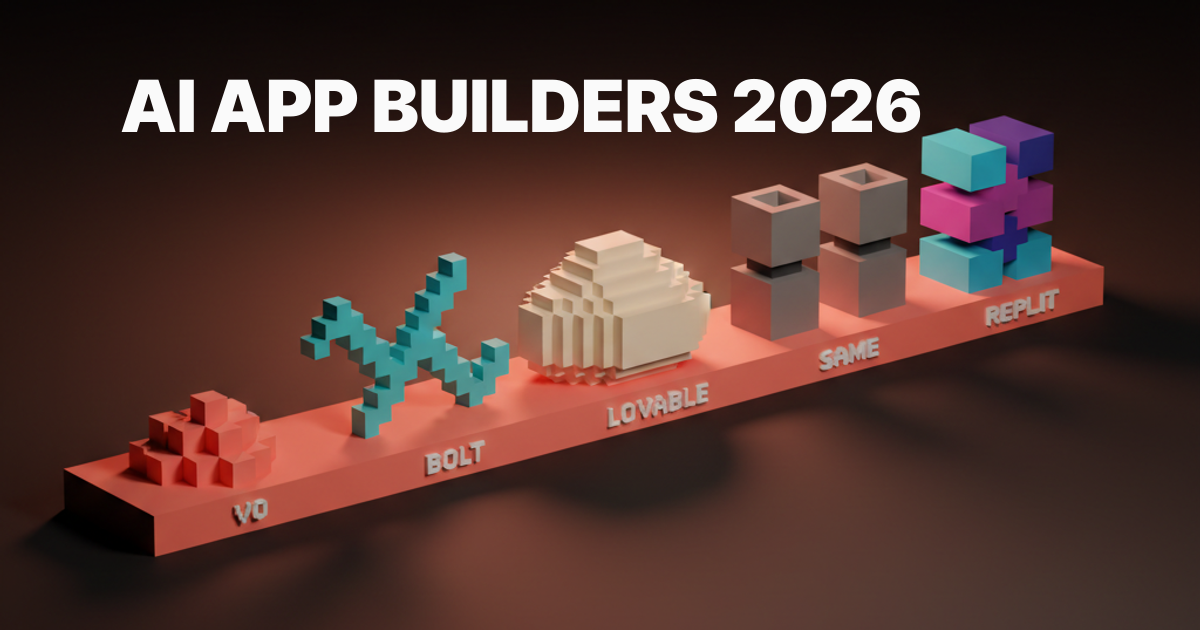
Five tools turn a prompt into a working app in 2026. Picking the wrong one wastes a weekend. Here is how to pick the right one.
The category exploded in eighteen months. v0 grew up inside Vercel, Bolt out of StackBlitz, Lovable out of Stockholm, Same as a scrappy newcomer, and Replit Agent matured on top of the original browser IDE. They look identical in the marketing screenshots, and they are wildly different the moment you ship anything that has to pay rent.
The 2026 AI App Builder Landscape
The category is now a real category, not a demo. The first wave of "prompt to app" tools in 2024 were toys that produced toy output. The 2026 generation produces code you can actually deploy, with real auth, real databases, and real money flowing through Stripe.
Two axes matter when you compare them. One is vibe-first versus production-first, meaning how much the tool wants to feel magic versus how much it wants to hand you a real repo. The other is indie versus enterprise, meaning whether the pricing and infra assume a single founder or a team of fifty. Every tool in this review has a different center of gravity on those two axes.
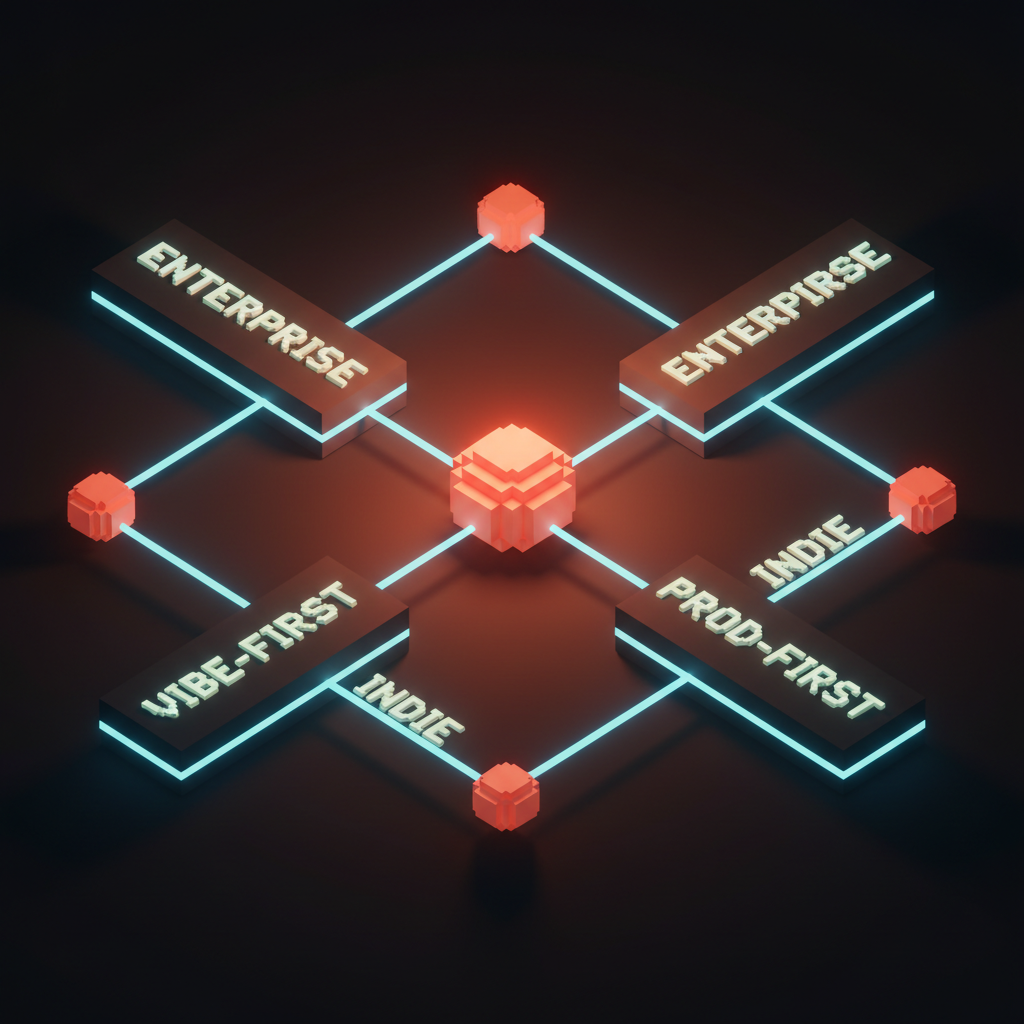
The mistake most people make is picking on aesthetics of the marketing page instead of the shape of the output. Pick the tool whose output shape matches what you actually want to do with the code afterward. A clean v0 component in a real Next repo and a Lovable hosted app may both feel "magic," but they are different products solving different problems.
The other useful frame is to ignore what each tool calls itself and look at where the team came from. v0 came out of a frontend platform, so the output is frontend-shaped, while Bolt came out of a browser-runtime team, so the output is browser-shaped.
Replit Agent came out of a polyglot Linux IDE, so the output is server-shaped. Same came out of nowhere with a "clone an app" thesis, so the output is clone-shaped, and Lovable came out of a consumer-product mindset, so the output is consumer-shaped. The DNA of each parent company shows up in the code.
v0 by Vercel, Best For Production React Code
v0 lives at v0.dev and ships out of Vercel. It is the most "developer-shaped" of the five, and it is the one that produces the cleanest Next.js code by a margin. The output is real Next.js App Router, real Tailwind, real shadcn/ui components, and it deploys to Vercel in two clicks because of course it does.
The thing v0 is genuinely best at is building a polished frontend on top of a stack a real engineer would have chosen anyway. You can paste a Figma screenshot, describe what you want, and it gives you back a component that uses the same primitives a senior frontend engineer at a YC startup would have used. That is rare.
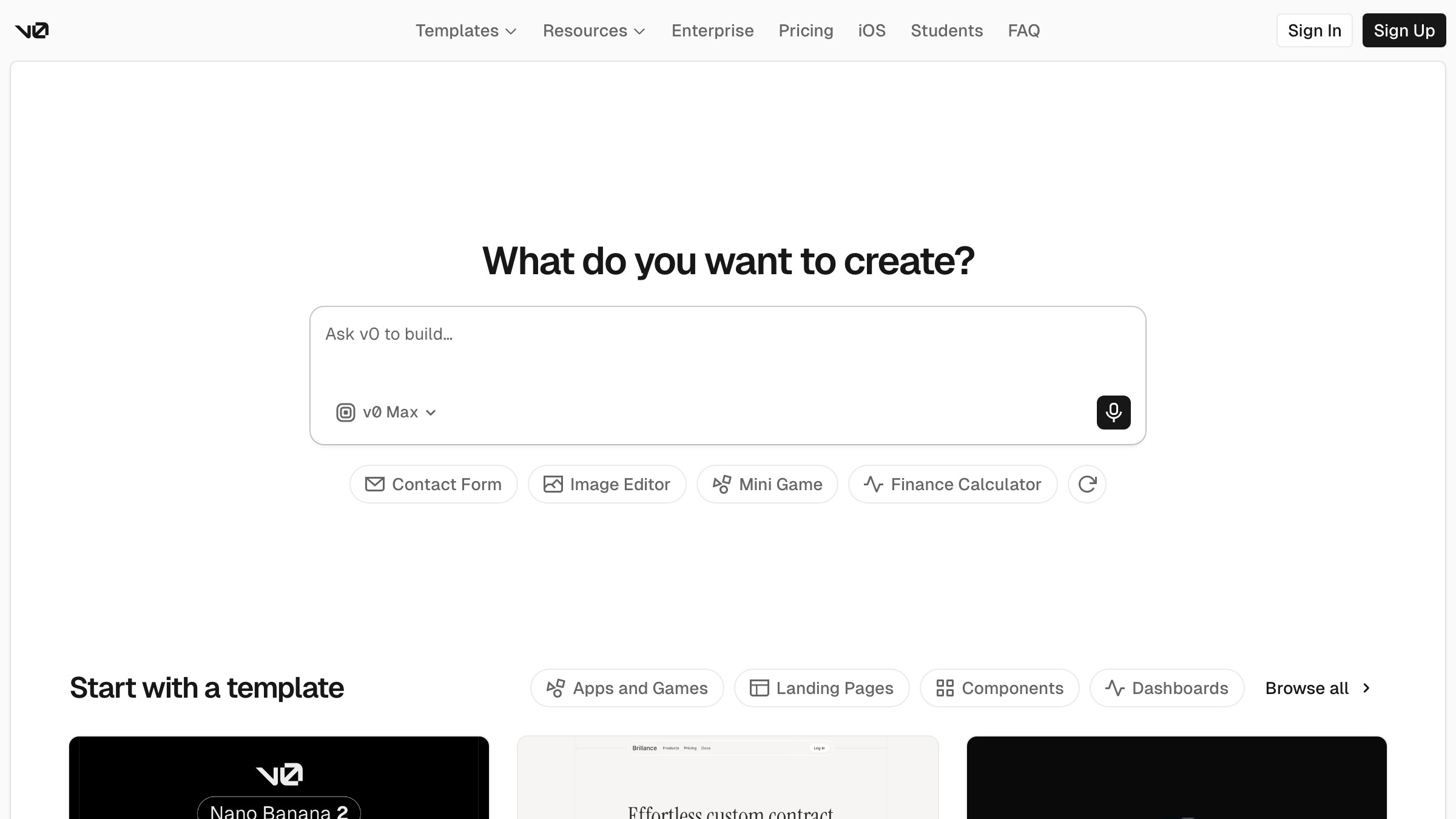
I asked v0 to build a pricing page with a three-tier comparison table, a FAQ accordion, and a sticky CTA bar. It produced clean shadcn components, sensible Tailwind, accessible markup, and a working Next.js page in about ninety seconds. I dropped it into a real Next 16 app the same afternoon and it ran without modification.
The limitation is that v0 is frontend-first. Database, auth, server logic, Stripe wiring, all of that is on you or on Vercel's other products. It is not pretending to be a full-stack tool, and it is better for it.
Bolt by StackBlitz, Best For Full Stack Prototyping In The Browser
Bolt lives at bolt.new and ships out of StackBlitz, the team behind WebContainers. The reason Bolt feels different is that it runs Node in your browser tab, not in a remote container. That sounds like a small detail. It changes the texture of the work.
Bolt will spin up an entire Vite or Next or Astro project, install dependencies, run the dev server, and let you watch the app build in a live preview, all without leaving the tab. You can ask it for a SaaS dashboard with Supabase auth and a Stripe checkout flow and it will scaffold the whole thing, files and all, in two minutes.
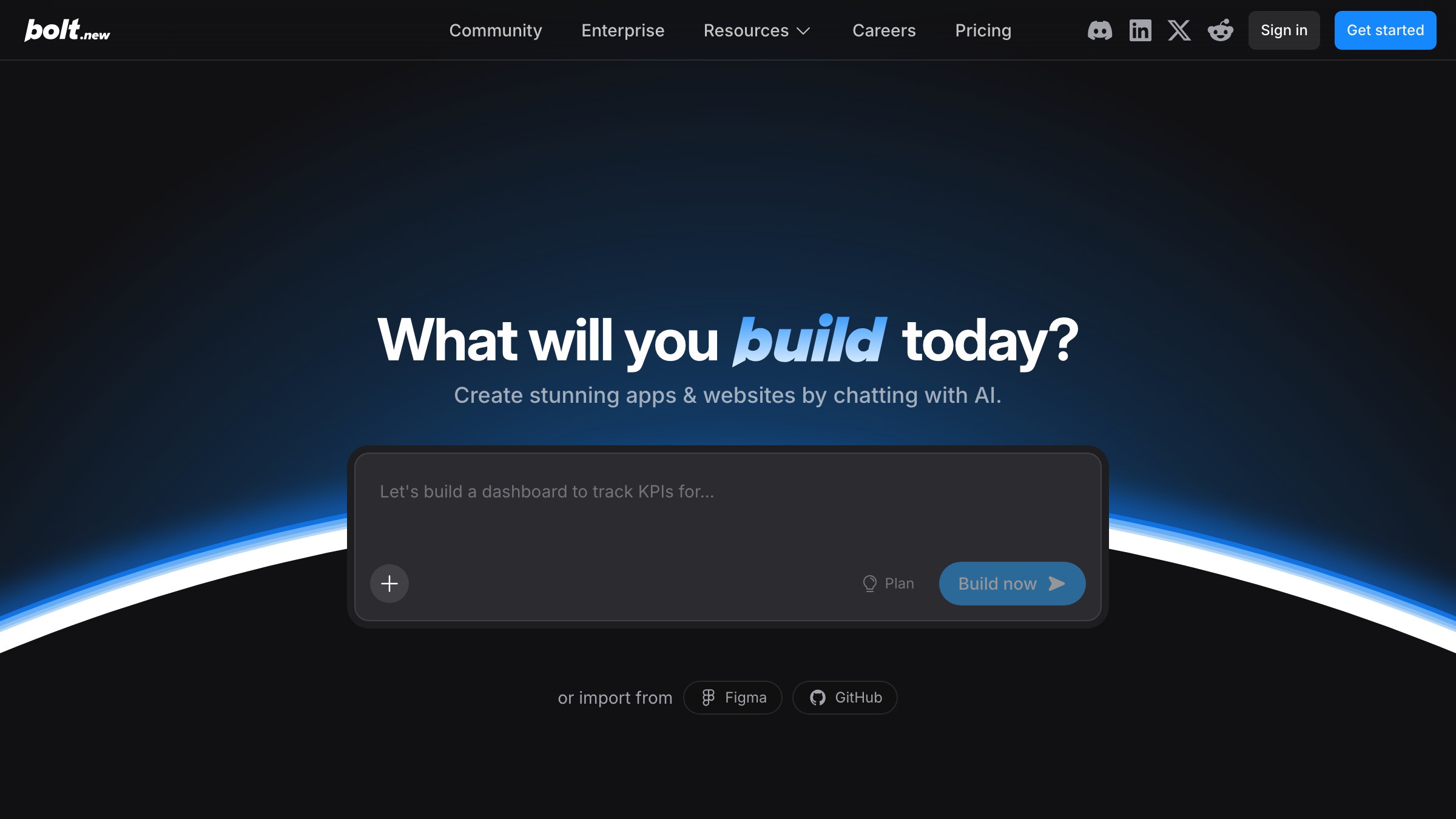
I asked Bolt to build a small expense tracker with Supabase, a login screen, an expenses table, and an add-expense modal. It scaffolded the whole project, wrote the SQL, wrote the auth code, and produced something that worked end to end after I plugged in my Supabase keys. Total time around twelve minutes including the keys.
The catch is that Bolt's output is more "scaffold quality" than "production quality." The patterns are reasonable, the code is readable, but it is the work of an enthusiastic mid-level engineer at 2am, not a senior engineer in their best hour. You will rewrite parts of it before shipping to real customers.
The other quiet strength of Bolt is that the live preview is fast enough to actually iterate inside the tab, not in a separate window. The chat to fix to preview cycle runs in seconds, not minutes, which changes the feel of the work from "submitting jobs to a queue" to "shaping something with your hands." That speed compounds over a long session in a way that does not show up in any feature list.
Lovable, Best For Non-Technical Founders
Lovable lives at lovable.dev and is built out of Stockholm. It positioned itself early as the tool for people who cannot code and do not want to learn. The pitch is "describe your idea in plain English, get a working app." For a real category of user, that pitch is correct.
The Lovable interface hides the file tree, the terminal, and most of the developer-shaped surface area. You chat, the app updates in a live preview, and you publish with a button. Under the hood it is React plus Supabase plus a hosted runtime, but you do not have to know that to ship.
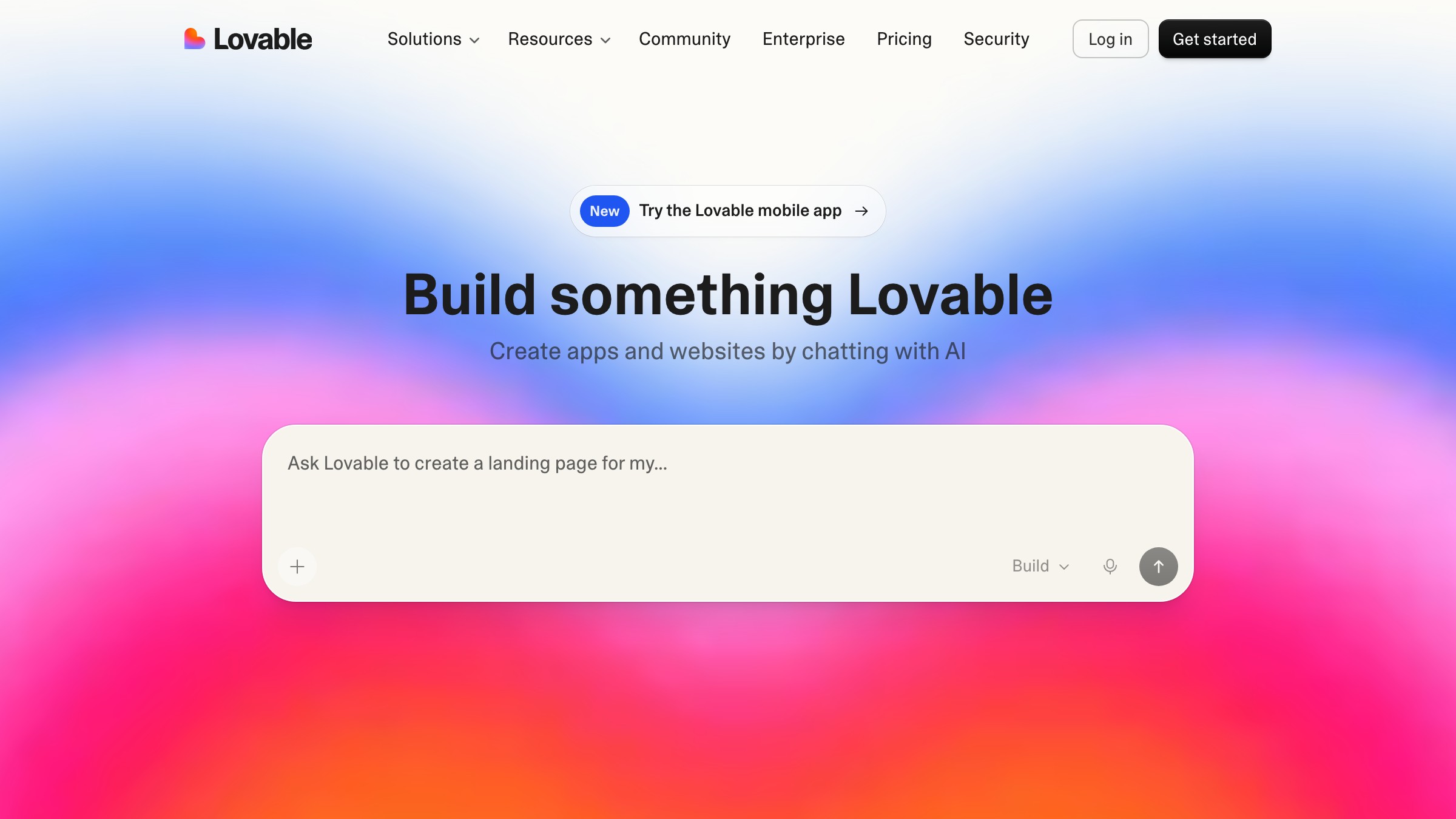
I asked Lovable to build a directory site for indie product designers, with a homepage, a submission form, an admin moderation view, and email notifications. Two hours of chatting later, I had a published, working v1 sitting at a lovable.app subdomain, including the email flow. A non-engineer friend tested it and was able to add a designer without my help.
The limitation is that the moment you want to do something Lovable did not anticipate, you are stuck. You can eject the code, but the code is shaped for Lovable's runtime, and porting it elsewhere is not free. It is the iPhone of app builders, and that is a feature for the right buyer.
Same.new, Best For Cloning And Remixing Existing Apps
Same is the newest of the five and the most differentiated. The pitch is not "build an app from a prompt." The pitch is "paste a URL of an app you like, get a working clone you can edit." That is a wildly different product, and it solves a real problem.
The Same workflow starts by feeding it a live URL. It scrapes the design, infers the data model, generates a React plus Supabase clone, and gives you a chat interface to remix. It is the closest thing the category has to a "design as code" generator that starts from real existing apps instead of a blank prompt.
I pointed Same at a small indie habit tracker, asked it to clone the UI but swap the data model to "books I am reading," and it produced a working app in about eight minutes. The visual fidelity was close enough that a casual user would not have noticed it was a clone. The data layer needed work, but the scaffolding was real.
The limitation is that Same is opinionated about the stack, and the cloning quality drops fast on highly interactive apps. Static dashboards clone cleanly. Anything with real-time, drag-and-drop, or complex state usually does not.
Replit Agent, Best For Long-Running Indie Tools
Replit Agent lives inside replit.com, on top of the original Replit IDE. Of the five, it is the most "real engineer in a box," because it inherits Replit's full Linux environment, persistent storage, hosted databases, deployments, and secrets manager. The Agent layer drives all of that for you.
The strength of Replit Agent is that the apps it builds keep running. You get a real hosted app with a real URL, real persistent data, real cron jobs, real background workers, and you can come back six months later and the thing still works without you having to redeploy. That sounds boring. It is rare.
I asked Replit Agent to build a small Telegram bot that scrapes a public RSS feed every fifteen minutes, summarizes the new items with Claude, and posts them to a channel. It set up the cron, the API keys via secrets, the database for tracking which items were already sent, and the Claude integration. Total time around twenty minutes, and the bot has been running quietly since.
The limitation is that the visual and design quality of Replit Agent output is the weakest of the five. It builds working things, not beautiful things. If your app is internal or scriptable, that is fine. If it is user-facing and consumer-grade, you will need to dress it up afterward, usually by piping the UI work through v0 or Bolt and gluing it back into the Replit app by hand.
The Comparison Axes That Actually Matter
The five tools market themselves on the same three feelings, fast, magic, and easy. None of those words help you pick. The axes that actually predict whether a tool will work for your specific job are concrete and measurable.
Here are the six dimensions that matter, in order of how much they predict your success:
- Output ownership. Do you get a real repo you can self-host, or a hosted runtime you cannot leave.
- Stack opinion. Is the stack one you would have picked yourself, or one you will have to fight.
- Full-stack depth. Does it handle database, auth, payments, and email, or just frontend.
- Design output quality. Does the UI look like a 2026 product or a 2018 admin panel.
- Iteration loop speed. How fast does the chat to preview to fix cycle actually run.
- Pricing at scale. Does the cost stay reasonable when you have one paying user versus a thousand.
The table below summarizes how each tool scores on those six axes after a week of real use. Scores are subjective, opinionated, and based on May 2026 versions of each product, all of which will be obsolete in six weeks.
| Tool | Output Ownership | Stack Opinion | Full-Stack | Design Quality | Iteration Speed | Price At Scale |
|---|---|---|---|---|---|---|
| v0 | High, real Next repo | Strong, sensible | Frontend only | Excellent | Fast | Fair |
| Bolt | Medium, exportable | Medium, flexible | Yes, scaffold-level | Good | Very fast | Fair |
| Lovable | Low, eject penalty | Hidden, forced | Yes, hosted | Good | Fast | Tightens fast |
| Same | Medium, exportable | Medium, fixed | Yes, scaffold-level | Good for clones | Fast | Unclear, new |
| Replit Agent | High, real repo | Strong, all-Linux | Yes, full | Weak | Slower | Reasonable |

When To Skip All Five And Use Cursor Or Claude Code
There is a category of work where none of these tools are the right answer. If you already know how to code, if the project has more than two engineers, or if the codebase already exists, you do not want an app builder. You want a chat-shaped IDE assistant that lives inside your editor.
Cursor and Claude Code occupy that slot. They do not produce a "scaffold from prompt," they produce surgical changes inside a real repo you already control. The output is your repo, your conventions, your tests, your CI.
The five tools in this review compete with starting from scratch. Cursor and Claude Code compete with already having work.
The decision rule is simple. If you are starting from nothing and want a working app by the end of the day, use one of the five. If you are starting from a real repo and want a senior collaborator inside it, use Cursor or Claude Code. Mixing them works fine, prototype in Bolt or v0, then move the surviving parts into a real repo and continue in Claude Code.
Pricing And Free Tiers, Briefly
Free tiers across the five are converging on the same shape, a small daily quota of messages or builds, with paid plans starting around twenty dollars per month for serious use. The interesting differences are at the top of the stack, not the bottom.
v0 is included in Vercel paid plans, which makes it effectively free for anyone already paying for Vercel hosting. Bolt has the most generous free tier of the standalone tools, with roughly a million tokens a day on the free plan as of May 2026. Lovable has a hard message cap that gets tight quickly, by design, since each message can produce thousands of lines of code.
Replit Agent is bundled into Replit Core, which is twenty-five dollars a month and also covers hosting, deployments, and databases. That bundling is genuinely the best price-for-value of the five if you are running real apps in production on small budgets. Same is the newest and the pricing is still moving, do not optimize for it.
The Verdict Matrix
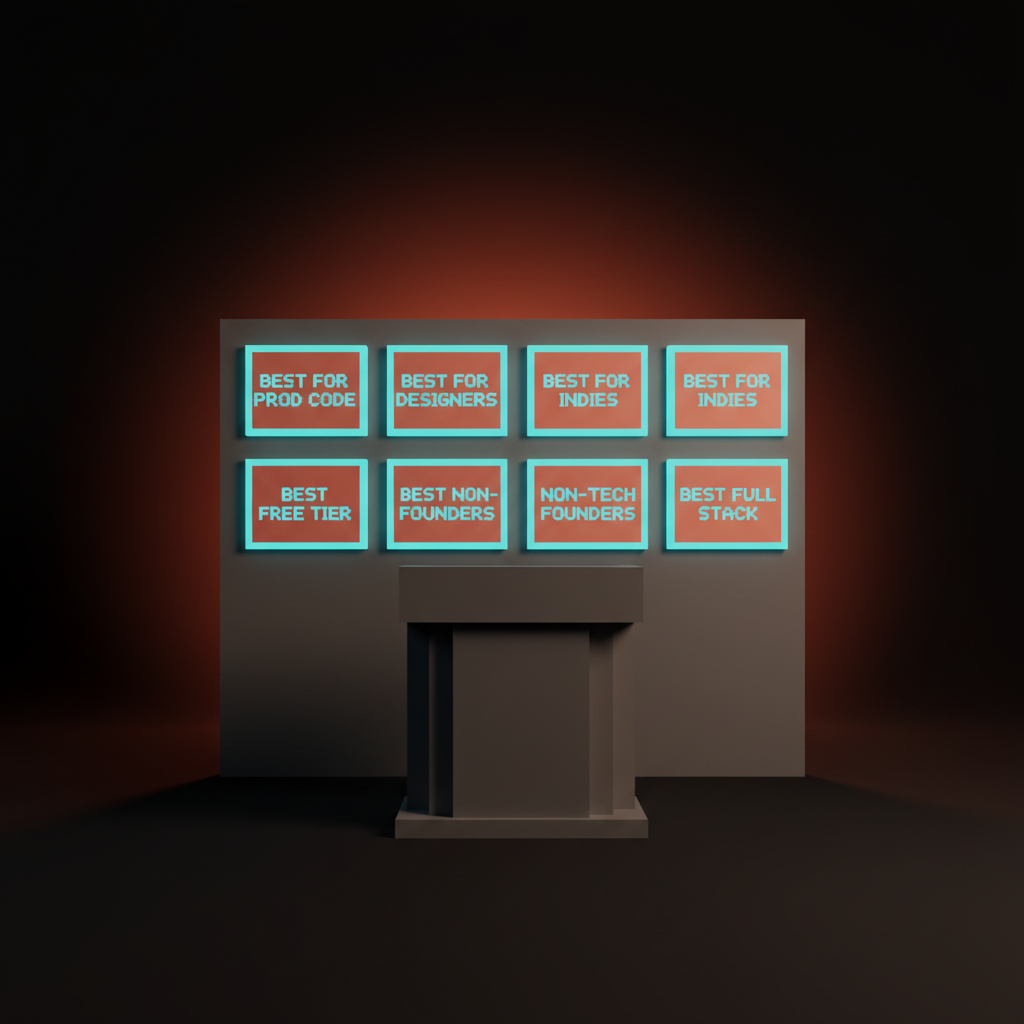
Here is the opinionated answer to "which one should I use," sliced by the question you are actually asking. None of these are the same person's best answer, which is the entire point of this review.
| Question | Pick |
|---|---|
| Best for production-ready React code | v0 |
| Best for full-stack prototyping in a tab | Bolt |
| Best for product designers prototyping | v0 or Bolt |
| Best for non-technical founders | Lovable |
| Best for cloning a UI you already love | Same |
| Best for indie tools that need to keep running | Replit Agent |
| Best free tier for casual use | Bolt |
| Best price-for-value at scale | Replit Agent |
If you are a product designer or a PM picking one tool to learn, the highest-payoff choice is v0 plus a real Next.js project. The output is real code you can hand to a real engineer, and the design quality is the highest of the five.
If you are a non-engineer founder trying to ship a v1 of an idea, the highest-payoff choice is Lovable, with the caveat that you should plan to migrate off it the moment you have product-market fit. Lovable is a fantastic starter home and a bad forever home.
Where The Category Goes In Late 2026
Three things are obviously coming, and one of them will reshape the rest. The first is that all five tools will have real backend depth, real Stripe integration, and real email by the fall. The frontend-only positioning of v0 is already softening. The full-stack gap will close.
The second is that the design output quality of all five will continue to climb, mostly because shadcn/ui and Tailwind v4 raised the floor of what "default" looks like. A 2026 LLM scaffold of a SaaS app is already prettier than a 2022 hand-coded one. That trend keeps going.
The third, and the one that reshapes the rest, is that the line between app builders and IDE agents is going to dissolve. Cursor and Claude Code will sprout "scaffold from prompt" surfaces, and v0 and Bolt will sprout "live in an existing repo" surfaces. By the end of 2026 the five tools in this review will not be a category. They will be a feature.
The fourth thing, which is quieter but real, is that the underlying models will keep getting better at code while the surfaces stay roughly the same. The same prompt that produces a shaky scaffold today will produce a clean shippable app in November, on the same UI, on the same pricing. You do not have to switch tools to get the upgrade. You just have to stay on one.
The right move for May 2026 is to pick one tool that matches your current job, ship something with it this weekend, and keep your option to switch open. The space moves weekly. Do not marry the tool, marry the habit of shipping fast.
Whichever of the five you pick today, you will have shipped more in a weekend than most teams ship in a quarter, and that is the only metric that matters in this category right now.
If you would rather have a senior product team ship the real version of your prompt, see /hire.
Get StartedGet new papers by email
New Brainy papers in your inbox. Confirm once, unsubscribe anytime.