
Brand Architecture Models: Master, Sub, and Endorsed Compared
A working designer's guide to brand architecture in 2026. The three models that matter, when to use each, and live examples from Oatly, Glossier, Patagonia, Mejuri, and Pentagram.
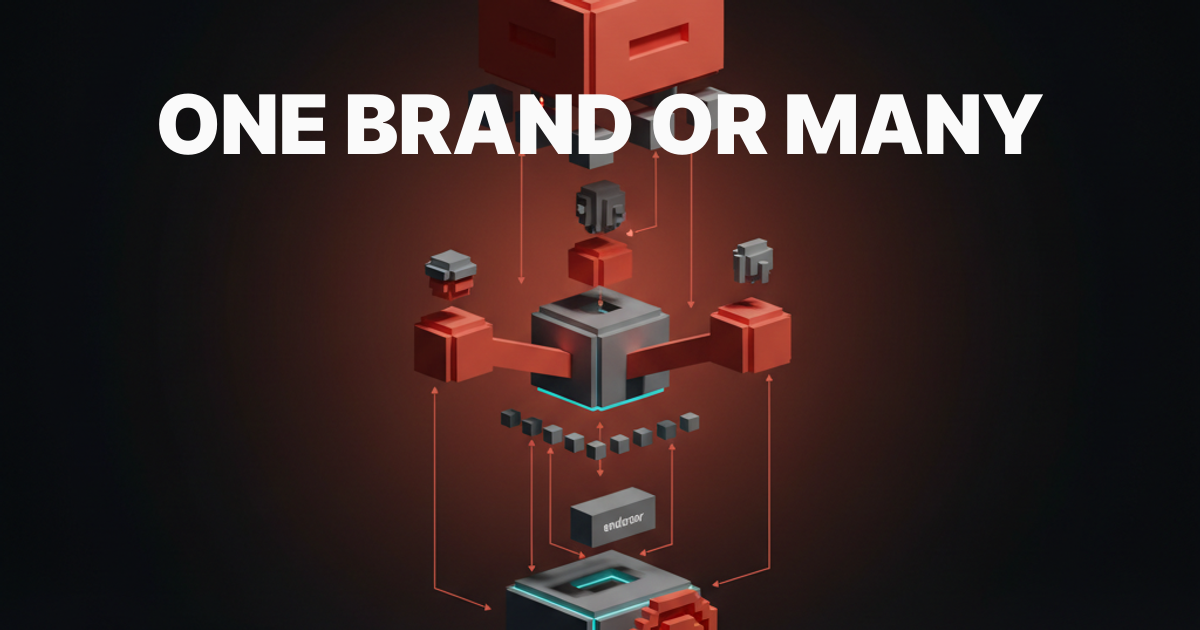
Brand architecture is the shape of every future fight your team will have about naming. Pick it wrong at the start and you spend the next decade patching decisions that were never designed to hold together.
This is not a marketing exercise. It is a design decision with structural consequences for every touchpoint, system, and hire that comes after it. The consultancy charts are not the problem. The problem is that designers are rarely in the room when the decision gets made.
Why brand architecture is a design decision, not a marketing one
Most architecture conversations happen in slide decks. A strategist draws a diagram, hands it off, and calls the work done. The designers inherit constraints they did not set and spend years working around them.
Architecture determines what your logo lockups look like across product lines, whether your design system needs one type scale or four, and how much visual debt you accumulate every time you launch something new. A bad architecture forces permanent workarounds. A good one makes the right call obvious every time a new surface appears.
The three models, in plain words
Three models define every brand architecture decision. Every consultancy renames them, but the structures are the same.
| Model | What it means |
|---|---|
| Branded house | One master brand covers every product |
| House of brands | Each product is its own brand, parent invisible or nearly so |
| Endorsed brand | Products stand on their own but carry the parent's name as a trust signal |
Everything else is a variation or a hybrid. When someone shows you a fourth option, they are describing a hybrid and calling it a new thing.

Branded house: when one master eats everything
The master brand is the product in a branded house. One voice, one visual system, one promise. Expanding into a new category means bringing the master, not inventing a new name.
Apple is the textbook example, but it is almost too tidy. The harder version is Oatly: oat milk in different formats, different recipes, and different regional variants, all under one loud, irreverent master with no sub-brands.
No "Oatly Premium." No "OatlyGo." Just Oatly, pushed harder into each new SKU. The architecture works because the voice is strong enough to carry the weight.
The cost of a branded house is focus. You cannot launch a product that contradicts the master. If the master has a personality, every product inherits it, whether it fits or not.
House of brands: when products live separately
The parent company is invisible to consumers in a house of brands. Each product runs its own brand, its own positioning, its own visual identity, and sometimes its own agency.
This model is most visible in FMCG and appears in premium consumer goods too. The cost is brand investment: instead of building one equity pool, you build many, and every new brand starts from zero awareness and zero trust. For design, this means separate systems, separate type hierarchies, separate photography direction. The coordination overhead is real.
The honest version of this model is expensive. Most brands that think they want it actually want an endorsed model, because they are not willing to fund what a true house of brands requires at every level of the portfolio.
Endorsed brand: the half-step in between
The endorsed model lets sub-brands carry their own names and personalities while referencing the parent, usually in a lockup or a shared visual grammar. The appeal is that you get stretch without forcing every product to sound like the master.
The risk is equally clear: the endorsement only works if the parent brand means something. If it does not, you have added noise to every lockup without adding trust.
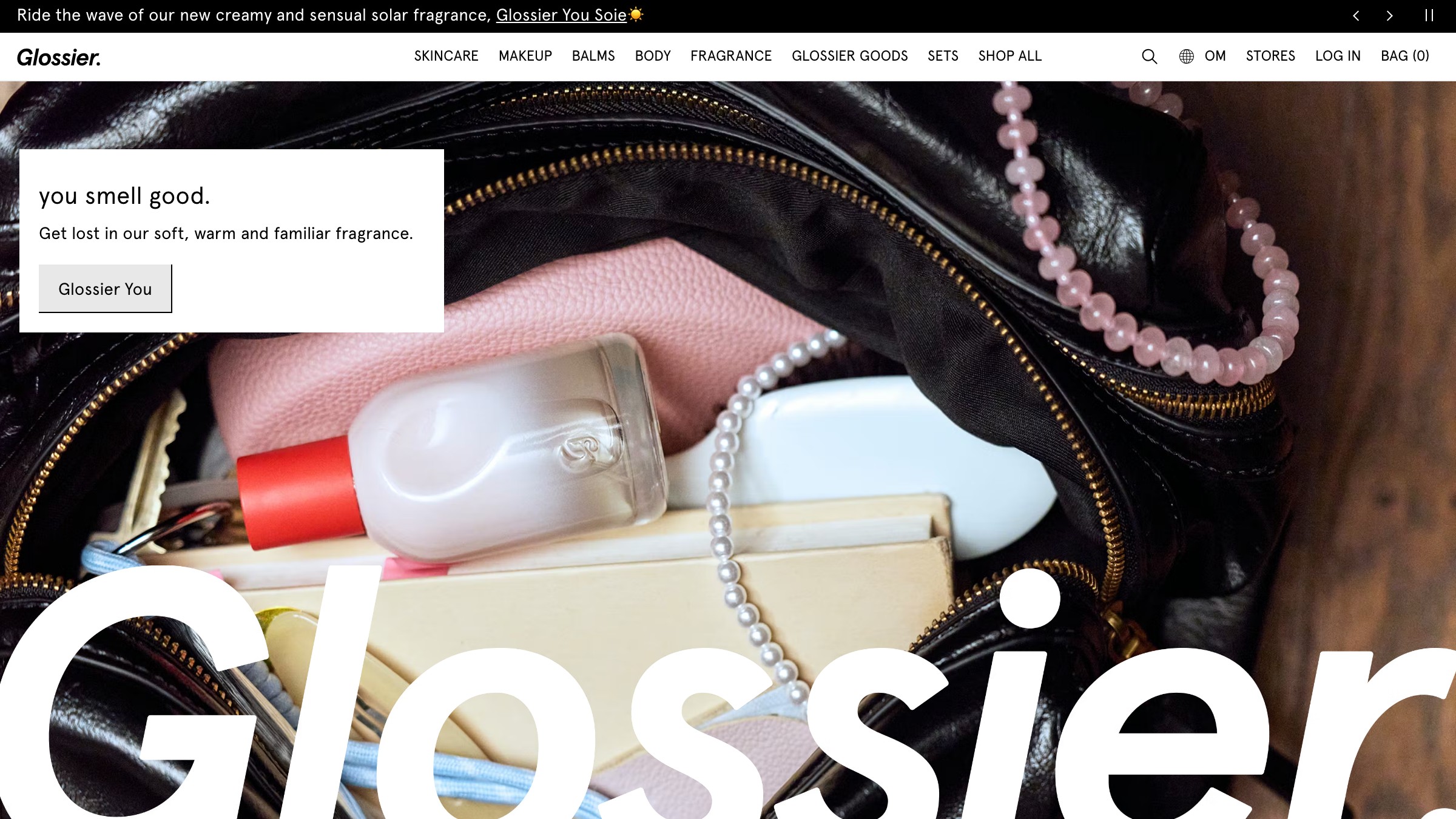
Glossier runs a version of this well. The master brand sets the tone (direct, democratic, cool) and sub-brands like You and Generation G carry their own identities without losing the Glossier anchor. Patagonia does the same with Worn Wear and Provisions. Both extensions draw on the master's environmental credibility, which they would struggle to earn from scratch on their own.
The decision rule that picks between them
Five questions. Answer them in order and the model usually picks itself.
| Question | If yes | If no |
|---|---|---|
| Is your master brand strong enough to carry products in new categories? | Branded house | Endorsed or house of brands |
| Do your target audiences share a worldview, not just a need? | Branded house | House of brands or endorsed |
| Would one product's failure damage the others if they shared a name? | House of brands | Branded house or endorsed |
| Does the parent brand's credibility add real value to the sub-brand? | Endorsed | House of brands |
| Can you afford to build and maintain separate design systems indefinitely? | House of brands | Branded house or endorsed |
If your answers split evenly, lean toward the endorsed model. It is the most forgiving architecture and leaves the most options open as the portfolio grows.
Building a brand with more than one product? Brainy designs the architecture, not just the logo.
Six live brands, picked apart
Six brands, one framework. The table maps each to its model, the key trait that makes the system work, and the design consequence.
| Brand | Model | Key trait | System implication |
|---|---|---|---|
| Oatly | Branded house | Founder worldview is the product; no sub-brands | One system, every SKU carries the master voice |
| Glossier | Endorsed | Sub-brands (You, Generation G) hold own characters inside Glossier canon | Shared visual grammar plus sub-brand personality space |
| Allbirds | Descriptor-led | Material names (Tree, Wool, Mizzle) differentiate without true sub-brand overhead | One system, lighter than full endorsed model |
| Patagonia | Endorsed | Extensions (Worn Wear, Provisions) borrow master's environmental credibility | Parent does trust-building; extensions do positioning |
| Mejuri | Endorsed (collections) | Capsule collections (Bold, Heirloom) backed by master quality signal | Fashion-style endorsed with collection-level differentiation |
| Pentagram (Saks) | Branded house | Flexible master generates hundreds of lockup variations | Portfolio-scale branded house built on a lockup grammar |
The brand strategy that holds up under stretch is visible in how the Glossier master sets tone without erasing sub-brand personality.
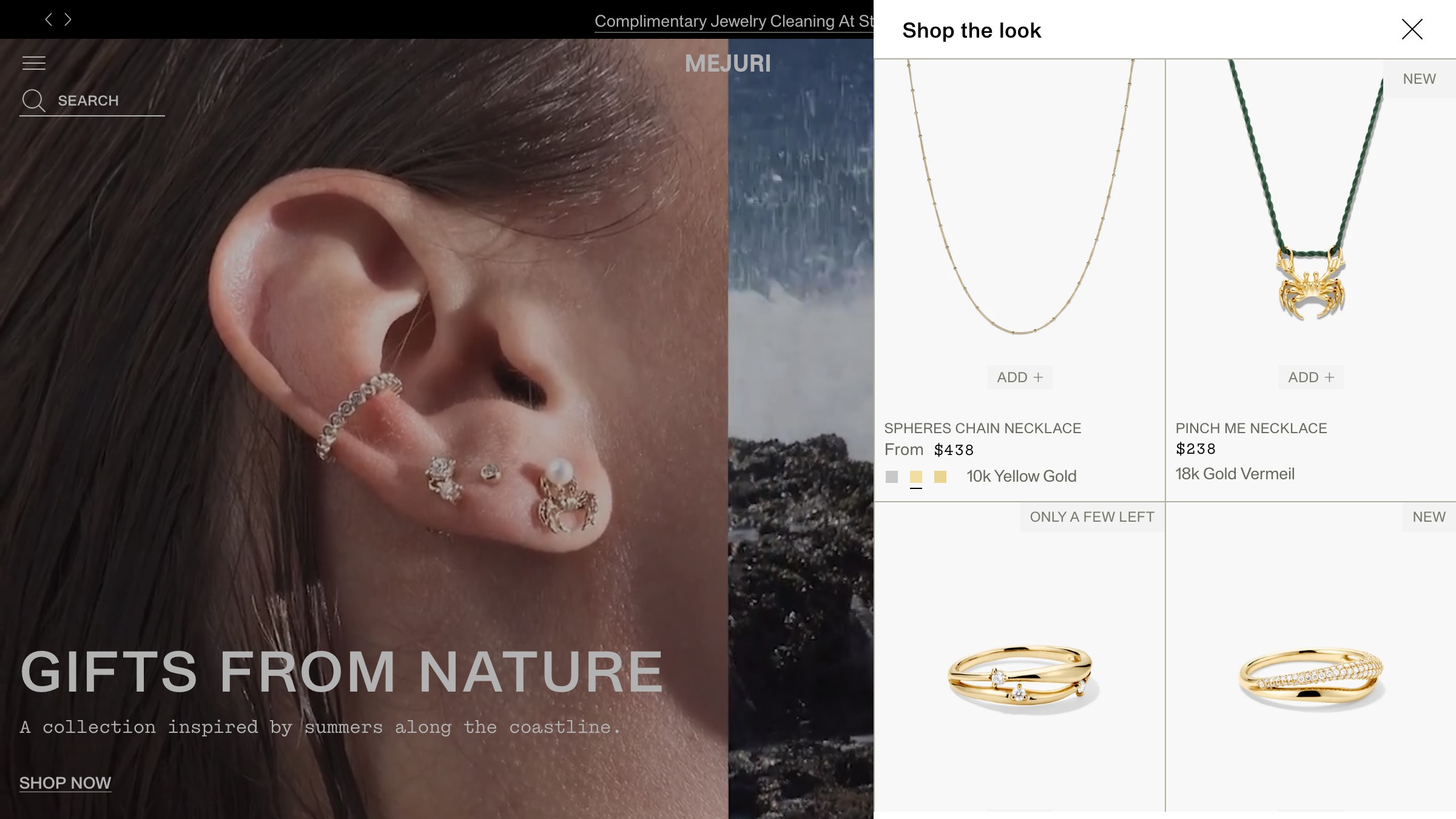
Browse Mejuri collections on mejuri.com
What each model demands of your design system
Each model has a different design system profile. This is where the strategy conversation hits reality.
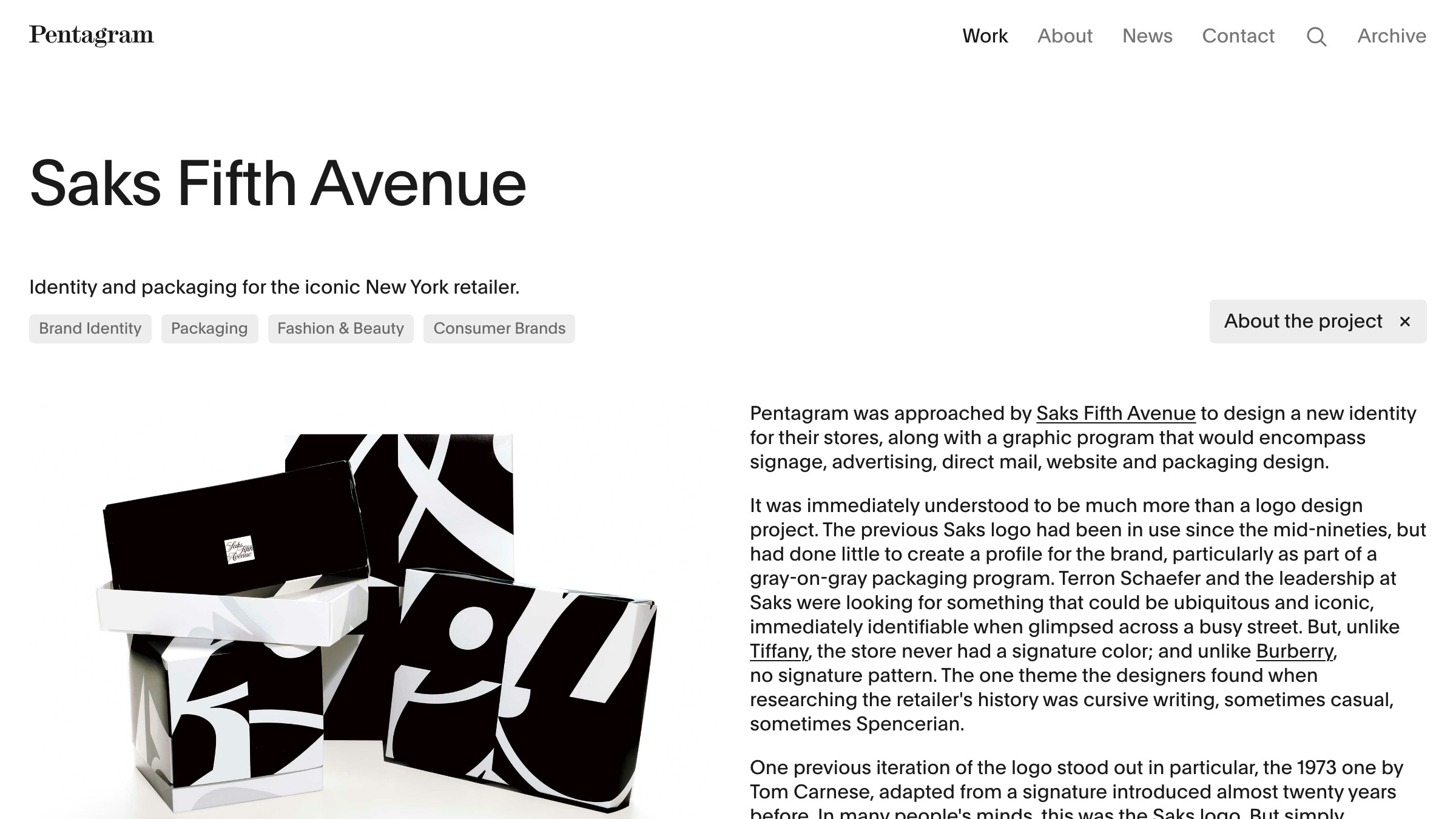
See the Saks case on pentagram.com
| Model | Type scales | Color systems | Logo variants | System complexity |
|---|---|---|---|---|
| Branded house | 1 | 1 core with tints | Tight lockup set | Low |
| House of brands | 1 per brand | 1 per brand | Fully independent | Very high |
| Endorsed brand | 1-2 | 1 master plus sub-brand accents | Lockup grammar with sub-variants | Medium-high |
A branded house is the cheapest to maintain. One system, one team, one source of truth. The decision test is always the same: does this fit the master or not?
The endorsed model requires a lockup grammar, which means clear rules for how the parent mark relates to sub-brand marks in different sizes, contexts, and hierarchies. Get the grammar wrong and every application looks like a different interpretation. Get it right and the system scales cleanly without constant arbitration.
Designing the identity system underneath the architecture decision is where most of the work lives. Do not skip to the visual before the model is locked.
How to migrate without burning equity
Brands outgrow their architecture. A branded house becomes something more complex when the portfolio diversifies enough that the master can no longer carry every product. The reverse happens when a house of brands consolidates to cut system costs.
The rule for migration: move the equity, not just the mark.
If you are collapsing sub-brands under a master, audit which sub-brand assets carry real recognition before you retire them. The assets that audiences associate with quality or trust survive; the rest gets cut.
If you are separating a product from a master, give the new brand time to build standalone equity before the parent endorsement recedes. Rushing a migration burns what you built; stalling it costs you the positioning you need.
FAQ
What is the difference between a sub-brand and a product line extension?
A sub-brand has its own name, personality, and sometimes its own visual identity. A product line extension is a descriptor within the master brand system, like Apple MacBook Pro. Line extensions live inside the master. Sub-brands have their own address in the brand architecture.
Which model is right for a startup with one product?
Branded house, every time. You do not have the resources to build separate brand equities and you have not earned the complexity yet. Build the master strong first. Architecture decisions expand naturally as the portfolio grows.
Can you switch models later without destroying equity?
Yes, but it is expensive and slow. The earlier you make the right call, the less debt you accumulate. Every year of incorrect architecture creates design and naming debt that costs real money and real time to unwind.
Does an endorsed model require a visual connection between parent and sub-brand?
Not always visual, but always semantic. The endorsement can live in a wordmark lockup, a shared color system, or a "from the makers of" reference. The connection needs to be legible to the audience, not necessarily graphic in every execution.
How do you handle naming under a branded house without accidentally creating sub-brands?
Use descriptive names and category descriptors: Oatly Barista Edition, Allbirds Tree Runner. The master name anchors; the descriptor differentiates. Avoid invented names under a branded house unless you intend to spin up a sub-brand with its own equity and system requirements.
Pick your model before you pick your colors
No color palette, logo, or type system survives an architecture conflict. Get the model right first. Then build the system that fits it.
Architecture is not a chart. It is a structural decision that governs every naming, design, and stretch call for the next decade. Make it deliberately, with designers in the room, before anyone opens a brand guidelines template.
If you need to think this through with people who have done it, have Brainy design your brand system before the wrong model locks you in.
Building a brand with more than one product? Brainy designs the architecture, not just the logo.
Get StartedGet new papers by email
New Brainy papers in your inbox. Confirm once, unsubscribe anytime.